Sunrise alarms are a clever way to hack your circadian rhythm by using gradual light simulation to wake you naturally and refreshed. They mimic the sunrise, helping reduce grogginess, improve sleep quality, and boost mood by aligning with your body’s internal clock. You’ll wake more easily and feel energized throughout the day. If you want to discover how to maximize their benefits and avoid common mistakes, explore further to access better mornings every day.

Turn your quiet moments into listening time
- Thousands of audiobooks, podcasts and originals
- Listen on your phone, tablet or Echo — also offline
- Cancel anytime
Key Takeaways
- Sunrise alarms mimic natural sunrise, aligning your internal clock for easier, more energizing mornings.
- They gradually increase light, reducing grogginess and enhancing overall sleep quality through circadian regulation.
- Proper customization and placement optimize effectiveness, making waking feel effortless—like a cheat code for mornings.
- Light synchronization during sleep cycles promotes restorative rest and improves mood and alertness.
- Consistent use leverages your circadian rhythm, providing a powerful, cheat-like advantage over traditional alarms.
Products Worth Considering

BowFlex SelectTech 840 Adjustable Kettlebell

BowFlex Results Series SelectTech Adjustable Dumbbells, Pair

Fitbit Versa 4 Health and Fitness Smartwatch with GPS, Heart Rate and Sleep Tracking, Alexa, Water Resistant, Black
As an affiliate, we earn on qualifying purchases.
Struggling to Wake Up? How Sunrise Alarms Can Help
Do you find it hard to wake up feeling revitalized? Improving your sleep hygiene can make a big difference. A consistent sleep schedule, avoiding screens before bed, and creating a calming bedtime routine help you rest better. When morning comes, a sunrise alarm gently nudges you awake, aligning with your natural circadian rhythm. This makes waking up easier and less jarring than traditional alarms. Incorporating sunrise alarms into your morning routines can help you start the day more energized and alert. Instead of abrupt, loud noises, these alarms simulate natural sunlight, easing you out of sleep gradually. Over time, this approach can improve your overall sleep quality and make mornings feel less stressful and more invigorating. Additionally, experimenting with digital concepts can lead to discovering new ways to enhance your waking experience. Moreover, high refresh rates in technology can make engaging with your morning routine more dynamic and enjoyable. To further complement your morning routine, consider adding seating areas for relaxation and socializing in your backyard space. Having a proper first aid kit nearby ensures that you’re prepared for unexpected events, making your mornings even more secure.
What Are Sunrise Alarms and How Do They Work?

Sunrise alarms use light simulation to gradually brighten your room, mimicking the natural sunrise to wake you gently. They work by aligning with your sleep cycle, ensuring you wake at the most favorable time. This way, you wake up feeling more refreshed and ready for the day. Additionally, incorporating simple systems in your morning routine can further enhance your overall well-being and organization throughout the day. Using tools like audio recorders can help you capture your thoughts and ideas immediately after waking, enhancing your creative flow. Research suggests that circadian rhythms play a crucial role in regulating sleep and wakefulness, making sunrise alarms an effective tool for many. Understanding effective management strategies can also improve your productivity and set a positive tone for the day ahead.
Light Simulation Method
Light simulation is the core mechanism that mimics the natural sunrise, gradually increasing brightness to gently wake you up. The alarm uses adjustable color temperature settings, starting with warm, reddish hues that resemble dawn, then shifting to cooler, brighter tones as it approaches full brightness. This gradual change signals your body to wake naturally, reducing grogginess. The alarm volume is usually adjustable, starting quietly and increasing as the light intensifies, ensuring a gentle but effective wake-up. By controlling both the color temperature and the alarm volume, sunrise alarms create a realistic sunrise experience that aligns with your circadian rhythms. This seamless progression helps you wake refreshed and energized, making the process feel less like an alarm and more like a natural sunrise.
Sleep Cycle Alignment
Have you ever wondered how sunrise alarms synchronize with your body’s natural sleep patterns? They work by aligning with your sleep cycle, gradually waking you during lighter sleep stages. This minimizes grogginess and enhances your overall sleep environment, making mornings feel smoother. When your alarm mimics sunrise, it signals your brain to reduce melatonin production, helping you wake naturally. This synchronization can also boost dream enhancement, as your brain transitions seamlessly through sleep phases. To optimize this, set your alarm to wake you at the right point in your sleep cycle, often just before your usual wake time. Diverse tent camping locations ensure that you have a variety of beautiful settings to explore, which can contribute positively to your overall well-being. Proper sleep cycle alignment ensures you wake feeling refreshed, alert, and ready for the day. It’s a circadian hack that turns waking up into a seamless, restorative experience. Additionally, understanding battery capacity can help you choose the right devices to maintain a consistent sleep environment. This practice also aligns with the concept of mental wellbeing, promoting a holistic approach to your overall health.
Why Natural Light Boosts Your Wakefulness
Natural light helps regulate melatonin, so you wake up feeling more refreshed and alert. It also lifts your mood and boosts your focus throughout the day. Plus, exposure to sunlight syncs your internal clock, making mornings feel more natural and easier to start. Additionally, incorporating Nordic-inspired spa routines can enhance your overall well-being, promoting better sleep and wakefulness. Furthermore, maintaining good indoor air quality can significantly improve your sleep environment, ensuring a more restorative rest. Engaging in outdoor activities, such as visiting family waterparks, can also increase your exposure to natural light and promote physical wellness. Moreover, utilizing accessibility features on devices can help set reminders for outdoor activities, ensuring you consistently benefit from sunlight exposure. Notably, AI surveillance systems are increasingly being used to monitor public spaces, encouraging people to engage more with their surroundings and enjoy natural light.
Light Regulates Melatonin Levels
Ever wonder why morning sunlight makes you feel more alert? It’s because light directly influences melatonin levels, the hormone that controls your sleep-wake cycle. When you’re exposed to natural light, especially in the morning, it triggers melatonin suppression, signaling your body that it’s time to wake up. This process is what helps reset your internal clock and promotes alertness. Light therapy mimics this effect, providing controlled exposure to bright light that can regulate melatonin production, even on cloudy days. By aligning your melatonin levels with natural light patterns, you optimize your ability to wake early and stay alert. This simple yet powerful mechanism is at the core of how sunrise alarms enhance your morning routine, making waking up feel less like a chore. Additionally, incorporating workspace accessories that support your morning routine can further enhance your productivity throughout the day. Engaging in social interactions during morning routines can also boost your mood and energy levels, enhancing the benefits of natural light exposure.
Enhances Mood and Alertness
When you step into sunlight in the morning, it can instantly lift your mood and make you feel more alert. Natural light plays a key role in mood regulation, helping your brain release serotonin, the hormone linked to feelings of happiness and well-being. This boost in mood isn’t just mental—it also supports physical energy levels. Exposure to morning light enhances alertness by signaling your brain to wake up and sharpen focus. The combination of serotonin production and increased alertness makes you feel more motivated and ready to face the day. Consistent morning sunlight creates a positive feedback loop, reinforcing your sense of well-being and energy. So, opening your curtains or stepping outside isn’t just pleasant—it’s a simple, powerful way to improve your mood and stay alert.
Synchronizes Internal Clocks
Sure! Here’s the revised content following your instructions:
—
As daylight enters your environment each morning, it signals your internal biological clock, known as the circadian rhythm, to stay synchronized with the outside world. Natural light triggers hormonal regulation, especially reducing melatonin, the sleep hormone, which helps you wake up alert and ready. When your circadian rhythm aligns with the sunrise, your body optimizes its internal processes, making waking up easier and more natural. Consistent exposure to morning light reinforces this synchronization, preventing disruptions that can cause fatigue or jet lag. By harnessing natural light, you support your body’s internal clock, ensuring your hormonal regulation promotes wakefulness during the day and restful sleep at night. This alignment boosts overall energy, alertness, and well-being. Additionally, studies suggest that seasonal events can influence mood and energy levels, further emphasizing the importance of light exposure. Furthermore, embracing calm and clarity can help you cultivate a more focused mindset, enhancing your ability to maintain your circadian health. Implementing effective debt management strategies can reduce stress, allowing for a more focused approach to maintaining your circadian health. Incorporating performance upgrades into your morning routine, like exposure to natural light, can enhance your overall vitality and productivity throughout the day. Engaging in aquatic exercise can also promote physical well-being, further supporting your body’s ability to stay energized during the day.
—
Feel free to let me know if you need any further modifications!
How Sunrise Alarms Reset Your Body’s Internal Clock

Sunrise alarms work by gradually increasing light in your room, signaling to your internal clock that it’s time to wake up. This mimics natural sunrise, helping reset your body’s circadian rhythm. When your sleep environment is optimized with adjustable brightness and timing, the alarm becomes even more effective. You can customize the light intensity and duration, ensuring a gentle *shift* from sleep to wakefulness. This process reinforces your body’s natural sleep-wake cycle, making mornings easier and more consistent. The table below shows how different features support this reset:
| Feature | Impact | Benefit |
|---|---|---|
| Light intensity | Signals wake time | Improves morning alertness |
| Duration | Gradual wake-up | Prevents abrupt awakening |
| Alarm timing | Syncs with natural rhythms | Stabilizes circadian cycle |
| Sleep environment | Optimized for comfort | Enhances overall sleep quality |
| Customization | Personalizes wake-up | Fits individual needs |
Additionally, ensuring your room is optimized for comfort can further enhance the effectiveness of your sunrise alarm. Implementing smart thermostats can also contribute to air quality benefits, making your sleep environment more conducive to restful nights.
How to Choose the Best Sunrise Alarm for Your Sleep Goals
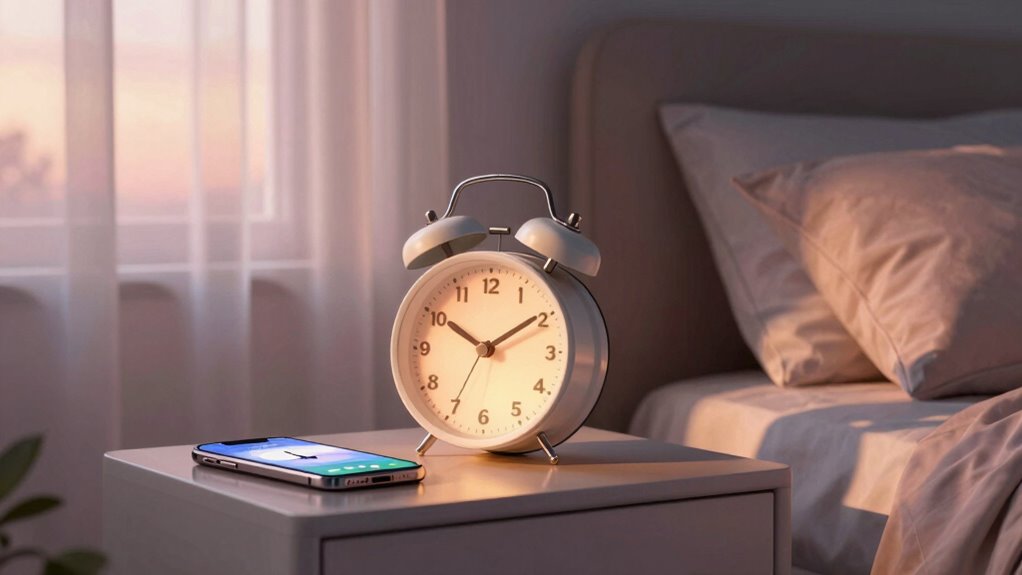
Choosing the right sunrise alarm depends on your specific sleep goals and daily routines. To find the best fit, consider models with personalized features that let you adjust light intensity, color, or timing to suit your preferences. Comparing brands helps you identify options that align with your needs and budget. Look for alarms with customizable sunrise duration to gradually wake you up comfortably. Pay attention to user reviews and brand comparisons to gauge reliability and performance. Some alarms offer supplementary features like soothing sounds or sleep tracking, which might enhance your overall experience. By focusing on these factors, you can select a sunrise alarm that supports your sleep goals effectively and seamlessly integrates into your morning routine.
Tips for Using Sunrise Alarms Effectively
To get the most benefit from your sunrise alarm, it’s important to use it consistently and set it up correctly. Incorporate it into your morning routines so that waking up becomes a smooth, predictable process. Establish a consistent sleep schedule to support your circadian rhythm and improve sleep hygiene. Avoid abrupt wake-ups by gradually adjusting the alarm’s brightness and timing if needed. Keep your sleep environment dark and cool to enhance the alarm’s effectiveness. Use the sunrise feature daily, even on weekends, to reinforce your internal clock. Over time, this consistency helps your body associate the alarm with waking naturally, making mornings easier. Remember, a well-integrated sunrise alarm can transform your mornings into a more energized start.
Common Mistakes When Using Sunrise Alarms and How to Avoid Them
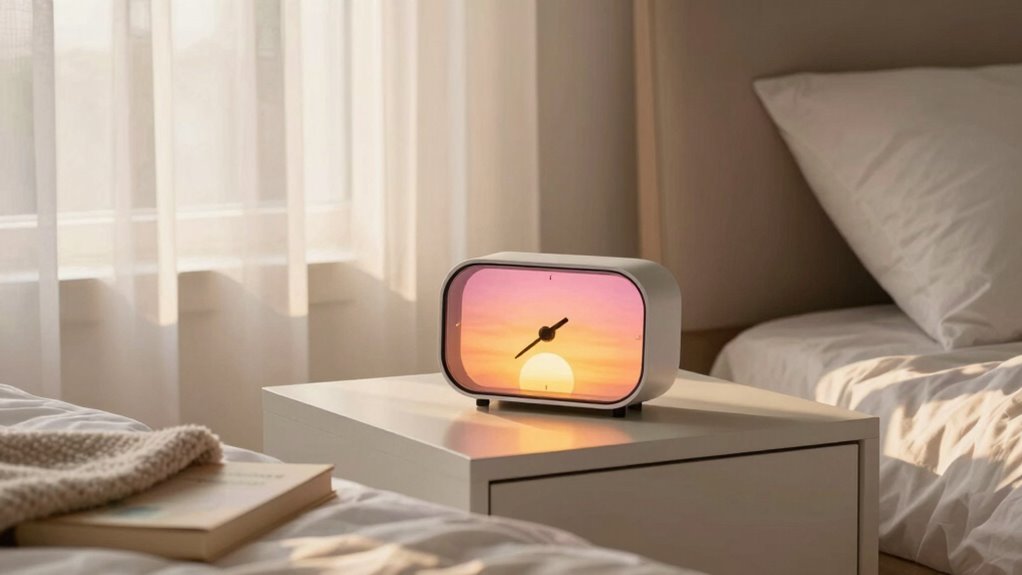
One common mistake people make is setting their sunrise alarm too abruptly or with an overly bright light, which can startle you awake rather than gently easing you out of sleep. To foster effective habit formation, guarantee the light gradually increases over 20-30 minutes. Proper alarm placement is also essential; placing the sunrise alarm where you can’t easily hit snooze or turn it off prevents disrupting your wake-up routine. Additionally, avoid positioning the alarm too far from your bed, which can lead to delayed waking or oversleeping. Other pitfalls include neglecting to customize brightness levels or timing, and using the alarm inconsistently. Adjusting these factors helps your body adapt smoothly and assures the sunrise alarm promotes a more natural wake-up.
Can Sunrise Alarms Improve Your Overall Sleep Quality?

Sunrise alarms can considerably enhance your overall sleep quality by promoting a more natural waking process. When your sleep environment is optimized—dark, quiet, and cool—you set the stage for restorative sleep. Waking gradually with sunrise alarms helps your body shift smoothly from sleep to wakefulness, reducing grogginess and morning stress. Incorporating a consistent morning routine, like stretching or mindfulness, becomes more effective as you wake more refreshed. Over time, this can stabilize your circadian rhythm, leading to better sleep at night and more energized mornings. By aligning your wake-up time with natural light, you support your body’s internal clock, improving sleep quality overall. Sunrise alarms are a simple yet powerful tool to make your sleep environment and morning routines work in harmony.
Frequently Asked Questions
Are Sunrise Alarms Suitable for People With Sleep Disorders?
Sunrise alarms might help some with sleep disorders, but they’re not a one-size-fits-all solution. Light therapy can support melatonin regulation, aiding your circadian rhythm, but if you have a sleep disorder, it’s best to consult a healthcare professional first. These alarms can promote natural wakefulness, yet they shouldn’t replace medical treatment. Use them as part of an all-encompassing approach to improve your sleep quality safely and effectively.
Can Sunrise Alarms Replace Traditional Alarm Clocks Entirely?
While sunrise alarms can beautifully mimic natural light, they might not fully replace traditional alarm clocks for everyone. You could find that they enhance your sleep quality and gently wake you, but for some, especially heavy sleepers, a backup alarm remains essential. Relying solely on natural light for waking might feel like a soothing start, but it’s wise to keep a traditional alarm handy to guarantee you don’t miss important moments.
How Long Should I Set My Sunrise Alarm Before Waking Up?
You should set your sunrise alarm to gradually increase light intensity about 30 to 45 minutes before your wake-up time. This allows your body to gently shift from sleep to wakefulness, aligning with your natural circadian rhythm. Adjust the wake-up time depending on how quickly you respond to light; some may prefer 20 minutes, while others need up to 45 minutes for a comfortable, invigorating start.
Do Sunrise Alarms Work Equally Well for All Sleep Chronotypes?
Sunrise alarms work differently depending on your sleep phase and light sensitivity. If you’re a morning lark, they naturally reinforce your early wake-up time, but night owls might find less benefit unless you adjust light intensity and timing. For ideal results, set the alarm to gradually increase light during your sleep phase, helping your body adapt. Understanding your sleep chronotype helps tailor the alarm for maximum effectiveness.
Are There Any Health Risks Associated With Using Sunrise Alarms Regularly?
Using sunrise alarms regularly isn’t likely to cause health risks, but be aware that light exposure at dawn intentionally suppresses melatonin, which might disturb your natural rhythm if misused. Ironically, this tool designed to improve sleep can, if overused or improperly timed, lead to disrupted circadian patterns. Moderation and proper timing guarantee you enjoy the benefits without risking your sleep health or hormonal balance.
Conclusion
As you explore sunrise alarms, you might notice how a simple shift in your morning routine unexpectedly transforms your sleep cycle. It’s almost like the dawn itself conspires to reset your body, making waking easier and mornings brighter. When you embrace natural light’s subtle power, you access a deeper connection to your circadian rhythm—proof that sometimes, the smallest changes can lead to the most profound improvements in your overall sleep and wellbeing.