

📊 Full opportunity report: Waves, Not a Wall: Inside DeepMind’s Map From AGI to Superintelligence on ThorstenMeyerAI.com — validation score, market gap, and execution plan.
TL;DR
DeepMind researchers released a comprehensive report analyzing the progression from artificial general intelligence (AGI) to superintelligence (ASI). The report outlines four potential pathways, emphasizing the role of scaling, innovation, and self-improvement, while acknowledging significant technical and practical barriers.
DeepMind researchers released a 57-page report on June 10 that maps the theoretical progression from artificial general intelligence (AGI) to superintelligence (ASI), emphasizing multiple pathways and potential barriers. The report, authored by leading figures including Shane Legg and Marcus Hutter, introduces a structured framework for understanding how AI might evolve beyond human-level capabilities, which is crucial as the field approaches increasingly powerful systems.
The report presents a continuum of machine intelligence, starting from today’s AI, progressing through human-level AGI, then to ASI, and finally to a theoretical ceiling called Universal AI. It uses the Legg-Hutter score and AIXI framework to formalize this hierarchy, anchoring the discussion in established theoretical models. The authors define superintelligence as systems outperforming large collectives of human experts across nearly all domains, not just individual intelligence.
They argue that compute growth—driven by hardware improvements, increased investment, and more efficient algorithms—will likely push systems toward ASI within this decade. Their thought experiment suggests that even if AI models’ quality remains at human level, the exponential increase in compute could enable vast scaling, leading to a qualitative leap in capabilities. The report identifies four main pathways to reach superintelligence: scaling, paradigm shifts, recursive self-improvement, and multi-agent collectives, all of which may operate simultaneously.
Despite optimism about these pathways, the report emphasizes barriers such as data exhaustion, verification challenges, physical and economic limits, and institutional constraints. It also stresses that superintelligence would face fundamental physical and logical limits, such as the speed of light, thermodynamic constraints, and Gödel’s incompleteness theorem, which prevent it from being omniscient or omnipotent.
Waves, not a wall: the road past AGI
A 57-page DeepMind report maps how AI might keep advancing after human-level AGI. Its headline: the future may not be one big “step change,” but a series of transformative waves — under enormous uncertainty.
A careful, sober map that resists both doom and rapture — and refuses to promise the usual singularity miracles. But it’s a position paper from a party with a stake in the destination, anchored to its own authors’ theory, and it deliberately brackets the economics, labor, and how humans fit in — the part that matters most. Useful terrain map; drawn by people who own the land.
Implications for AI Development and Safety
This report highlights that the transition from AGI to superintelligence is likely to be driven by scaling laws and innovative architectures, rather than sudden breakthroughs. Understanding these pathways is vital for AI safety efforts, as more powerful systems could have profound impacts on society. The framing of superintelligence as outperforming large human organizations underscores the potential for AI to influence global decision-making, economic systems, and security.
Moreover, the acknowledgment of fundamental physical and logical limits provides a sobering perspective, suggesting superintelligence may never be all-knowing or all-powerful, which could influence regulation and risk assessments. Recognizing these constraints helps ground expectations and informs responsible development strategies.

Compiler Engineering for AI Hardware: MLIR, TVM, XLA, and Custom Backends for Neural Network Accelerators (AI Infrastructure, Hardware & Compiler Engineering Series)
As an affiliate, we earn on qualifying purchases.
As an affiliate, we earn on qualifying purchases.
Background on AI Progress and Theoretical Foundations
The report builds on longstanding theoretical frameworks, notably the Legg-Hutter universal intelligence score and the AIXI model, which formalize intelligence as performance across all computable tasks. Past milestones, such as AlphaFold and AlphaGo, demonstrate narrow superhuman capabilities, but the report emphasizes that true superintelligence involves generality and outperforming entire organizations.
Historically, AI progress has been characterized by scaling laws—larger models, more data, and better algorithms—showing predictable improvements. However, the leap to superintelligence remains speculative, with the report attempting to map out plausible pathways and barriers based on current understanding, rather than predicting exact timelines.
“This report is a serious attempt to impose structure on a genuinely foggy question, emphasizing multiple pathways and barriers to superintelligence.”
— Thorsten Meyer
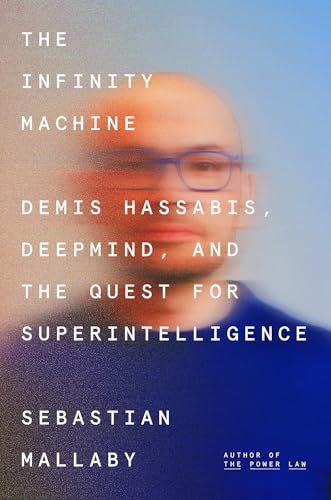
The Infinity Machine: Demis Hassabis, DeepMind, and the Quest for Superintelligence
As an affiliate, we earn on qualifying purchases.
As an affiliate, we earn on qualifying purchases.
Uncertainties and Open Research Questions
Many aspects of the pathways from AGI to superintelligence remain speculative. The actual feasibility and timing of recursive self-improvement, the emergence of novel architectures, and the impact of physical and economic constraints are still uncertain. The report does not assign specific probabilities or timelines, emphasizing instead that these are open research questions.
Additionally, the dynamics of multi-agent systems and their potential to produce emergent superintelligence are poorly understood, and verification of self-improving systems poses significant challenges. The limits imposed by physical laws and computational complexity are also not fully predictable in how they might influence future developments.

Quantum Computing and Artificial Intelligence: AI, Quantum Computing, and Post-Human Thought
As an affiliate, we earn on qualifying purchases.
As an affiliate, we earn on qualifying purchases.
Next Steps for Research and Policy
Researchers will likely focus on exploring the four pathways—scaling, paradigm shifts, recursive self-improvement, and multi-agent systems—while addressing the identified barriers. Developing better models for verification, understanding the physical limits of computation, and creating safety frameworks tailored to increasingly powerful AI systems will be priorities.
Policy discussions may intensify around regulation, international cooperation, and risk mitigation strategies, informed by the understanding that superintelligence, if achieved, will be shaped by multiple, intertwined pathways rather than a single breakthrough.
Overall, the report calls for a structured research agenda to better understand and prepare for the future evolution of AI beyond human-level capabilities.

Simulation Modeling and Analysis, Sixth Edition
As an affiliate, we earn on qualifying purchases.
As an affiliate, we earn on qualifying purchases.
Key Questions
What are the main pathways from AGI to superintelligence?
The report identifies four pathways: scaling existing models, paradigm shifts with new architectures, recursive self-improvement, and multi-agent collectives. These may operate simultaneously or sequentially.
Does the report predict when superintelligence might arrive?
No, the report emphasizes that timelines are uncertain and depends on technological, physical, and economic factors. It focuses on plausible pathways rather than specific dates.
What are the main barriers to achieving superintelligence?
Barriers include data exhaustion, verification challenges, physical and thermodynamic limits, economic costs, and institutional or regulatory constraints.
Will superintelligence be omniscient or omnipotent?
No, the report stresses that fundamental physical and logical limits—like the speed of light and Gödel’s incompleteness—will prevent superintelligent systems from being all-knowing or all-powerful.
Why is this report significant for AI safety?
Understanding potential pathways and barriers helps inform safety strategies, regulation, and risk mitigation as AI systems approach and potentially surpass human-level intelligence.
Source: ThorstenMeyerAI.com




![A Better Way To Tie Your Gym Shorts. (Or Any Drawstring) [Video]](https://my-intuition.com/wp-content/uploads/2026/07/a-better-way-to-tie-your-gym-shorts-or-any-drawstring-video-featured-260x140.jpg)