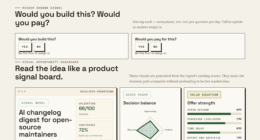

📊 Full opportunity report: Capital: The Lever Beneath the Levers on ThorstenMeyerAI.com — validation score, market gap, and execution plan.
TL;DR
Major AI companies are transitioning hundreds of billions of dollars from private to public markets, revealing a circular flow of capital that underpins AI’s rapid growth. This process creates systemic risks due to high leverage and reliance on internal demand.
In June 2026, the three most valuable private AI companies—SpaceX with xAI, Anthropic, and OpenAI—listed on stock exchanges, marking a significant transfer of private risk to public markets. This move underscores how capital functions as a fundamental chokepoint in AI development, controlling who can fund and build the infrastructure that powers the industry.
On June 12, SpaceX, which owns xAI, listed on Nasdaq with a valuation approaching $2 trillion, oversubscribed several times over, and held a large share for retail investors. Shortly after, Anthropic filed confidentially with a valuation around $965 billion, and OpenAI is expected to go public at between $730 billion and $850 billion. Collectively, these offerings represent roughly $4 trillion in private value transitioning to public markets within 18 months.
Bank of America described this as a large-scale transfer of risk from early investors to the public, with many insiders already selling billions in stock before the listings. This pattern indicates the flow of risk is shifting outward, with private capital being redistributed at high valuations.
Capital: The Lever Beneath the Levers
Every chokepoint costs money — so whoever can fund the buildout decides who builds at all. In 2026 the bill came due in public: a trillion-dollar IPO wave, financed by a circle of firms paying each other, now sold to everyone else.
The meta-chokepoint: it gates the other five, because you can’t build any of them without clearing the capital bar. A synchronized machine has no natural brake — no one can slow first — and the IPO wave moves the risk to the public as insiders take gains. The hedge is solvency that doesn’t depend on the music playing: sane burn, own what’s cheap, self-host where you can.
Implications of Capital Concentration in AI
This concentration of capital at the top influences who controls AI infrastructure and development. The circular flow of money—where giants like Microsoft, Amazon, and Google pour funds into Nvidia, which then funds AI startups—creates a self-reinforcing loop. While it accelerates growth, it also introduces systemic risks: demand may be artificially inflated, and capacity investments may be mispriced, making the entire ecosystem fragile.
Economists warn that this high-debt, circular capital flow, combined with a small paying customer base, increases the risk of a broader economic impact if confidence falters or demand drops unexpectedly.

Buy, Rehab, Rent, Refinance, Repeat: The BRRRR Rental Property Investment Strategy Made Simple
As an affiliate, we earn on qualifying purchases.
As an affiliate, we earn on qualifying purchases.
Private Funding and Market Dynamics in AI
The AI industry’s funding cycle has shifted dramatically in 2026. Private investors and insiders have taken early gains, and now the risk is being transferred to public markets at valuations that often lack prior scrutiny. The move comes amid a broader pattern of massive private investments—estimated at over $3 trillion in data-center spending from 2025 to 2028—largely financed through private credit.
This cycle is supported by a limited base of paying consumers, with only about 3% of users paying directly for AI services, raising concerns about the sustainability of such growth. The interconnected demand within the industry creates a fragile balance that could be disrupted by a sudden shift in investor sentiment or economic conditions.
“There is more greed than fear right now, and plenty of liquidity—conditional on continued optimism.”
— Goldman Sachs CEO

The AI Stock Investor: A Beginner’s Guide to Profiting from the AI Revolution (Stock Investing 101)
As an affiliate, we earn on qualifying purchases.
As an affiliate, we earn on qualifying purchases.
Unclear Risks and Potential Market Disruptions
It remains uncertain how long the current funding cycle can sustain high valuations without a correction. The actual demand for AI services from consumers is still limited, and a sudden pullback in investor confidence could trigger a market correction. Additionally, the systemic risks posed by the circular funding loop are not yet fully understood or quantifiable, leaving open the possibility of unforeseen disruptions.

The AI-Powered Grant Winner: Using Artificial Intelligence to Find Funding and Win Grants
As an affiliate, we earn on qualifying purchases.
As an affiliate, we earn on qualifying purchases.
Future Developments in AI Funding and Market Stability
Expect ongoing public offerings from major AI firms, with increased scrutiny from regulators and investors. Monitoring signs of demand slowdown or shifts in corporate spending—such as Microsoft’s recent cautious stance—will be crucial. Economists and industry leaders will likely evaluate the sustainability of this capital cycle, and potential policy responses may emerge to mitigate systemic risks.

AI Investing For Dummies (For Dummies: Learning Made Easy)
As an affiliate, we earn on qualifying purchases.
As an affiliate, we earn on qualifying purchases.
Key Questions
Why is capital considered the most fragile chokepoint in AI development?
Because the entire infrastructure relies on massive, often debt-financed investments that are interconnected in a circular demand pattern, making the system vulnerable to shocks if demand weakens or investor confidence drops.
What does the recent IPO wave mean for the average investor?
It means that private risk and inflated valuations are being transferred to the public market, often at high prices, which could lead to volatility if demand or confidence wanes.
How might systemic risks in AI funding affect the broader economy?
If the circular demand and high leverage lead to a market correction, it could impact not only tech stocks but also the wider economy, given the large scale of data-center investments and debt involved.
What role do major tech firms play in this funding cycle?
They act as both investors and consumers within the loop, pouring money into AI infrastructure, which sustains the cycle but also concentrates risk at the top tier of the industry.
Are there signs that the cycle is slowing or about to collapse?
While some companies, like Microsoft, are pulling back from commitments, overall valuations remain high. The true test will come if demand fails to meet expectations or if investor sentiment shifts suddenly.
Source: ThorstenMeyerAI.com