

📊 Full opportunity report: Meta Enters The AI Coding Fray With Muse Spark 1.2 on ThorstenMeyerAI.com — validation score, market gap, and execution plan.
TL;DR
Meta has introduced Muse Spark 1.2, an AI coding model with a dedicated coding agent, Muse Code. The company claims co-training enhances performance, especially for long tasks, and improves safety by reducing hallucinations. Independent testing is pending.
Meta has officially released Muse Spark 1.2, its latest AI coding model, alongside Muse Code, a dedicated coding agent. The pair was co-trained to improve tool use, reduce retries, and support long-horizon tasks, marking Meta’s direct competition with established coding AI tools like OpenAI’s Codex and Claude Code. The release was announced publicly by Mark Zuckerberg in a beta update, signaling Meta’s strategic push into professional AI coding tools.
Muse Spark 1.2 is a frontier model designed specifically for coding, featuring a novel co-training approach with Muse Code, its terminal agent. Meta claims this pairing results in higher first-attempt accuracy, better tool integration, and fewer retries, especially on complex, long-duration projects. The model was trained on extensive repository data, emphasizing planning, goal conditioning, and context management to handle complex, end-to-end coding tasks.
One of the key innovations is Muse Code’s persistent, replay-exact log system, enabling the agent to resume precisely from where it left off after interruptions, making it suitable for autonomous, long-running tasks. It ships with three core skills—/plan, /grill, and /goal—and supports parallel background agents for continuous operation. The model boasts a genuine 1 million token context window, supported by Meta’s context compaction techniques, though independent testing will clarify the real-world effectiveness of this feature.
Meta shipped a coding model and its first coding agent on the same day, co-trained together. The pairing is the story — and it puts Meta straight into competition with Claude Code and Codex. Parts are genuinely strong; one part cuts against how I build.
▲ Capability claims are Meta’s own · benchmarks independentMuse Code and Muse Spark 1.2 were co-trained — harness and model together — for better tool use and fewer retries than a generic wrapper. Three default skills ship with it.
Vendor benchmarks are worth nothing until someone independent runs the model. Artificial Analysis already has, on a coding- and agent-heavy index.
One finding a launch post will never tell you — and it matters more than the headline score.
The pricing has a tell. Below the standard tier sits a contributor tier at a tenth of the price — in exchange for one thing. (The two-panel pattern below mirrors §03 by design.)
The choice here isn’t “sovereign or not” — it’s which frontier vendor’s pipeline your code flows into.
- Frontier-adjacent coding model, co-trained with a crash-safe agent
- Priced below the competition; one-command install on macOS + Linux
- The event-log runtime is a genuinely good idea
- Closed, API-only, from a company whose model is data harvesting
- Same hosted tradeoff as Claude Code / Codex — pick your pipeline
- Thin track record: replaced Llama months ago; 1.2 is a fast follow on a weeks-old 1.1
The cheapest number on the pricing page is the one that costs the most.
Implications for Developer Tools and AI Competition
Meta’s entry into AI coding tools with Muse Spark 1.2 and Muse Code signals a significant shift in the professional developer landscape. The co-training approach aims to produce more reliable, efficient, and autonomous coding agents, challenging existing players like OpenAI and Anthropic. The focus on long-horizon, goal-driven tasks could influence how AI is integrated into software development workflows, potentially accelerating automation and reducing developer workload. Additionally, Meta’s competitive pricing strategy aims to make high-performance AI coding tools more accessible, potentially disrupting the market.

Coding with AI For Dummies (For Dummies: Learning Made Easy)
As an affiliate, we earn on qualifying purchases.
As an affiliate, we earn on qualifying purchases.
Meta’s Rapid Development of AI Coding Models
Meta has been actively developing AI models for coding, with multiple releases over recent months, including Muse Spark 1.0 through 1.2. The company’s focus on co-training and long-task capabilities aligns with industry trends toward more autonomous, goal-oriented AI agents. Prior to this release, Meta’s models had generally been behind the frontiers set by OpenAI and other labs, but recent benchmarks suggest Muse Spark 1.2 is closing the gap, especially in agentic work and cost efficiency. The launch follows a pattern of rapid iteration, with Meta aiming to establish itself as a serious competitor in professional AI development tools.
"Meta’s co-training approach and focus on long-horizon tasks could redefine how AI assists in software development, offering more reliable and autonomous coding solutions."
— Thorsten Meyer

THINKTPMS VENU90 TPMS OBD2 Scanner Diagnostic Tool, Activate/Read/Learn TPMS Sersor, Programming THINKCAR/MUCAR Sensors(315/ 433MHz) Only,No App Needed, Lifetime Wi-Fi Upgrades
- Device Condition Notice: Used devices may be customer returns
- Customer Support: 24-hour response via Amazon messages
- Sensor Bundle: Includes VENU 5*4 sensors for savings
As an affiliate, we earn on qualifying purchases.
As an affiliate, we earn on qualifying purchases.
Unverified Claims and Performance in Real-World Use
Independent testing of Muse Spark 1.2 remains pending, and its real-world performance—particularly regarding long-term reliability, safety, and cost efficiency—has yet to be confirmed. The reported improvements in hallucination rates are partly attributed to increased abstention rather than genuine capability gains, raising questions about how the model will perform in diverse, practical coding scenarios. Additionally, the long-term effectiveness of Meta’s context compaction and replay system is still unverified outside controlled benchmarks.
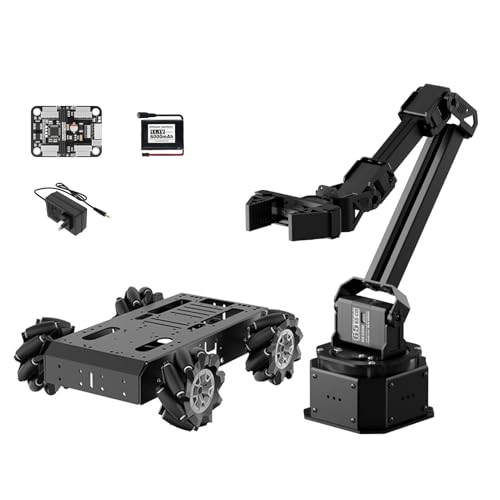
HIWONDER AI Robotic Arm Kit Imitation Learning VLA Model Development Embodied AI 6DOF Full Metal Robot Arm with Large AI Models K230 AI Vision Voice Interaction, NexArm Advanced Kit & Big Chassis
- Embodied AI Robotic Arm: Industrial-grade metal, high-precision servos
- Dual-Chip Architecture: ESP32 + AT32 for robust control
- High Precision & Reach: 500mm reach, ±2mm repeatability
As an affiliate, we earn on qualifying purchases.
As an affiliate, we earn on qualifying purchases.
Next Steps: Independent Evaluation and Market Adoption
Expect independent researchers and industry users to begin testing Muse Spark 1.2 in real-world coding environments in the coming months. Meta will likely continue refining the model based on feedback, possibly releasing updates or new versions. Meanwhile, competitors will monitor this launch closely, assessing whether Meta’s approach can capture significant developer adoption and market share. The broader industry will watch for how these innovations influence automation, safety, and cost in AI-assisted coding.

AI-Assisted Coding: A Practical Guide to Boosting Software Development with ChatGPT, GitHub Copilot, Ollama, Aider, and Beyond (Rheinwerk Computing)
As an affiliate, we earn on qualifying purchases.
As an affiliate, we earn on qualifying purchases.
Key Questions
What makes Muse Spark 1.2 different from previous Meta models?
Muse Spark 1.2 features co-training with Muse Code, a dedicated coding agent, and supports long-horizon tasks with a 1 million token context window, aiming for higher accuracy and safety in autonomous coding.
How does Meta’s pricing compare to other AI coding tools?
Meta’s models are priced at approximately $0.40 per benchmark task, making them among the most cost-efficient for their performance level, and they are intentionally priced to undercut competitors to attract developer adoption.
What are the main limitations of Muse Spark 1.2 so far?
Independent testing has not yet confirmed its performance outside benchmarks. Its lower hallucination rate is partly due to increased abstention, which may indicate a trade-off between safety and capability in real-world scenarios.
When will independent evaluations of Muse Spark 1.2 be available?
Expect independent testing results within the next few months as researchers and industry users begin applying the model in practical coding environments.
Will Meta release more features or updates soon?
While specific plans are not confirmed, Meta is likely to continue refining Muse Spark 1.2 and Muse Code based on initial feedback, potentially releasing updates to improve long-term performance and safety.
Source: ThorstenMeyerAI.com