
📊 Full opportunity report: Pre-1980 Fixer-Upper Risks? The Role Of Pre-Demo Condition Evaluations on IdeaNavigator AI — validation score, market gap, and execution plan.

Turn your quiet moments into listening time
- Thousands of audiobooks, podcasts and originals
- Listen on your phone, tablet or Echo — also offline
- Cancel anytime
TL;DR
A new service offers pre-demo condition evaluations for pre-1980 fixer-upper homes, helping DIY buyers assess risks and costs before renovation. This approach aims to reduce unexpected surprises and overruns.
A new service is emerging to provide pre-demolition condition verdicts for pre-1980 fixer-upper homes, targeting DIY buyers. This approach aims to help buyers identify potential hidden hazards and estimate renovation costs before breaking down walls, thereby reducing the risk of costly surprises. The service combines guided phone scans with mail-in testing kits, offering a wall-by-wall assessment that can influence buy-or-walk decisions and prevent expensive overruns at closing. This development is significant amid a housing market where most affordable starter homes predate 1980, and where traditional inspections often fall short in revealing hidden hazards.
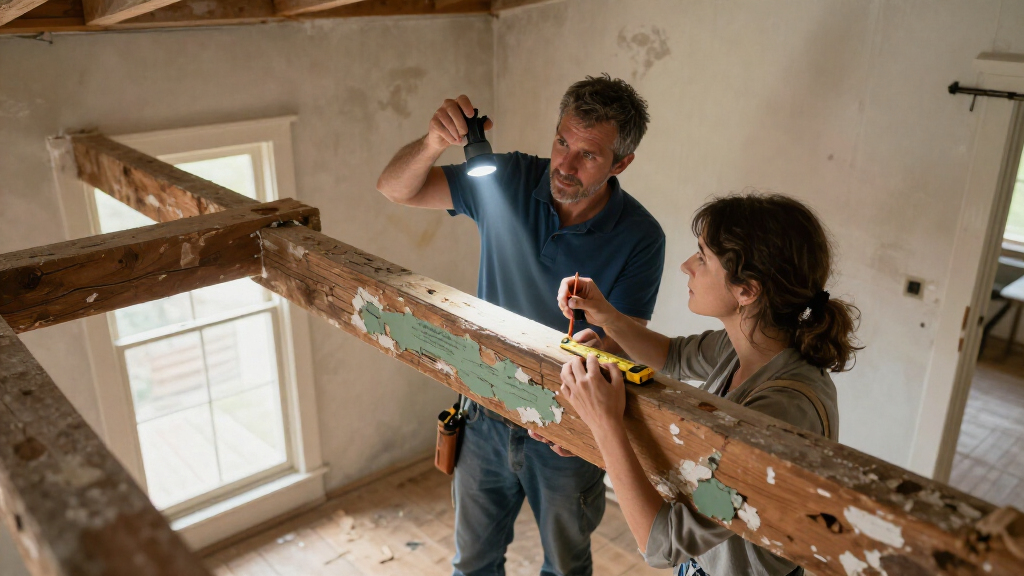
The core of this new workflow involves a guided phone-based inspection of key areas such as electrical panels, crawlspaces, and supply lines, combined with mail-in kits for suspect materials like asbestos and galvanized pipes. The service returns a detailed report on the likely contents and the opening costs associated with each wall, giving DIY buyers a clearer picture of what to expect during demo. The goal is to offer a fixed-fee verdict per house, with an optional upsell to contractor-matched remediation quotes, creating a streamlined risk assessment process for buyers who plan to renovate on weekends and savings.
Market validation involves selling twenty such verdicts to pre-demo buyers and then comparing these predictions against actual findings once walls are opened. Success will be measured by the accuracy of predictions and the willingness of buyers to refer the service to others. This approach aims to address the common problem where hidden hazards like cloth-wrapped wiring or asbestos delay projects, increase costs, and lead to unexpected overruns—sometimes exceeding forty thousand dollars—after demolition begins.
Implications for DIY Home Renovators
This development could significantly reduce the financial and safety risks faced by DIY millennial buyers of pre-1980 homes. By providing a wall-by-wall assessment before demolition, buyers can make more informed decisions, avoid costly surprises, and better plan their renovation budgets. It also offers a new revenue stream for service providers and a potential shift in how pre-purchase inspections are conducted for older homes, emphasizing remote and quick assessments over traditional in-person evaluations.
asbestos testing kit for home renovation
As an affiliate, we earn on qualifying purchases.
As an affiliate, we earn on qualifying purchases.
Background on Pre-Demo Risks in Older Homes
Most affordable starter homes in the United States now predate 1980, meaning they often contain hazardous materials like asbestos, cloth-wrapped wiring, and galvanized pipes. Traditional home inspections frequently miss these hazards until walls are opened, leading to delays and unexpected costs. Historically, buyers relied on visual inspections and limited testing, which often proved insufficient for revealing hidden dangers. As housing stock ages, the need for more precise, pre-demo evaluations has grown, especially among DIY buyers who lack access to extensive contractor assessments.
Recent technological advances, including guided phone scans and mail-in testing kits, have made remote assessments more feasible. Pilot programs testing such workflows aim to validate whether these tools can reliably predict what lies behind walls, thereby reducing risks associated with renovation projects.
As an affiliate, we earn on qualifying purchases.
Uncertainties About Accuracy and Adoption
It is not yet clear how reliably the guided phone scans and mail-in kits will predict actual conditions once walls are opened. The pilot testing phase will determine the accuracy of predictions and whether buyers find the service valuable enough to adopt widely. Additionally, questions remain about the cost-effectiveness and scalability of this approach across diverse housing markets and older homes with varying construction standards.
As an affiliate, we earn on qualifying purchases.
Next Steps for Validation and Expansion
The pilot program plans to sell twenty pre-demo verdicts, then analyze the correlation between predictions and actual findings after demolition. Success could lead to broader adoption among DIY buyers and renovation professionals. Further development may include refining testing protocols, expanding the range of hazardous materials assessed, and integrating the service into broader home purchase and renovation workflows. Industry stakeholders will watch closely to see if this approach can become a standard part of pre-purchase due diligence for older homes.
home demolition risk assessment kit
As an affiliate, we earn on qualifying purchases.
As an affiliate, we earn on qualifying purchases.
Key Questions
How accurate are the pre-demo condition verdicts currently?
The accuracy is still being evaluated through pilot testing. Initial results will inform whether predictions reliably match actual conditions once walls are opened.
What materials are tested with the mail-in kits?
The kits target suspect materials such as asbestos, galvanized pipes, and cloth-wrapped wiring, common hazards in homes built before 1980.
How much does the service cost?
The service offers a fixed fee per house for the wall-by-wall verdict, with optional upsells for contractor-matched remediation quotes. Exact pricing is still being finalized during the pilot phase.
Will this replace traditional home inspections?
It aims to complement traditional inspections by providing detailed insights specific to demolition risks, especially for older homes where hazards are often hidden behind walls.
When will this service be available for wider use?
If pilot testing proves successful, wider availability could follow within the next year, with potential expansion to other types of older homes and renovation markets.
Source: IdeaNavigator AI
Halloween Picks
halloween
As an affiliate, we earn on qualifying purchases.