📊 Full opportunity report: Apple Is Reaching For Chinese Memory. Europe Doesn’t Even Have That Option. on ThorstenMeyerAI.com — validation score, market gap, and execution plan.
TL;DR
Apple is lobbying US authorities to purchase memory chips from China’s CXMT, exposing its reliance on Chinese supply. Europe, lacking similar options, faces greater vulnerability in the global chip shortage.
Apple is lobbying Washington for permission to buy memory chips from the Chinese manufacturer CXMT, a move confirmed by sources familiar with the matter. This development underscores Apple’s efforts to secure critical components amid a global memory shortage and highlights the company’s ability to leverage US policy and China’s manufacturing capacity. The move matters because it reveals the extent of Apple’s dependence on Chinese memory supply and exposes Europe’s lack of comparable options, raising questions about regional supply chain resilience.
This week, reports emerged that Apple is actively lobbying US authorities to approve the purchase of memory chips from CXMT, a Chinese company on the Pentagon’s blacklist. The request follows Apple’s recent price hikes on Macs and iPads, which the company attributes to a global memory shortage. Apple, the most well-funded hardware company globally, has multiple options, including sourcing from Micron in the US or lobbying in Washington, but the Chinese supplier presents a strategic fallback, especially in times of supply constraints.
In contrast, Europe has little to no capacity to pursue similar strategies. The EU manufactures less than 10% of the world’s semiconductors by value, with almost all memory chips, including high-performance HBM, produced outside Europe—mainly in East Asia and the US. European companies have minimal influence over global memory prices or supply chains, and existing policies and subsidies are insufficient to develop domestic manufacturing at scale. The current shortage has driven memory prices up roughly four to six times year-over-year, with Europe paying the highest prices as a price-taker.
While Europe has some critical chokepoints, such as ASML’s monopoly on EUV lithography, it lacks the manufacturing capacity to produce advanced memory chips domestically. The EU’s ambitious goal to reach a 20% share of the global chip market by 2030 has been widely viewed as unrealistic, with current projections suggesting only around 11.7% and a cost of over €250 billion to meet targets. Major projects like Intel’s Magdeburg fab face delays, and autarky in advanced fabrication remains unlikely in the foreseeable future.
Apple is reaching for Chinese memory. Europe doesn’t even have that option.
The shortage exposes America’s dependence — and Europe’s far more brutally. Apple has a domestic supplier, political weight, and the China option. Europe has no memory of its own, no seat at the table, no leverage on what counts.
- EU makes < 10% of the world’s semiconductors
- Effectively no DRAM, no HBM from Europe
- 3–4 memory makers worldwide — none European
- Pure price-taker: memory ~4× in 3 quarters
- ASML: EUV monopoly — no leading-edge chip without it
- Zeiss: precision optics, unrivalled worldwide
- imec · CEA-Leti · Fraunhofer: world-class research
- Infineon, NXP, STMicro: automotive · power · SiC
The shortage is a sovereignty test — Europe fails on supply but still holds the leverage in its hand. If even Apple can’t buy its way out, Europe’s answer isn’t to buy its way in, but to run two tracks: press the unique chokepoints as real leverage — and cut dependence wherever it can without Brussels: local-first, open weights, quantization, right-sized hardware. Bury the 20% dream, defend what’s yours, need less.
Implications of Apple’s Chinese Memory Strategy for Europe
Apple’s move to seek Chinese memory chips underlines its strategic dependence on external suppliers and the US-China relationship. For Europe, the situation exposes a critical vulnerability: without the ability to pursue similar procurement strategies, it remains heavily reliant on East Asian manufacturing and vulnerable to supply disruptions. This dependence could impact European tech industries, increase costs, and hinder supply chain resilience in a crisis. The episode emphasizes the importance of building regional supply chain chokepoints, such as advanced lithography and specialized fabrication, to reduce reliance on external sources and improve security in critical tech sectors.
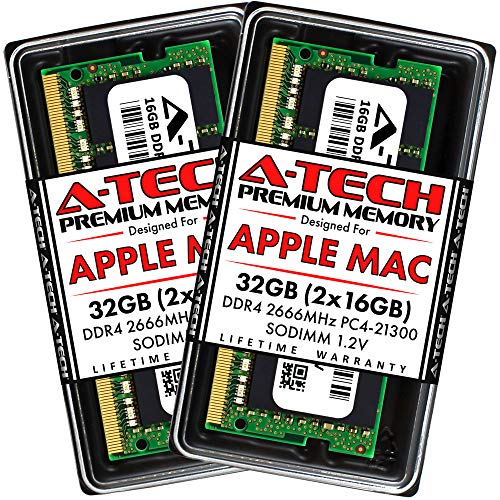
A-Tech 32GB Kit (2x16GB) RAM for Apple iMac & Mac mini (2018, 2019 & 2020) | DDR4 2666 MHz SODIMM PC4-21300 / PC4-21333 260-Pin SO-DIMM Memory Upgrade
- Total Capacity: 32GB (2x16GB) Kit
- Memory Speed: DDR4 2666/2667 MHz
- Form Factor: 260-Pin SO-DIMM
As an affiliate, we earn on qualifying purchases.
As an affiliate, we earn on qualifying purchases.
Europe’s Semiconductor Manufacturing Limitations and Strategic Challenges
Europe produces less than 10% of the world’s semiconductors, with a shrinking number of domestic memory chip makers—none of which are European. The global memory market is dominated by South Korean and US companies, with East Asian fabrication facilities controlling the supply chain. Europe’s efforts to increase its market share through initiatives like the EU Chips Act have fallen short, with projections showing only partial progress and significant funding gaps. Major projects aimed at expanding domestic fabrication capacity, such as Intel’s plant in Magdeburg, face delays or cancellations, underscoring the difficulty of developing independent manufacturing at the cutting edge.
Meanwhile, Europe controls critical upstream manufacturing chokepoints, notably ASML’s monopoly on EUV lithography machines, which are essential for producing advanced chips. The US export controls against China also depend on Dutch cooperation, highlighting Europe’s strategic position. However, Europe’s inability to produce high-performance memory chips internally leaves it vulnerable to external supply shocks, especially as global demand for AI and high-performance computing surges.
“Europe’s semiconductor industry remains heavily dependent on external supply chains, and current policies are insufficient to develop independent manufacturing at scale.”
— European Commission official

Gettysburg and Stories of Valor – The Civil War
As an affiliate, we earn on qualifying purchases.
As an affiliate, we earn on qualifying purchases.
Unclear Impact of US-China Tensions on European Supply Chains
It remains uncertain how ongoing US-China tensions and export controls will influence Europe’s access to critical manufacturing equipment and materials. While Europe controls key chokepoints like ASML, its capacity to develop independent memory chip production is limited, and the future of global supply chain stability under geopolitical pressures is still evolving. The potential for increased restrictions or disruptions remains a significant unknown.
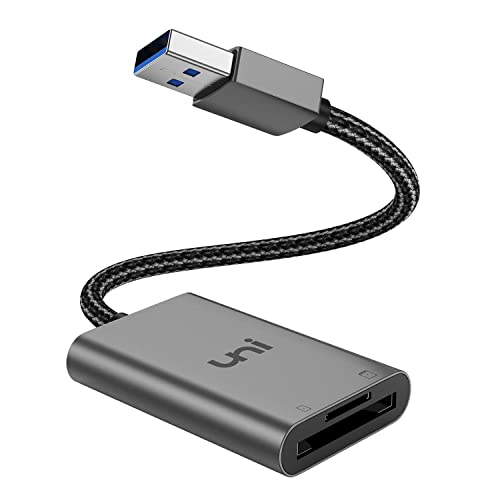
uni SD Card Reader, High-Speed USB 3.0 to Micro SD Card Adapter for Laptop
- Fast Data Transfer: 5Gbps transfer speed with USB 3.0
- Simultaneous Read & Write: Supports two cards at once
- Compact & Durable Design: Spring-loaded, braided cable, aluminum case
As an affiliate, we earn on qualifying purchases.
As an affiliate, we earn on qualifying purchases.
Next Steps for Europe’s Semiconductor Strategy and Supply Resilience
Europe is likely to continue emphasizing building strategic chokepoints, such as expanding capabilities at ASML and investing in advanced packaging and new memory architectures through initiatives like the EU Chips Act 2.0. However, achieving significant domestic fabrication capacity within the next few years appears unlikely. Monitoring US-China policy developments and Europe’s ability to leverage existing strengths will be critical in shaping its future supply resilience. Additionally, efforts to diversify supply sources and strengthen regional partnerships may become more prominent.
Design Rules in a Semiconductor Foundry
As an affiliate, we earn on qualifying purchases.
As an affiliate, we earn on qualifying purchases.
Key Questions
Why is Apple lobbying Washington to buy Chinese memory chips?
Apple is seeking US approval to purchase memory chips from CXMT, a Chinese manufacturer, to mitigate supply shortages and secure critical components amid global chip market constraints.
How dependent is Europe on external memory chip supplies?
Europe produces less than 10% of the world’s semiconductors, with almost all high-performance memory chips manufactured outside the continent, mainly in East Asia and the US.
What are Europe’s main strategic chokepoints in semiconductor manufacturing?
The most significant is ASML’s monopoly on EUV lithography machines, essential for manufacturing advanced chips. Europe also has research and design capabilities but lacks large-scale fabrication facilities for high-end memory chips.
Could Europe develop its own memory chip manufacturing capacity?
Current estimates suggest that building domestic memory fabrication at scale would require over €250 billion and many years, making it unlikely within the near term.
What does this mean for Europe’s technology independence?
Europe remains heavily reliant on external supply chains, especially in memory manufacturing, which poses risks for future technological sovereignty and resilience in a geopolitical crisis.
Source: ThorstenMeyerAI.com