
TL;DR

Turn your quiet moments into listening time
- Thousands of audiobooks, podcasts and originals
- Listen on your phone, tablet or Echo — also offline
- Cancel anytime
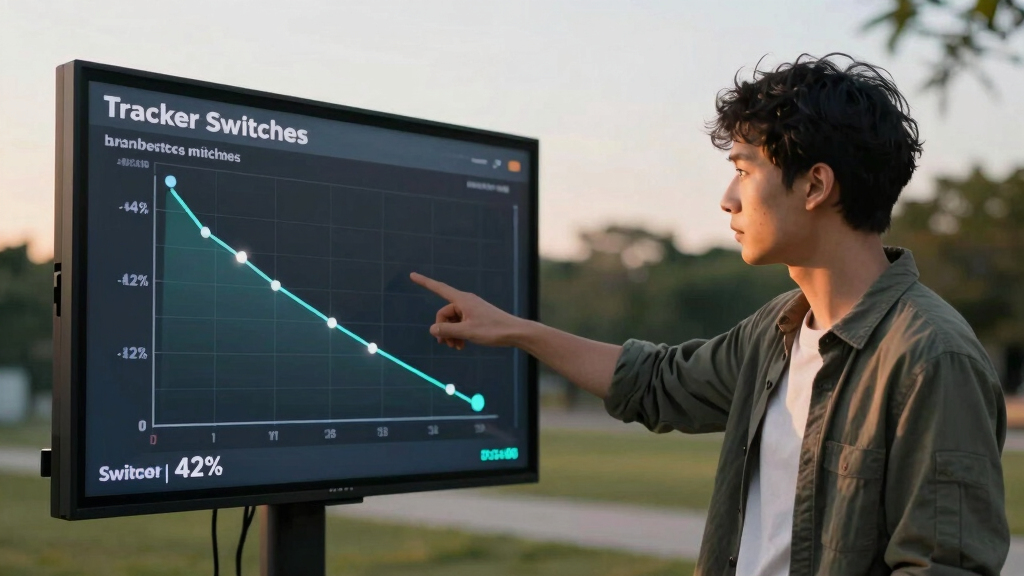
Public benchmark data reveals that CORVUS ISR’s latest AI model decreases tracker identity switches by approximately 42%. This improvement is confirmed through synthetic scene testing with perfect ground truth. The development indicates significant progress in multi-object tracking technology.
Public benchmark testing confirms that the latest version of CORVUS ISR’s AI model reduces tracker identity switches by approximately 42%. This improvement was measured using synthetic scenes with perfect ground truth, making it a significant step forward in multi-object tracking technology.
The benchmark, conducted by CORVUS ISR, used a synthetic scene with fixed seed 1337, lasting 120 seconds, to compare the performance of the previous ‘greedy nearest-neighbour’ tracker against the newer ‘confirmed-track auction’ model. In a configuration with 150 movers at 2 frames per second, identity switches per minute dropped from 2,042 to 1,183, a 42.1% reduction. In a denser scenario with 400 movers, switches decreased from 14,032 to 8,040, a 42.7% reduction. These results are consistent across various stress tests, including lower frame rates, occlusion, and jitter conditions.
The benchmark employs a stricter metric than standard MOT challenge definitions, counting every change in track identity, including re-acquisitions and fragmentations. Both models maintain high detection rates, which are determined by sensor properties and are identical for both AI versions. The newer model’s improvements were achieved without sacrificing real-time performance, averaging around 1.2 milliseconds per sensor tick in typical scenarios.
Impact of Reduced Tracker Switches on Multi-Object Tracking
The 42% reduction in identity switches indicates a substantial enhancement in tracking stability, which is critical for applications such as surveillance, defense, and autonomous systems. Fewer switches mean more reliable tracking of objects over time, reducing errors and re-identifications that can compromise operational effectiveness. This progress demonstrates the potential for AI advancements to improve synthetic and real-world tracking performance, offering a clearer path toward more accurate wide-area motion imagery exploitation.
As an affiliate, we earn on qualifying purchases.
Background on CORVUS ISR and Benchmark Methodology
CORVUS ISR is a synthetic demonstration platform designed to evaluate multi-object tracking algorithms using perfect ground truth data. Its benchmark involves reproducible scenes with fixed seeds, enabling consistent comparison across tracker versions. The initial ‘greedy nearest-neighbour’ tracker served as a baseline, while the latest ‘confirmed-track auction’ incorporates advanced features such as track confirmation, velocity gating, and confidence decay. These developments are part of ongoing efforts to improve wide-area motion imagery analysis, with the current tests conducted in controlled synthetic environments to measure pure algorithmic performance.
“The 42% reduction in identity switches demonstrates a significant step forward in multi-object tracking stability.”
— an anonymous researcher
As an affiliate, we earn on qualifying purchases.
Uncertainties About Real-World Performance
While the benchmark results are promising, it remains unclear how these improvements will translate to real-world scenarios, where sensor noise, occlusion, and environmental factors can differ significantly from synthetic conditions. The current data is based solely on synthetic scenes with perfect ground truth, and real-world testing is required to validate the AI’s practical effectiveness.
As an affiliate, we earn on qualifying purchases.
Next Steps for Validation and Deployment
CORVUS ISR plans to conduct real-world testing and deploy the updated AI in operational environments to assess its performance outside synthetic benchmarks. Further development may include refining the model to handle more complex scenarios, with ongoing public benchmarks allowing transparent comparison of future versions. The company encourages users to reproduce the benchmark results by running the ‘Run benchmark’ feature on their platform.
As an affiliate, we earn on qualifying purchases.
Key Questions
What does a 42% reduction in tracker switches mean for practical applications?
A 42% reduction indicates more stable and reliable object tracking, which enhances the accuracy of surveillance, defense, and autonomous systems by reducing errors and re-identifications over time.
Are these benchmark results applicable to real-world scenarios?
Not directly. The results come from synthetic scenes with perfect ground truth. Real-world environments involve additional challenges, and further testing is needed to confirm practical effectiveness.
How can I verify these benchmark results myself?
CORVUS ISR provides a public demo where users can run the ‘Run benchmark’ feature to reproduce the results using the same synthetic scene and models.
What improvements does the new AI model include over the previous version?
The newer model adds features like track confirmation, three-tier auction association, velocity gating, noise-scaled reservation, and confidence-decayed coasting, which collectively improve tracking stability.
Source: ThorstenMeyerAI.com
Halloween Picks
halloween
As an affiliate, we earn on qualifying purchases.