📊 Full opportunity report: Single Digits: The April That Closed the Open-Weight Gap on ThorstenMeyerAI.com — validation score, market gap, and execution plan.
TL;DR
Multiple open-weight AI models released in April 2026 have closed the performance gap with closed proprietary models across major benchmarks. This shift impacts AI economics, model selection strategies, and regulatory considerations for enterprises.
In April 2026, open-weight AI models achieved benchmark scores on par with the leading closed proprietary models, marking a major shift in AI economics and enterprise strategy. This development challenges the longstanding premium placed on closed models and shifts the competitive landscape.
Over the past month, six labs released significant open-weight models, including DeepSeek V4-Pro, Qwen 3.6-35B-A3B, Llama 4, Gemma 4, Mistral Small 4, and Zhipu AI’s GLM-5.1. Benchmarks across various evaluation categories—such as reasoning, coding, multimodal tasks, and tool use—show that open models now match or nearly match the performance of closed models like those from Anthropic, OpenAI, and Google. Notably, the performance gap in key metrics has narrowed to a single digit, with differences as small as 1.5 points in some cases. This convergence is driven by advances in distillation techniques, which allow open models to approximate the reasoning and capabilities of proprietary models more closely than ever before. The result is a rapid reduction in the cost differential for enterprise deployment, with open models now offering comparable performance at a fraction of the cost of API-based closed models.Implications for AI Economics and Enterprise Strategies
This shift fundamentally alters the economic calculus for organizations deploying AI. Previously, proprietary models were seen as essential for high-stakes or complex tasks, justified by their superior performance and the premium pricing models. Now, with open weights matching performance, enterprises can self-host and customize models at a fraction of the cost, reducing reliance on closed APIs. This democratizes access to advanced AI, accelerates innovation, and forces closed labs to re-evaluate their offerings. Additionally, the convergence influences licensing, sovereignty concerns, and regulatory debates, as open models become more attractive for organizations seeking control and transparency.
enterprise AI model hosting solutions
As an affiliate, we earn on qualifying purchases.
As an affiliate, we earn on qualifying purchases.
Recent Trends in Open-Weight Model Development
Throughout early 2026, multiple research labs and companies released high-capacity open-weight models, including DeepSeek V4-Pro, Qwen 3.6-35B-A3B, and Llama 4.0. These models benefited from advanced distillation pipelines, leveraging open base weights and engineering discipline rather than large PhD teams. Prior to this, the industry largely viewed closed models as the only viable option for cutting-edge performance, with open models trailing significantly. The recent April releases demonstrate that the performance gap has shrunk to a single digit across key benchmarks such as reasoning, code generation, and multimodal tasks. This progress is underpinned by empirical proof that distillation is scalable and effective at the frontier, challenging the traditional moat of proprietary weights.
“The recent benchmark results prove that open weights can now compete with closed models across all major evaluation categories.”
— DeepSeek AI researcher

Edge AI Model Distillation: Optimizing Deep Learning for Mobile, IoT, and Embedded Devices Using Knowledge Distillation, TinyML, Quantization, and … … Intelligent IoT and TinyML Applications)
As an affiliate, we earn on qualifying purchases.
As an affiliate, we earn on qualifying purchases.
Uncertainties About Long-Term Impact and Regulation
While benchmark performance has improved dramatically, it remains unclear how open models will perform in real-world enterprise deployments at scale, especially concerning robustness, safety, and regulatory compliance. Additionally, the potential for closed labs to re-raise the performance bar with upcoming models like GPT-6 or Gemini 3 could temporarily re-establish their dominance. The regulatory landscape may also shift, with proposals for compute restrictions or licensing controls that could influence future development and deployment strategies. These factors are still evolving and could alter the trajectory of open-weight model adoption.
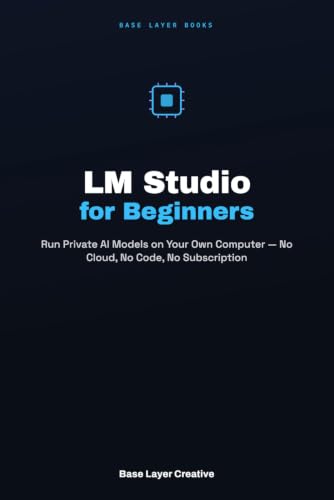
LM Studio for Beginners: Run Private AI Models on Your Own Computer — No Cloud, No Code, No Subscription
As an affiliate, we earn on qualifying purchases.
As an affiliate, we earn on qualifying purchases.
Next Steps for Enterprises and Industry Leaders
Enterprises should consider testing open-weight models in pilot projects, especially if their current AI spend exceeds €1 million annually on closed APIs. The rapid convergence suggests that self-hosting and customizing open models may become more cost-effective and strategically advantageous. Industry leaders are likely to focus on developing platform offerings that integrate long-term memory, tools, and organizational context, diminishing the importance of underlying model differences. Additionally, regulatory developments may impose new constraints on open-weight training and inference, which organizations will need to monitor closely.
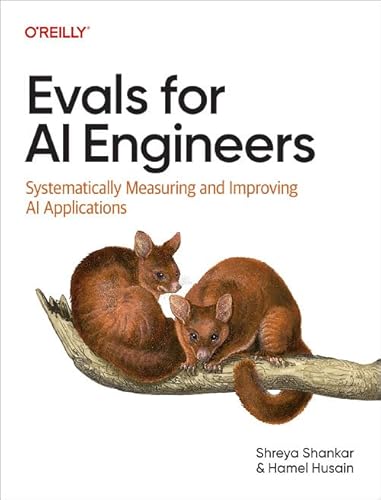
Evals for AI Engineers: Systematically Measuring and Improving AI Applications
As an affiliate, we earn on qualifying purchases.
As an affiliate, we earn on qualifying purchases.
Key Questions
What does the closing performance gap mean for AI pricing?
As open models match closed models’ performance, the premium paid for proprietary API access is increasingly unjustified, leading to potential cost savings for enterprises and a shift toward self-hosted solutions.
Will closed labs continue to improve their models faster?
Predictions suggest that closed labs will raise the bar with upcoming models like GPT-6 and Gemini 3, but the open-weight models are catching up rapidly, often within months.
How might regulation impact open-weight AI development?
Regulatory proposals, including compute restrictions and licensing controls, could influence future open-weight releases, potentially favoring proprietary models or restricting open training efforts.
What does this mean for AI sovereignty and licensing?
Open models with permissive licenses are gaining popularity, but licensing restrictions—such as those on Llama 4—remain a key procurement consideration, affecting deployment choices.
Source: ThorstenMeyerAI.com