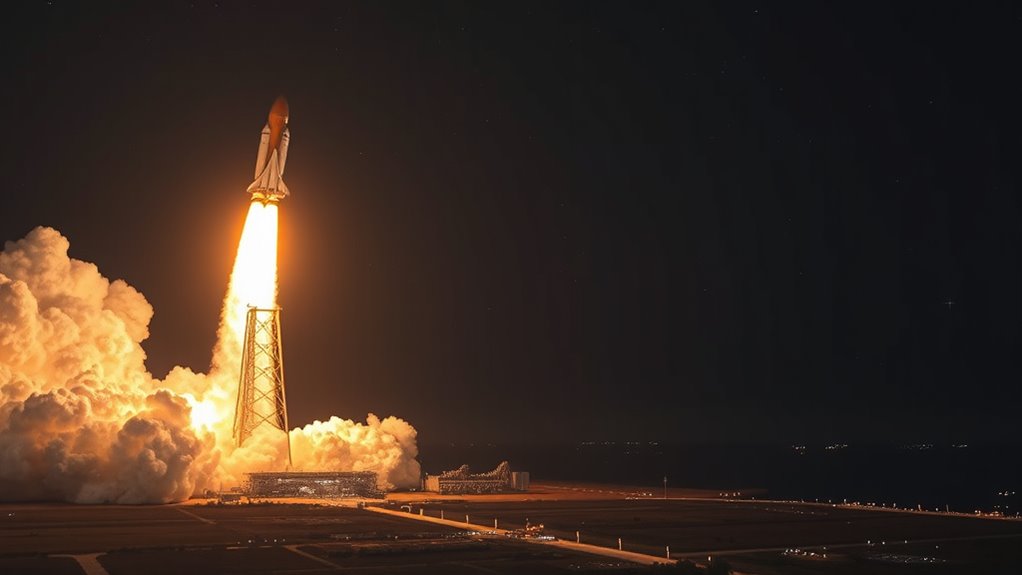

Upcoming space missions aim to explore Mars, the Moon, and beyond, using advanced technologies and international teamwork. These missions focus on understanding planetary geology, searching for signs of water or past life, and testing new exploration methods. Your curiosity can help you stay informed about these exciting developments. If you keep exploring, you’ll discover how scientists and astronauts are pushing the boundaries of what we understand about our universe.
Key Takeaways
- Upcoming missions focus on Mars, Moon, and beyond to study planetary geology and search for signs of water and life.
- New training programs incorporate virtual reality simulations to prepare astronauts for extraterrestrial surface exploration.
- Missions aim to collect diverse geological samples to understand planetary histories and assess resource availability.
- Advanced exploration strategies emphasize rapid geological feature interpretation for operational safety and scientific success.
- International collaborations and robotic missions complement crewed efforts, expanding our understanding of the solar system.
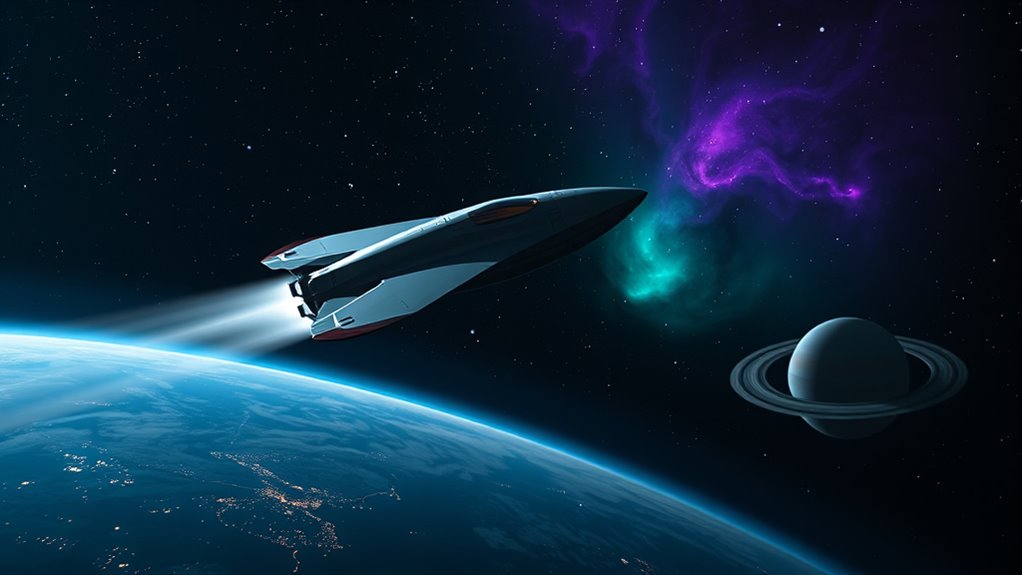
Have you ever wondered how humanity pushes the boundaries of what’s possible? Every new mission extends our understanding of the universe and brings us closer to uncovering the secrets of distant worlds. When planning these missions, scientists and engineers focus heavily on planetary geology—the study of rocks, soils, and landscapes on other planets and moons. This knowledge helps determine where to land, what resources might be available, and how to navigate unfamiliar terrains. For astronauts, mastering planetary geology isn’t just academic; it’s a crucial part of their training. During simulated expeditions on Earth, future explorers learn to analyze soil samples, identify mineral deposits, and recognize geological features that could indicate water or signs of past life. This hands-on experience prepares them for the challenges they’ll face on alien worlds, where understanding the geology could mean the difference between success and failure.
As upcoming missions gear up to explore Mars, the Moon, and beyond, the focus on astronaut training becomes even more critical. These training programs are rigorous, incorporating virtual reality simulations that replicate the harsh conditions of space and extraterrestrial surfaces. They also include physical drills, emergency procedures, and teamwork exercises to ensure astronauts can operate effectively in extreme environments. The goal is to equip crew members not only with technical skills but also with the adaptability needed to handle unpredictable situations. Given the complex geology of planets like Mars—known for its vast volcanoes, canyon systems, and layered sediments—astronauts must be able to quickly interpret geological features and make decisions on the spot. This ability is essential for scientific exploration, sample collection, and ensuring safety during extravehicular activities. Furthermore, understanding the horsepower of electric dirt bikes can inspire innovative tools and equipment for planetary exploration.
The integration of planetary geology into astronaut training underscores the interdisciplinary nature of space exploration. It’s no longer just about flying into space; it’s about understanding the environments you’re entering and being prepared for every possible scenario. As new missions are planned, scientists continue to develop advanced training modules, incorporating lessons learned from past landings and robotic missions. These preparations aim to maximize scientific yield while keeping crew members safe. Ultimately, the combination of detailed geological knowledge and holistic astronaut training represents humanity’s commitment to exploring the cosmos intelligently and responsibly. With each mission, we not only push technological boundaries but also deepen our understanding of the universe’s history and the potential for life beyond Earth.

Fascinations Metal Earth Mars Rover 3D Metal Model Kit
Gift Envelope Includes – Unassembled Model Easy to Follow Instructions
As an affiliate, we earn on qualifying purchases.
As an affiliate, we earn on qualifying purchases.
Frequently Asked Questions
What Are the Long-Term Sustainability Plans for Mars Colonies?
You focus on creating a sustainable Mars habitat by implementing resource recycling systems that minimize waste and maximize reuse. Long-term plans include developing closed-loop life support systems, using local resources for building materials, and harnessing solar energy. These strategies guarantee your Mars colony remains self-sufficient, reduces dependence on Earth, and adapts to the harsh environment, making your settlement viable for future generations.
How Will Space Debris Be Managed During Future Missions?
Did you know there are over 23,000 pieces of space debris larger than 10cm orbiting Earth? During future missions, you’ll see advanced collision avoidance systems in action, which detect and track space debris to prevent collisions. These systems help guarantee the safety of spacecraft and astronauts by actively managing space debris, reducing risks, and maintaining a clear path for exploration. This proactive approach is vital for sustainable space travel.
What Advancements Are Needed for Human Life Support Systems?
You need to focus on technological improvements to enhance life support systems, making them more reliable and efficient. Advances should include better air filtration, water recycling, and waste management to sustain longer missions. Incorporating AI and automation can improve system responsiveness and reduce human error. Investing in lightweight, durable materials will also help. These innovations guarantee astronauts’ safety, comfort, and health during extended space travel, supporting the future of human exploration.
How Will International Collaboration Evolve in Upcoming Space Projects?
Imagine space as a vast tapestry woven with international partnerships, each thread strengthening the whole. As you look ahead, collaboration frameworks will become more intricate, fostering seamless cooperation among nations. You’ll see more shared resources, joint missions, and open data exchanges, turning space exploration into a united human endeavor. This evolution will make the cosmos a collaborative frontier, where your efforts and those of others blend into a powerful force for discovery.
What Are the Potential Risks of Asteroid Mining Missions?
You face several risks with asteroid mining, including the potential for asteroid impact during the mission, which could cause catastrophic damage. Mining hazards, such as equipment failure or unintended fragmentation of the asteroid, pose significant safety concerns. These dangers could lead to environmental damage or loss of valuable resources. Carefully planning and advanced technology are vital to mitigate these risks and ensure safe, successful asteroid mining operations.

Abacus Brands Virtual Reality Galaxy Gift Box – Illustrated Interactive VR Book and STEM Learning Activity Set
THE ULTIMATE GIFT EXPERIENCE! Discover the galaxy like never before, with over 80 pages of interactive content as…
As an affiliate, we earn on qualifying purchases.
As an affiliate, we earn on qualifying purchases.
Conclusion
As you follow these upcoming missions, remember you’re witnessing humanity’s greatest leap since the dawn of civilization. Each mission pushes boundaries beyond what you thought possible, turning science fiction into reality. Your curiosity fuels this incredible journey, and soon, we’ll uncover secrets of the universe that could change everything you know. Keep watching — because these missions are not just steps forward; they’re catapulting us into an era of discovery so vast, it’s almost unimaginable.

TOYANDONA Sun Earth Moon Orbital Model, Solar System Planetarium Model Solar System Project Kit for Kids Educational
DIY your own sun earth moon orbital planetarium model with this creative kit. This three dimensional model represents…
As an affiliate, we earn on qualifying purchases.
As an affiliate, we earn on qualifying purchases.

INCLY 15 PCS Geology Rock Pick Hammer Kit, 32oz Hammer & 3 PCS Digging Chisels Set for Rock Hounding, Gold Mining & Prospecting Equipment Tool Gear Shovel Musette Bag, Compass, Whistle, Wooden Chisel
Complete and Organized Set: Our INCLY 15 – piece kit includes a sturdy 32oz rock pick hammer, 3…
As an affiliate, we earn on qualifying purchases.
As an affiliate, we earn on qualifying purchases.