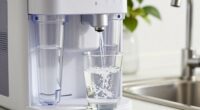
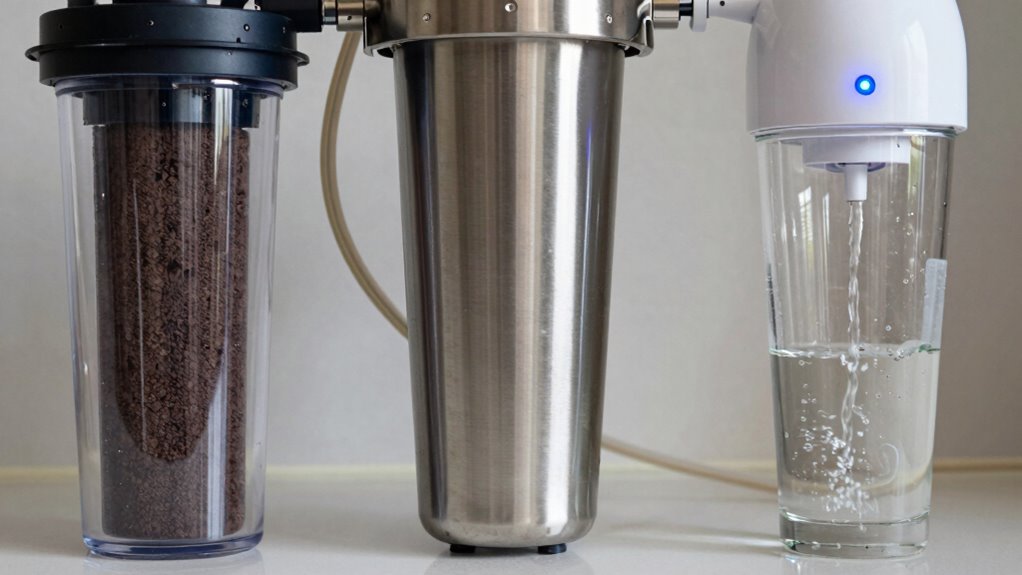
If you’re choosing between water filters, each type targets specific problems. Carbon filters improve taste by removing chlorine, odors, and organic pollutants but don’t eliminate dissolved salts or microbes. Reverse osmosis offers thorough purification by removing salts, heavy metals, and chemical pollutants, making your water very pure. UV purifiers kill bacteria and viruses, ensuring microbiological safety without chemicals. Understanding these differences will help you pick the right system for your needs and concerns.

Turn your quiet moments into listening time
- Thousands of audiobooks, podcasts and originals
- Listen on your phone, tablet or Echo — also offline
- Cancel anytime
Key Takeaways
- Carbon filters effectively improve taste, remove chlorine, odors, and organic contaminants, enhancing water flavor and freshness.
- Reverse osmosis systems provide comprehensive purification by removing salts, heavy metals, and dissolved chemical pollutants.
- UV filters disinfect water by killing bacteria and viruses without chemicals, ensuring microbiological safety.
- Choose based on specific contaminants: use carbon filters for organic compounds, RO for dissolved solids, and UV for biological threats.
- Maintenance varies: carbon filters are simple and inexpensive, RO requires regular membrane replacements, and UV needs periodic bulb changes.
best carbon water filter for tap water
As an affiliate, we earn on qualifying purchases.
As an affiliate, we earn on qualifying purchases.
Understanding the Main Types of Water Filters

Have you ever wondered which water filter best suits your needs? Choosing the right type depends on understanding the main options available. For example, activated carbon filters are excellent for removing chlorine and odors, while reverse osmosis (RO) systems eliminate contaminants like heavy metals. UV filters use ultraviolet light to kill bacteria and viruses. When considering water filter maintenance, each type requires specific care—carbon filters need regular replacement, RO systems demand periodic filter changes, and UV units need bulb replacements. Installation tips vary; carbon filters are typically easy to install under sinks, RO units may require more space and plumbing adjustments, and UV systems often need dedicated electrical connections. Knowing these basics helps you select and maintain your water filter effectively, ensuring safe, clean drinking water. Additionally, exploring content formats can enhance your understanding of the various filtration technologies available. Understanding these differences is crucial for ensuring your home has effective water filtration.
reverse osmosis water filtration system
As an affiliate, we earn on qualifying purchases.
As an affiliate, we earn on qualifying purchases.
What Problems Do Carbon Filters Solve?
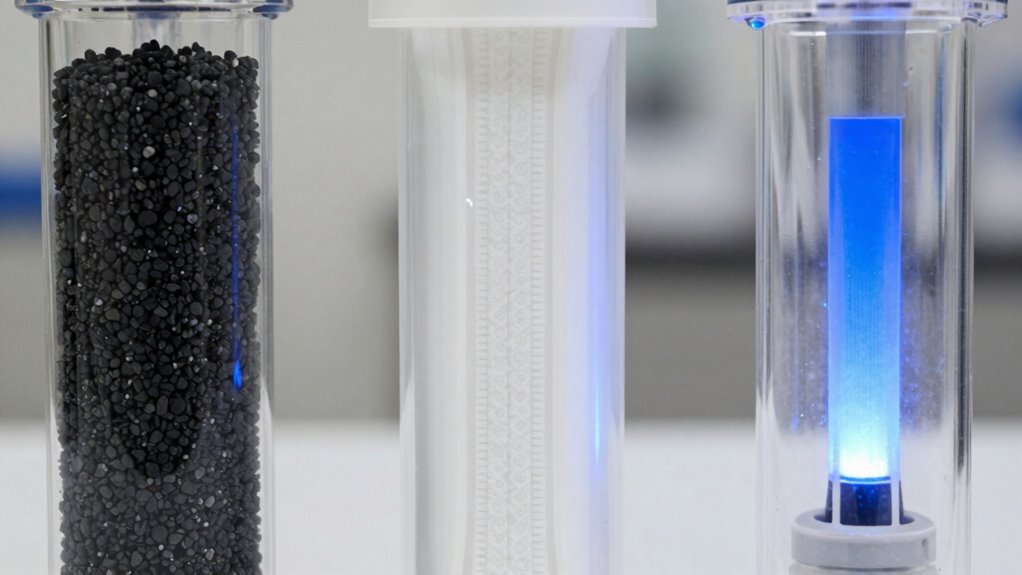
Carbon filters effectively remove chlorine and odors from your water, making it taste and smell better. They also eliminate organic contaminants that can pose health risks. As a result, your water becomes cleaner, fresher, and more enjoyable to drink. Additionally, using resilient landscaping techniques can further enhance your outdoor water management strategies. Implementing DIY water filtration methods can also improve the efficiency of your carbon filters. Furthermore, regular maintenance of carbon filters is essential for ensuring their optimal performance. It’s important to understand that, similar to how heat pumps are designed for efficiency, properly maintained carbon filters can significantly enhance water quality and reduce contaminants. Moreover, understanding the ethical implications of water filtration technologies can help consumers make informed choices about their water treatment options.
Removes Chlorine and Odor
When chlorine and unpleasant odors taint your tap water, a carbon filter can be a game-changer. It’s one of the most common water filter types used in various water purification methods because it effectively absorbs chlorine and reduces odors. This not only improves the water’s taste and smell but also makes it safer for daily use.
- Absorbs chlorine and chloramine compounds
- Eliminates musty or chemical odors
- Enhances overall water freshness
- Suitable for point-of-use filtration systems
Carbon filters are especially valuable if you’re concerned about chemical contaminants affecting your water quality. They’re a simple yet effective solution within water purification methods, providing immediate improvements without complex setups.
Eliminates Organic Contaminants
Sure! Here’s your revised article subheading content with the requested changes:
—
Wondering how to tackle organic contaminants in your tap water? Carbon filters excel at removing these pollutants, which include pesticides, herbicides, and other chemical pollutants. They absorb organic contaminants through a process called adsorption, trapping them in the filter’s charcoal. This not only reduces harmful chemicals but also lowers potential health risks. Additionally, healing trust in relationships can benefit from ensuring a safe and healthy environment. Here’s a quick overview:
| Contaminant Type | How Carbon Filters Help | Benefits |
|---|---|---|
| Organic Contaminants | Adsorption of chemicals | Safer, cleaner drinking water |
| Chemical Pollutants | Traps pesticides, herbicides | Reduced health risks |
| Total Organic Carbon | Reduces overall organic load | Better water quality |
Using a carbon filter helps eliminate these problematic substances, making your water safer and healthier to drink. Additionally, understanding water quality is essential for making informed choices about filtration methods. Incorporating eco-friendly practices in your water filtration can enhance overall environmental sustainability. Furthermore, color accuracy is crucial in ensuring that the water tastes fresh and appealing.
—
Let me know if you need further adjustments!
Improves Water Taste
Have you ever noticed that tap water can taste flat, chlorine-like, or metallic? That’s often due to impurities affecting water quality. Carbon filters effectively improve taste by removing these common contaminants. They target chlorine, which is a major culprit behind unpleasant flavors, and other volatile organic compounds. Proper filter maintenance is crucial to keep your water tasting fresh; neglecting it can lead to bacteria buildup or reduced filtration efficiency. Here’s what carbon filters can do for your water taste:
- Eliminate chlorine and chloramine
- Reduce organic impurities causing off-flavors
- Remove volatile compounds that cause odors
- Improve overall water freshness and palatability
Additionally, using AI tools to manage feedback on water quality can enhance customer satisfaction with filtration systems.
UV water purifier for bacteria and viruses
As an affiliate, we earn on qualifying purchases.
As an affiliate, we earn on qualifying purchases.
How Does Reverse Osmosis Remove Contaminants?

Reverse osmosis uses a thin membrane to filter out contaminants from your water by forcing it through under pressure. It effectively removes dissolved pollutants that other filters might miss, like salts and heavy metals. The membrane’s rejection mechanisms guarantee that only clean water passes through, leaving harmful particles behind. Additionally, using synthetic lubricants in systems that utilize reverse osmosis can enhance overall efficiency and longevity. Maintaining the right balance of support and boundaries in care practices can ensure optimal performance and safety for your family.
Membrane Filtration Process
How does reverse osmosis effectively remove contaminants from water? It relies on a semi-permeable membrane that filters out impurities by forcing water through under pressure. The membrane materials are designed for high filtration efficiency, blocking particles, salts, and larger molecules while allowing clean water to pass. These membranes are made from thin film composites or cellulose acetate, optimizing durability and performance. The process creates a barrier that prevents contaminants from crossing, ensuring only purified water reaches your tap. Key factors influencing filtration efficiency include pore size and membrane integrity. To maximize effectiveness, regular maintenance and monitoring of membrane condition are essential. This technology is especially adept at removing dissolved salts and larger organic molecules, which other filters might struggle to eliminate effectively.
Removal of Dissolved Pollutants
After water passes through the semi-permeable membrane in reverse osmosis systems, dissolved pollutants are effectively removed, leaving behind cleaner water. This process targets contaminants like salts, heavy metals, and chemicals that dissolve in water, ensuring they don’t reach your tap. Reverse osmosis also helps prevent algae growth by removing nutrients that algae need to thrive, aiding in algae prevention. Unlike some filters, it retains essential minerals, supporting water’s taste and health benefits. However, it eliminates many dissolved pollutants that other systems might miss, providing thorough purification. Keep in mind that while it’s highly effective at removing contaminants, it’s designed to balance purification with mineral retention, ensuring your water remains healthy and safe without stripping away beneficial minerals.
Contaminant Rejection Mechanisms
Contaminant rejection in reverse osmosis relies on the process’s ability to physically block impurities from passing through the membrane. As water is forced through a semi-permeable membrane, contaminants are left behind, enhancing filtration efficiency. Chemical interactions also play a role, as certain pollutants are rejected due to charge or molecular structure. The membrane’s tight pore size filters out particles, bacteria, and viruses effectively. To deepen your understanding, consider these factors:
- Size exclusion prevents large molecules and particulates from passing through
- Electrostatic charges repel or attract specific ions or molecules
- Molecular size determines whether a substance can traverse the membrane
- Chemical interactions contribute to rejection of certain dissolved pollutants
Together, these mechanisms guarantee high contaminant rejection rates in reverse osmosis systems.
As an affiliate, we earn on qualifying purchases.
Why Use UV Purifiers for Microbial Safety?
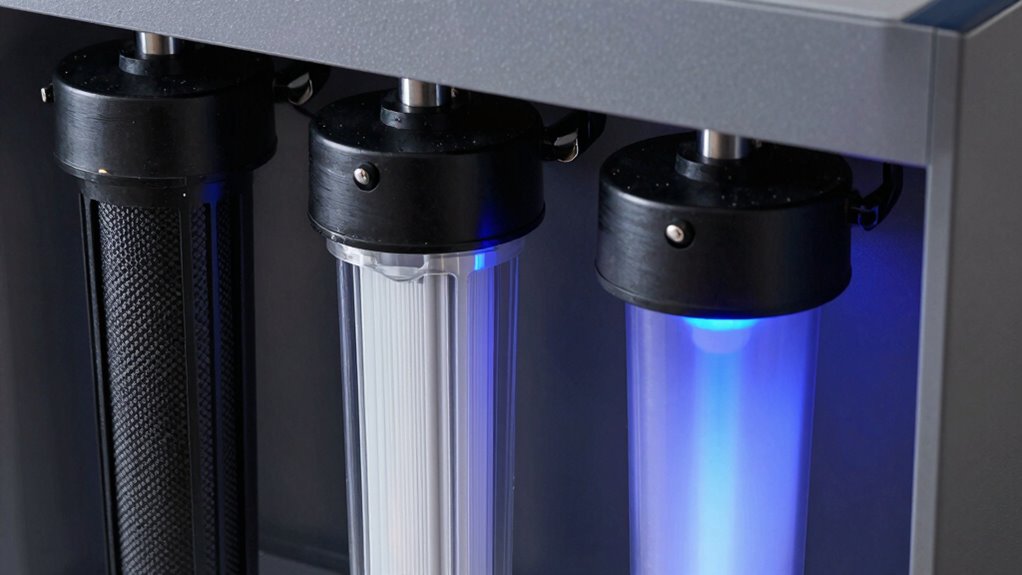
Have you ever wondered why UV purifiers are a popular choice for guaranteeing microbial safety in drinking water? It’s because UV sterilization is highly effective against microbial contamination. When water passes through a UV purifier, ultraviolet light penetrates microbial cells, damaging their DNA and preventing reproduction. This process quickly neutralizes bacteria, viruses, and other microorganisms, making water safe to drink. Unlike chemical treatments, UV sterilization doesn’t add anything to your water or alter its taste. It’s a fast, eco-friendly method that assures microbial safety without leaving residues. UV purifiers are especially useful in areas where microbial contamination is a concern, providing peace of mind knowing your water is free from harmful microorganisms that could cause illness.
Which Filters Improve Taste and Odor?

Wondering how to make your tap water taste fresher and smell better? Carbon filters are your best choice here. They effectively remove chlorine, volatile organic compounds, and other chemicals responsible for unpleasant odors and bad tastes. Unlike reverse osmosis, they retain beneficial minerals, ensuring mineral retention that supports health. Additionally, carbon filters have a lower environmental impact due to less water waste. Moreover, the adoption of universal basic income could facilitate greater access to clean water solutions for everyone.
Carbon filters improve water taste and smell by removing chemicals while preserving essential minerals and reducing environmental waste.
Key benefits include:
- Improving taste by removing chemical contaminants
- Eliminating odors caused by chlorine and organic compounds
- Preserving essential minerals for health
- Offering eco-friendly operation with minimal waste
Is Reverse Osmosis the Right Choice for You?
Is Reverse Osmosis the Right Choice for You?
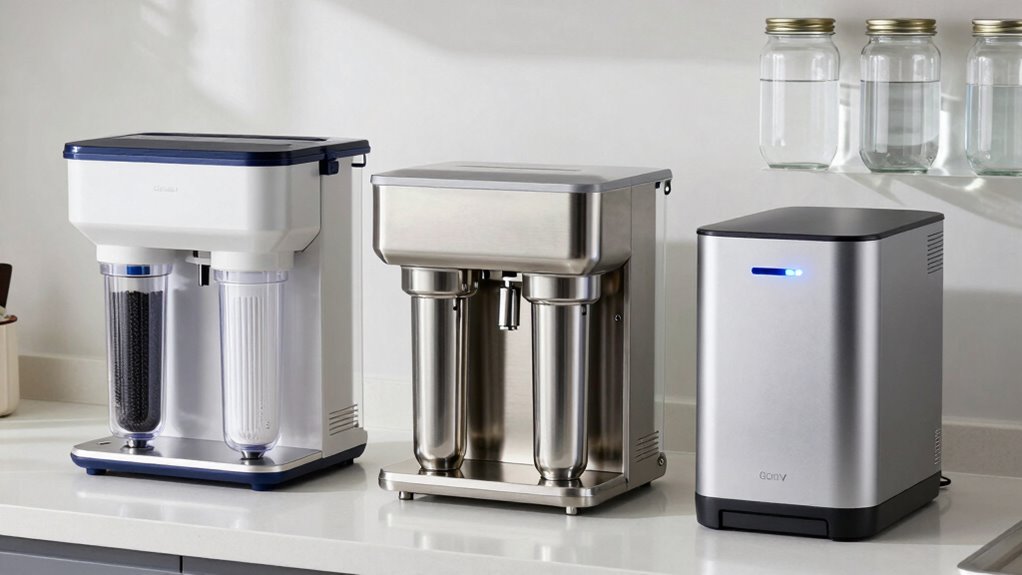
Is reverse osmosis (RO) the right choice for your water purification needs? If your goal is high water purity, RO is a powerful filtration technology that effectively removes contaminants, including heavy metals, salts, and microorganisms. It’s ideal if your water source has high levels of impurities or tastes off. RO systems use a semi-permeable membrane to filter out unwanted substances, providing clean, fresh water. However, it can also strip away beneficial minerals, so you might need mineral supplementation. If you prioritize thorough purification and are willing to invest in maintenance, RO is a reliable choice. Additionally, movie night planning tips can enhance your overall home environment, allowing you to enjoy a cozy atmosphere while focusing on hydration. However, be aware that ethical consumerism encourages individuals to consider the broader impact of their purchasing decisions, including the environmental footprint of water filtration systems. But if your water quality issues are minor or mainly involve taste and odor, other filtration options may suit you better. Consider your specific needs before opting for reverse osmosis. Additionally, it’s important to maintain a suitable humidity level in your environment, as this can affect both plant health and water quality.
Are UV Purifiers Suitable for Your Water Quality?
Sure! Here’s your revised content with the requested modifications:
—
While reverse osmosis offers thorough removal of many contaminants, it doesn’t address all water quality issues, especially biological ones. UV purifiers are effective against bacteria, viruses, and other microorganisms, making them suitable if biological contamination is a concern. Thanks to recent UV technology advancements, these purifiers now provide better efficiency and faster disinfection, all while preserving mineral retention in your water. Additionally, proper gear care can enhance your overall cycling experience by ensuring you stay healthy and hydrated. However, UV purifiers don’t filter out chemical pollutants or heavy metals, so they work best when paired with other filtration systems. Research shows that spiritual retreats can also provide mental clarity, which may enhance your overall well-being. Consider these points:
- They effectively neutralize biological threats
- They maintain essential minerals
- They don’t alter taste or odor
- They require clear water for ideal performance
Moreover, regular maintenance of UV systems ensures their optimal efficiency and prolongs their lifespan. If biological safety is your priority, UV purifiers are a suitable choice, but assess your water quality thoroughly. Additionally, incorporating safe home products can enhance your overall health and comfort while ensuring your water is clean and safe. Understanding work-life harmony can also contribute to your overall well-being, helping you manage stress effectively.
—
Let me know if you need any further modifications!
How to Choose the Best Water Filter for Your Needs and Budget
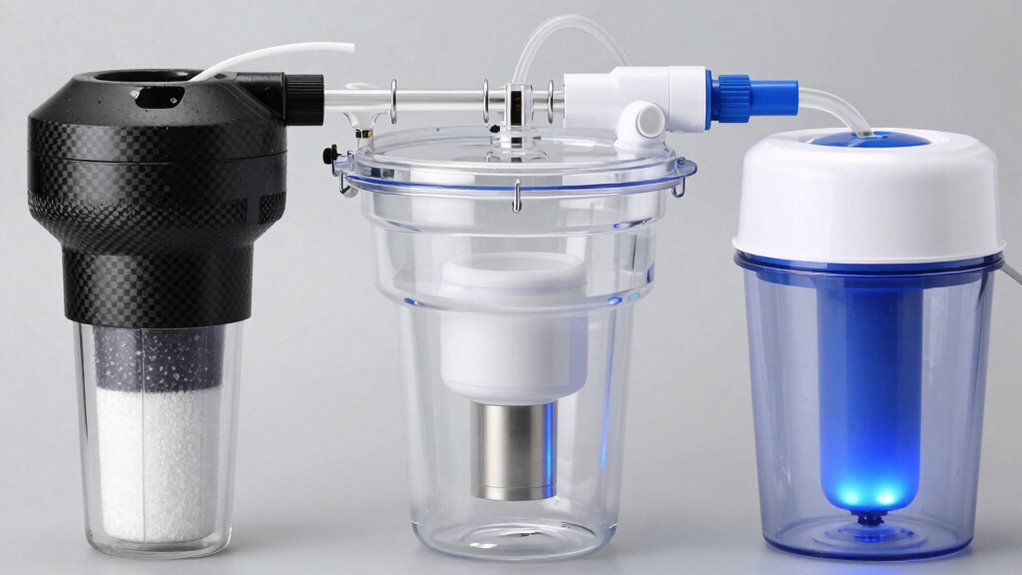
Choosing the right water filter involves balancing your specific water quality concerns, household needs, and budget constraints. Start by evaluating your water source and identifying contaminants you want to remove. Consider ongoing water filter maintenance, as some systems require regular filter changes, increasing costs over time. Conduct a cost comparison between options like carbon filters, RO systems, and UV purifiers to understand initial investments and long-term expenses. Here’s a simple comparison:
| Filter Type | Maintenance Needs | Cost Consideration |
|---|---|---|
| Carbon | Regular filter changes for taste and odor removal | Lower initial, ongoing costs |
| RO | Regular membrane replacements, waste water | Higher initial, moderate ongoing costs |
| UV | Lamp replacements, minimal maintenance | Moderate initial, low ongoing costs |
Choose a filter that fits your water concerns and budget for sustainable, clean drinking water.
Frequently Asked Questions
How Often Should I Replace Each Type of Water Filter?
You should replace your water filters based on their filter lifespan and recommended replacement schedule. Carbon filters generally last 6 to 12 months, UV filters need replacement every 12 months, and RO membranes last about 2 to 3 years. Check your manufacturer’s guidelines regularly and watch for signs of reduced water quality. Staying on top of your replacement schedule guarantees efficient filtration and safe, clean water.
Can Multiple Filters Be Combined for Better Water Purification?
Yes, you can combine multiple filters for better water purification, but you need to check filter compatibility and installation considerations first. Make sure each filter type complements the others without reducing flow rate or system pressure. You might need additional fittings or space for installation. Consulting manufacturer guidelines or a professional ensures your combined system works efficiently and safely, providing cleaner, safer water tailored to your specific needs.
Are There Any Health Risks Associated With UV Water Purifiers?
Imagine a tiny, invisible superhero zapping germs away—UV water purifiers are generally safe when used correctly. However, UV safety depends on proper maintenance; if the bulb isn’t replaced or the device isn’t cleaned, harmful bacteria could slip through. While health implications are minimal with good upkeep, prolonged exposure to UV light can cause eye or skin irritation, so always follow safety guidelines to keep your water pure and your health protected.
Do All Water Filters Remove Heavy Metals Effectively?
Not all water filters effectively remove heavy metals, so you need to choose a filter designed for that purpose. Activated carbon filters may reduce some metals but aren’t always reliable. Reverse osmosis (RO) systems are highly effective at filtering out heavy metals due to their fine membranes. UV filters mainly target microorganisms, so for heavy metals, an RO or specialized filter offers better effectiveness. Always check the filter’s specifications to verify it meets your needs.
How Do I Know Which Water Filter Is Best for My Specific Water Source?
In a flash, like a knight choosing a sword, you should test your water source first. Water source variability shapes your filter choice—if it’s contaminated with chemicals, a carbon filter works best; for heavy metals, consider reverse osmosis; and for pathogens, UV is ideal. Use filter selection criteria like water quality reports and your specific needs to make an informed decision, ensuring safe, clean drinking water.
Conclusion
Choosing the right water filter is like steering through a well-stocked library—you need the right book for the story you want to tell. Whether it’s carbon for taste, reverse osmosis for purity, or UV for microbes, understanding each type helps you make an informed decision. Remember, your water’s quality shapes your health—so don’t leave it to chance. As the wise owl of hydration, select wisely and drink confidently, knowing you’ve chosen the best chapter for your well-being.
Fall Picks
fall essentials
As an affiliate, we earn on qualifying purchases.