
📊 Full opportunity report: When One Agent Isn’t Enough: Claude Now Builds Its Own Team of Agents on the Fly on ThorstenMeyerAI.com — validation score, market gap, and execution plan.

Turn your quiet moments into listening time
- Thousands of audiobooks, podcasts and originals
- Listen on your phone, tablet or Echo — also offline
- Cancel anytime
TL;DR
Anthropic’s Claude AI now features ‘dynamic workflows,’ allowing it to generate and manage its own team of sub-agents during complex tasks. This development aims to improve performance on high-value, multi-step projects.
Anthropic’s Claude AI has introduced a new feature called dynamic workflows, enabling it to build and manage its own team of sub-agents in real-time for complex tasks. This marks a significant advancement in autonomous AI orchestration, aimed at addressing limitations of single-agent performance on high-value projects.
The new capability allows Claude to generate specialized sub-agents, each with a focused brief, and coordinate their efforts through custom-built JavaScript programs. This approach is designed to mitigate common issues such as agent laziness, self-preference bias, and goal drift, which occur when a single agent handles extensive or complex tasks.
According to Anthropic, this feature is particularly useful for tasks like large-scale code refactoring, research synthesis, and comprehensive fact-checking, where dividing work among multiple agents can lead to more accurate and reliable results. The system can also decide which model to deploy for each sub-task and whether agents should operate in isolated work environments to prevent interference.
Under the hood, Claude writes and runs small JavaScript programs that orchestrate sub-agents, enabling dynamic decision-making and resumption if interrupted. The feature is activated through specific prompts like “ultracode” or by requesting a workflow, allowing users to tailor the process for their needs.
When one agent isn’t enough: Claude now builds its own team on the fly
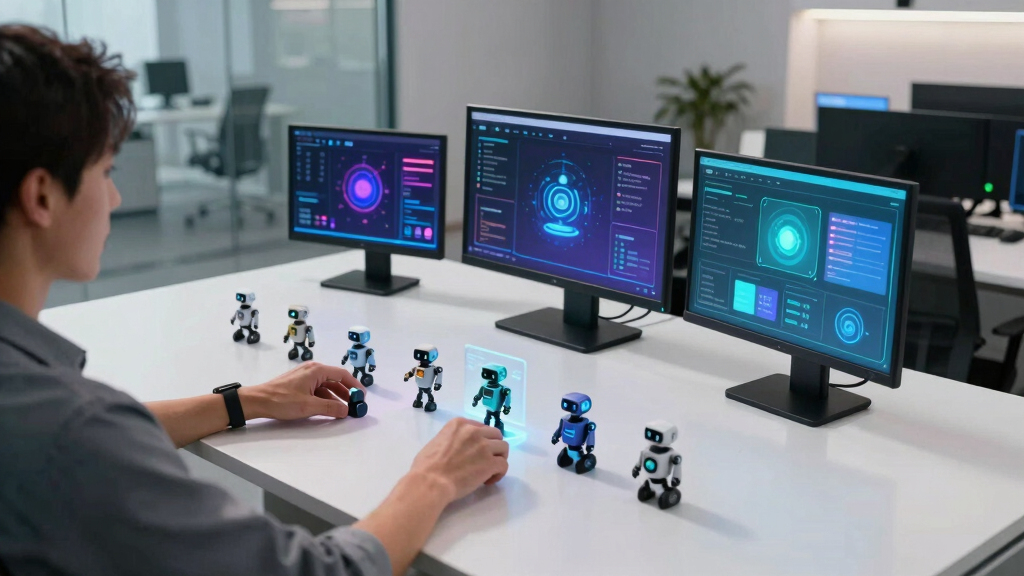
Skills package what you know; loops decide how far you delegate over time. Dynamic workflows are the third axis — within a single task, Claude writes its own harness and assembles a temporary team of subagents. Think of it as Claude drawing an org chart for one job.
The shift is from prompting a worker to commissioning a team — more output, more cost, and a manager’s judgment required. Reach for a workflow when a task is big, parallel, adversarial, or judgment-heavy — and when you can feel a single agent getting lazy, grading its own homework, or losing the plot. Bound it (token budgets, pilot first) — workflows can spawn hundreds of agents and burn far more tokens. For everything else, don’t hire five people to change a lightbulb.
Implications for AI Workflow Automation
This development represents a step forward in autonomous AI management, allowing Claude to handle complex, multi-layered projects more effectively. By orchestrating multiple specialized agents, the system can produce more accurate, thorough, and reliable outputs, especially for high-stakes applications like software development, research, and quality assurance.
For organizations, this could mean reduced need for human oversight in certain tasks, increased efficiency, and improved results in complex workflows. However, it also raises questions about transparency, control, and the potential for unforeseen interactions among agents.
As an affiliate, we earn on qualifying purchases.
Evolution of Multi-Agent AI Capabilities
Previously, Claude’s capabilities were limited to single-agent workflows, which often struggled with lengthy or complex tasks due to issues like goal drift and self-bias. The recent introduction of dynamic workflows builds on Anthropic’s earlier work on skills packages and looping mechanisms, completing a trilogy aimed at enabling more sophisticated AI delegation and orchestration.
Anthropic’s approach is inspired by traditional project management strategies, such as dividing work, independent review, and parallel processing, but now executed autonomously by Claude. This shift reflects a broader industry trend toward AI systems capable of managing their own complex processes without constant human intervention.
“By enabling Claude to write and execute its own orchestration scripts, we are pushing the boundaries of autonomous AI teamwork, especially for complex, high-value tasks.”
— Thorsten Meyer, AI researcher at Anthropic
As an affiliate, we earn on qualifying purchases.
Unanswered Questions About Autonomous Agent Management
It remains unclear how widely this feature will be adopted in real-world applications, and whether it will be integrated into commercial products at scale. The long-term reliability and safety of self-orchestrating AI teams are also still under evaluation, with ongoing testing needed to assess potential risks and unintended interactions among sub-agents.
Additionally, the extent of user control over the generated workflows and how they might influence transparency and accountability are still being explored.
As an affiliate, we earn on qualifying purchases.
Next Steps for Claude’s Dynamic Workflow Capabilities
Anthropic plans to expand testing of dynamic workflows across various industries, including software development, research, and quality assurance. Future updates may include more user-friendly interfaces for customizing workflows and enhanced safety features to monitor agent interactions.
Organizations interested in this technology should watch for broader availability and detailed case studies demonstrating its effectiveness in real-world tasks.
As an affiliate, we earn on qualifying purchases.
Key Questions
How does Claude build its own team of agents?
Claude writes small JavaScript programs that spawn and coordinate sub-agents, each with specific roles and goals, enabling it to manage complex workflows dynamically.
What types of tasks benefit most from dynamic workflows?
High-value, multi-step tasks such as software refactoring, research synthesis, fact-checking, and large-scale data analysis are ideal for this approach.
Are there limitations to this new feature?
Yes. It increases token consumption, is intended for complex projects rather than simple fixes, and safety and reliability are still being evaluated.
Will this feature be available to all users?
It is currently in testing and will likely be rolled out gradually, with further development to improve usability and safety.
Could autonomous agent teams pose risks?
Potential risks include unpredictable interactions among sub-agents and reduced transparency, which are being actively studied by developers.
Source: ThorstenMeyerAI.com
Halloween Picks
halloween
As an affiliate, we earn on qualifying purchases.