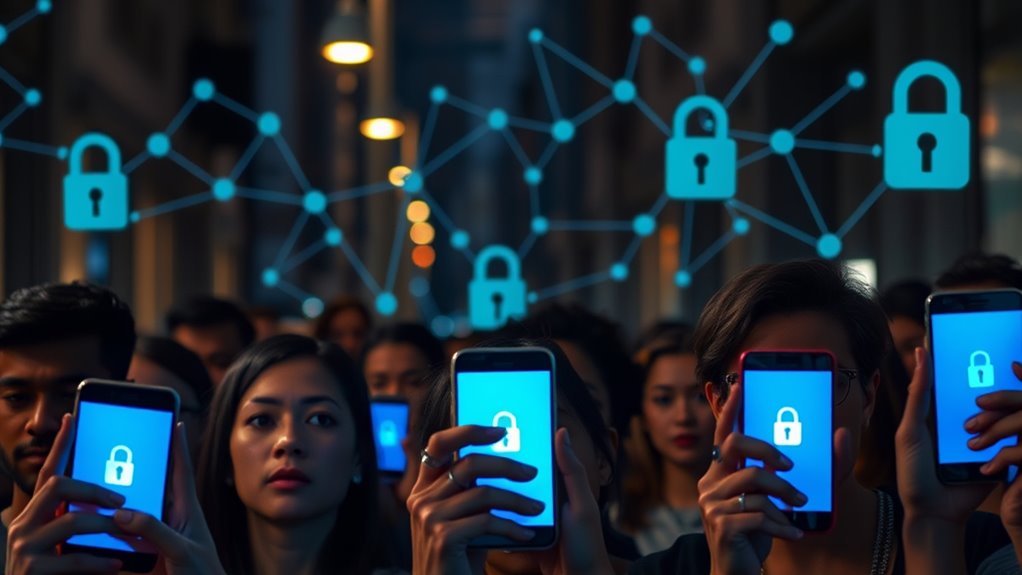

Digital rights are fundamental to protecting your human rights online, such as your privacy, freedom of expression, and access to information. As digital threats grow, your ability to communicate securely and maintain autonomy becomes vital. Governments and corporations may attempt to restrict or exploit your data, but by understanding these rights, you can advocate for fair policies and a free internet. Stay engaged to discover how you can help safeguard these essential freedoms in the digital age.

Turn your quiet moments into listening time
- Thousands of audiobooks, podcasts and originals
- Listen on your phone, tablet or Echo — also offline
- Cancel anytime
Key Takeaways
- Digital rights are essential to protect human rights like privacy, freedom of expression, and access to information online.
- Privacy safeguards prevent misuse of personal data by governments and corporations, ensuring autonomy and security.
- AI and emerging technologies raise ethical concerns, requiring responsible development to uphold digital human rights.
- Censorship restricts access to information, undermining free speech, democratic participation, and informed decision-making.
- Advocacy and transparent policies are vital to strengthen digital rights and ensure they align with fundamental human rights.

In today’s interconnected world, digital rights are fundamental to ensuring your basic human rights in the online space. As you navigate the internet, you may not always realize how your digital presence intersects with core freedoms like freedom of expression, privacy, and access to information. One of the biggest issues you face is privacy concerns, which have become increasingly prominent as governments and corporations collect, analyze, and sometimes misuse your personal data. You might feel that your online activities are monitored, and your personal details are vulnerable to breaches or unauthorized use. These privacy concerns threaten your ability to communicate freely and securely, creating a climate of fear or self-censorship. It’s imperative to recognize that privacy isn’t just about protecting secrets; it’s about safeguarding your autonomy and dignity in the digital age. Without robust protections, you risk losing control over your personal information, which can be exploited for financial gain, political manipulation, or social control. Additionally, emerging AI technologies, such as predictive analytics, can be used to profile and influence user behavior, making it even more crucial to advocate for AI ethics and responsible development.
Alongside privacy issues, censorship policies play a significant role in shaping your digital rights. Governments and private entities can impose restrictions that limit your access to certain websites, social media platforms, or content deemed undesirable or dangerous. These censorship policies can be justified as efforts to maintain national security or public morality, but they often serve to suppress dissent, silence minority voices, or control the flow of information. When access to information is restricted, your ability to participate fully in society diminishes, and your capacity to form informed opinions is compromised. You might find yourself in a situation where critical news or alternative viewpoints are blocked, leading to a distorted view of reality. Censorship can also foster an environment where self-censorship becomes a survival tactic, diminishing your freedom of expression and undermining the democratic principles that support human rights. Recognizing how AI tools analyze trends for content strategy can help you understand the mechanisms behind information flow and censorship.
Understanding these issues is essential because your digital rights are integral to your human rights. When privacy is compromised or censorship is imposed, your ability to exercise free speech, access information, and participate in digital communities is hindered. These challenges highlight the importance of advocating for stronger protections and transparent policies that respect your rights online. You have a stake in shaping the digital landscape to be a space where privacy is respected and censorship is limited, ensuring everyone can enjoy their human rights in the digital age. Recognizing the connection between digital rights and your broader human rights empowers you to demand accountability and push for policies that prioritize your freedom and dignity in the online world.
Frequently Asked Questions
How Do Digital Rights Impact Marginalized Communities Differently?
You might find that digital rights impact marginalized communities differently by affecting their digital access and data sovereignty. Limited digital access restricts their ability to participate fully online, while challenges to data sovereignty can lead to misuse of personal information. This can deepen existing inequalities, making it harder for them to access resources, voice their concerns, or protect their privacy. Ensuring equitable digital rights helps bridge these gaps and empowers marginalized groups.
What Legal Protections Exist for Digital Privacy Worldwide?
You have legal protections like encryption policies that safeguard your digital privacy by preventing unauthorized access to your data. Data sovereignty laws also impact your privacy, as they determine where your data is stored and who controls it. Around the world, these protections vary; some countries have strong laws, while others lack extensive regulations. Staying informed about local laws helps you better protect your digital privacy rights.
How Can Individuals Advocate for Digital Human Rights?
Think of yourself as a digital warrior wielding the power of digital activism to champion human rights. You can advocate for digital human rights by raising awareness, signing petitions, and supporting organizations that fight for online privacy and freedom. Protect your online anonymity to safely voice your opinions. Use social media platforms responsibly and engage in discussions that push for stronger policies. Your voice matters—make it heard in the digital sphere.
Are Digital Rights Universally Recognized Across Countries?
Digital rights aren’t universally recognized across countries. Some nations prioritize digital sovereignty and enforce data localization laws, which can limit global digital freedoms. You might find that in certain countries, governments control access to data and online content more strictly, impacting your rights. While international frameworks exist, enforcement varies. Staying informed about local laws helps you understand your digital rights and advocate for greater protections worldwide.
What Role Do Corporations Play in Digital Human Rights?
Think of corporations as gatekeepers in the digital domain—they hold significant power over your data sovereignty and rights. They play a vital role in safeguarding or risking your digital human rights through their corporate responsibility. By enforcing ethical data practices, respecting privacy, and ensuring transparency, corporations can champion your rights. Conversely, neglecting these duties can turn them into barriers, threatening your control and freedom in the digital world.
Conclusion
You hold the power to protect digital rights, because without them, your human rights are at risk of being swallowed whole by unchecked technology. The digital world is more than just bytes and screens—it’s your sanctuary and your battleground. If you don’t stand up now, the digital landscape could become an unrecognizable, oppressive maze where your freedoms vanish in the blink of an eye. Act today, or tomorrow might be too late to reclaim what’s rightfully yours.
Halloween Picks
halloween
As an affiliate, we earn on qualifying purchases.