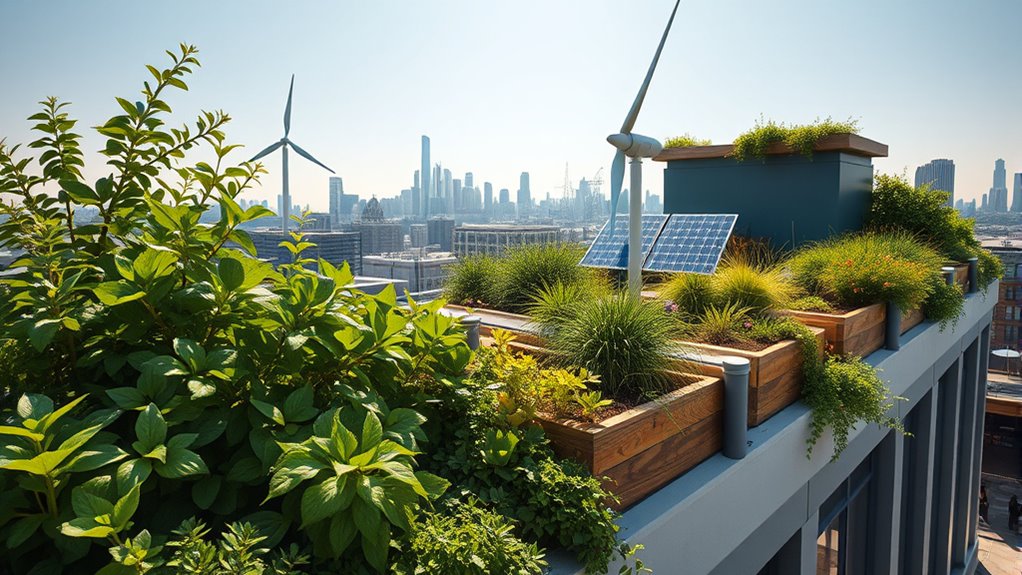

To create a better planet through sustainable design, focus on using eco-friendly materials, harnessing natural energy, and planning your space wisely. Incorporate locally sourced and recycled materials to reduce environmental impact while enhancing indoor air quality. Design buildings that work with the local climate to minimize energy use for heating, cooling, and lighting. Embracing these strategies can turn your projects into eco-conscious spaces, helping to fight pollution and conserve resources—discover more ways to make a difference.
Key Takeaways
- Incorporate eco-friendly materials and renewable resources to minimize environmental impact.
- Optimize building orientation and natural lighting to reduce reliance on artificial energy.
- Use sustainable design principles to improve indoor air quality and promote healthier living environments.
- Seek green building certifications like LEED or BREEAM to ensure environmental responsibility.
- Promote community awareness and gradual adoption of eco-conscious practices for long-term sustainability.

Have you ever wondered how design can help protect the environment? When you think about sustainable design, one of the first concepts that come to mind is green architecture. This approach emphasizes creating buildings that are energy-efficient, environmentally responsible, and resource-conscious. By integrating green architecture into your projects, you actively reduce your carbon footprint and promote healthier living spaces. It’s about designing with nature in mind, using strategies that minimize waste, lower energy consumption, and enhance the building’s harmony with its surroundings. Green architecture isn’t just a trend; it’s a necessity for a sustainable future.
Designing with nature in mind promotes energy efficiency and environmental responsibility.
A vital element of green architecture is the use of eco-friendly materials. When you choose sustainable materials, you’re making a conscious decision to lessen environmental impact. These materials are often sourced locally, reducing transportation emissions, and are designed to be durable and reusable, which extends their lifespan. Think about using recycled steel, bamboo, reclaimed wood, or low-impact insulation. These choices help conserve natural resources and cut down on waste. Plus, eco-friendly materials often improve indoor air quality, creating healthier environments for occupants. Incorporating such materials into your designs not only benefits the planet but also offers long-term cost savings, since they tend to require less maintenance and have lower energy needs over time.
Implementing green architecture and eco-friendly materials starts with thoughtful planning. You need to think about the local climate to optimize natural ventilation and daylight, reducing reliance on artificial lighting and mechanical cooling or heating. For example, orienting windows to maximize sunlight during winter while shading them during summer can greatly lower energy bills. Using natural, sustainable materials can also influence the aesthetic appeal of your projects, creating spaces that feel warm, inviting, and environmentally conscious. These choices reflect your commitment to sustainability and set a positive example for clients and communities alike.
You don’t need to overhaul every aspect of your design process overnight, but small steps make a big difference. Prioritize eco-friendly materials and incorporate green architecture principles into your planning. Seek out certifications like LEED or BREEAM, which recognize sustainable building practices. Additionally, understanding building codes and regulations is crucial to ensure your projects meet legal standards. With every project, you have the power to influence positive change by making environmentally responsible choices. Your designs can become a part of the solution—protecting natural resources, reducing pollution, and fostering healthier environments. Sustainable design isn’t just about creating beautiful spaces; it’s about building a better planet for future generations.

The Complete Guide to Alternative Home Building Materials & Methods: Including Sod, Compressed Earth, Plaster, Straw, Beer Cans, Bottles, Cordwood, and Many Other Low Cost Materials
As an affiliate, we earn on qualifying purchases.
As an affiliate, we earn on qualifying purchases.
Frequently Asked Questions
How Can Small Businesses Implement Sustainable Design Practices Effectively?
You can implement sustainable design practices by switching to renewable energy sources like solar panels to cut costs and emissions. Focus on waste reduction by recycling, reusing materials, and minimizing packaging. Incorporate energy-efficient lighting and appliances, and design your space to maximize natural light and airflow. These steps help reduce your environmental impact, save money, and demonstrate your commitment to sustainability, making your business more attractive to eco-conscious customers.
What Are the Initial Costs Versus Long-Term Savings of Sustainable Design?
Sure, you’ll spend more upfront on sustainable design costs, but think of it as a savvy investment in your future. A thorough cost analysis reveals long-term savings through energy efficiency, lower utility bills, and reduced waste. The initial investment benefits outweigh the short-term expense, making your business greener and more cost-effective in the long run. Save the planet and your wallet—who knew sustainability could be so profitable?
How Does Sustainable Design Influence Local Communities and Economies?
You see sustainable design boost local communities and economies by enhancing urban resilience and encouraging community engagement. It creates healthier environments, attracts new businesses, and increases property values. When you focus on sustainable practices, you help reduce environmental risks and foster stronger social ties. This approach not only benefits the planet but also strengthens local economies, making neighborhoods more vibrant and resilient for future generations.
Are There Any Certifications or Standards for Sustainable Design?
Yes, there are certifications and standards for sustainable design, like LEED and BREEAM, which promote green building practices. Eco labeling helps you identify buildings that meet these eco-friendly criteria, ensuring they use sustainable materials and energy-efficient systems. By aiming for these certifications, you demonstrate your commitment to sustainability, reduce environmental impact, and often enjoy financial savings through energy efficiency. These standards guide you in creating healthier, more sustainable spaces.
What Are the Biggest Challenges in Adopting Sustainable Design Globally?
You face challenges like integrating green technology effectively and managing resources efficiently worldwide. Adopting sustainable design requires overcoming high costs, limited awareness, and varying regulations across regions. You need to stay updated on innovations in green technology and prioritize resource management to reduce environmental impact. Collaboration among governments, industries, and communities is essential, but differing priorities and economic constraints often slow global progress.

Generic Garage Door Insulation Kit, White EPS Foam Panels, 8 Pack, 1.25x20x54 Inches, R-Value 4.0, Temperature Control, Noise Reduction, DIY Installation, One Car Garage (Low Density Non-Laminated)
DIMENSIONS: Each panel measures 1.25 inches thick x 20 inches wide x 54 inches long, with 8 panels…
As an affiliate, we earn on qualifying purchases.
As an affiliate, we earn on qualifying purchases.
Conclusion
By embracing sustainable design, you’re shaping a future as vibrant as a lush, green forest. Every eco-friendly choice you make is like planting a seed for a healthier planet. Remember, small actions add up—like drops creating a mighty river. So, stay committed to sustainable practices and inspire others to do the same. Together, we can turn our world into a thriving, beautiful place, just like a well-tended garden blossoming with life.

Consciot A19 LED Light Bulbs Dimmable,60W Equivalent,3000K Warm White,9W 800 Lumens,E26 Standard Base,UL Listed,Lighting for Bedroom Living Room Home Office,12 Packs
【Dimmable & Versatile】Smoothly adjust brightness with TRIAC dimmer compatibility. Tailor your lighting from soft to bright, ideal for…
As an affiliate, we earn on qualifying purchases.
As an affiliate, we earn on qualifying purchases.
LEED Green Associate Exam v5 Study Guide: 200 Exam Questions & Answers Fully Explained
As an affiliate, we earn on qualifying purchases.
As an affiliate, we earn on qualifying purchases.