To start with meditation, yoga, and breathwork, focus on finding a comfortable posture that keeps your spine straight and relaxed. Practice mindfulness by paying close attention to your breath or sensations without judgment, which helps you stay present and manage stress. Consistency matters more than duration, so develop a routine that fits your lifestyle. As you explore these practices, you’ll discover simple techniques that boost focus, inner calm, and emotional resilience—there’s plenty more to uncover.
Key Takeaways
- Meditation, yoga, and breathwork promote stress reduction, emotional resilience, and improved focus through mindfulness and controlled breathing.
- Proper posture—such as sitting with a straight spine—enhances comfort and concentration during practice.
- Focus on breath or sensations helps anchor attention, reducing distractions and promoting present-moment awareness.
- Consistent routines, even brief sessions, build habits that support mental clarity and emotional health.
- Incorporating mindfulness into daily activities can deepen the benefits of these practices and foster inner calm.
Have you ever wondered how meditation, yoga, and breathwork can transform your overall well-being? These practices aren’t just trendy; they’re powerful tools that help you manage stress, improve focus, and cultivate a sense of inner calm. To get started, understanding some fundamental concepts, like mindfulness techniques and meditation postures, makes a big difference. Mindfulness techniques involve paying close attention to your breath, sensations, and thoughts without judgment. When you practice mindfulness, you learn to stay present, which reduces anxiety and enhances emotional resilience. Incorporating mindfulness into your daily routine can be as simple as noticing your breath during a moment of pause or observing the sensations in your body as you walk.
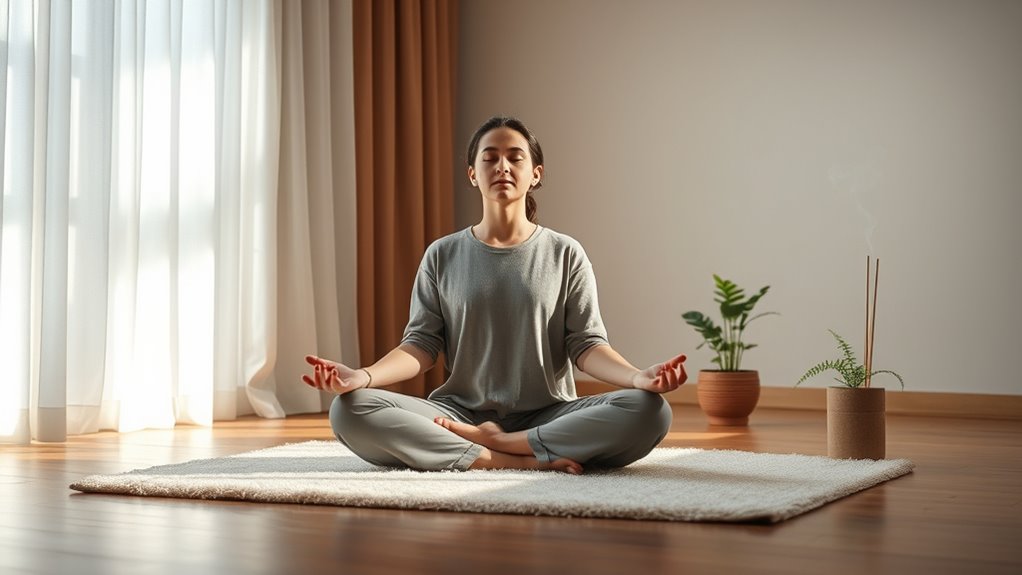
When it comes to meditation postures, comfort and alignment are key. Whether you prefer sitting cross-legged on the floor, kneeling, or sitting on a chair, the goal is to find a position that keeps your spine straight and your body relaxed. Maintaining good posture helps you stay alert during meditation and prevents discomfort that might distract you. You don’t need to sit in a traditional lotus position; what matters most is that you’re comfortable enough to hold the posture for a few minutes without strain. Rest your hands on your lap or knees, and keep your shoulders relaxed. As you settle into your meditation posture, focus on your breath or a specific point of attention. This focus anchors your mind and helps you stay present, reducing the tendency to ruminate on worries. Engaging in regular meditation practice can also strengthen your resilience against stress and improve overall mental health.
Practicing mindfulness techniques through meditation postures allows you to cultivate a calm, centered state of mind. Over time, these habits can improve your emotional health, increase your awareness, and deepen your sense of peace. Incorporating meditation into your routine doesn’t require hours of daily practice; even five or ten minutes can make a difference. As you become more familiar with different meditation postures and mindfulness exercises, you’ll discover which ones resonate most with you. Remember, consistency is more important than duration. The key is to create a regular habit that seamlessly fits into your lifestyle. With patience and practice, you’ll find yourself better equipped to handle daily stresses, maintain clarity, and foster a greater connection to yourself.
Frequently Asked Questions
Can Meditation Help With Chronic Pain Management?
Yes, meditation can help with chronic pain management by using mindfulness techniques to change your pain perception. When you practice regularly, you become more aware of your pain without judgment, which can reduce its intensity and emotional impact. This shift in perception helps you manage pain better, making it feel less overwhelming. Incorporating meditation into your routine can be a powerful tool to improve your overall comfort and well-being.
What Are the Best Yoga Poses for Beginners?
Start with beginner sequences like Mountain Pose, Downward Dog, and Child’s Pose to build confidence. Focus on proper yoga alignment to prevent injuries and maximize benefits. These poses are simple but effective for improving flexibility, strength, and balance. As you practice regularly, you’ll develop better awareness of your body and deepen your practice. Remember, consistency and patience are key to mastering beginner poses and enjoying the full benefits of yoga.
How Does Breathwork Influence Mental Health?
Think of breathwork as a reset button for your mind. When you practice mindfulness techniques like deep breathing, you actively influence your emotional regulation, reducing stress and anxiety. I once helped a friend manage panic attacks by guiding her through slow, intentional breaths. Regular breathwork strengthens your nervous system, making it easier to stay calm under pressure and boost mental clarity. It’s a simple tool for lasting mental health benefits.
Is Meditation Effective Without a Teacher or Guide?
Yes, meditation can be effective without a teacher or guide, especially if you practice self-guided meditation regularly. Solo practice benefits include developing your own rhythm, deepening focus, and understanding what works for you. While guidance can help initially, you can build confidence and consistency over time by exploring different techniques on your own. Just guarantee you stay patient and open-minded as you cultivate your meditation routine independently.
What Are Common Mistakes to Avoid in Breathwork Practices?
To avoid common mistakes in breathwork, focus on maintaining correct posture to guarantee proper airflow. Don’t hold your breath too long during retention; listen to your body and progress gradually. Avoid forcing breath retention or pushing beyond comfortable limits, which can cause dizziness or discomfort. Keep your shoulders relaxed and breathe naturally between exercises. These tips help you practice safely and effectively without risking injury or fatigue.
Conclusion
As you explore meditation, yoga, and breathwork, you might notice how their paths unexpectedly cross in daily moments. Sometimes, a simple breath can bring clarity just when you least expect it, or a quiet yoga pose aligns perfectly with a busy mind. These practices seamlessly weave into your life, reminding you that the most profound calm often appears when you’re not searching for it. Embrace these coincidences—they might just be signs you’re on the right path.