Mindfulness is a powerful spiritual practice that helps you deepen self-awareness, find inner peace, and connect with your true self through intentional presence. By practicing mindfulness regularly, you learn to observe your thoughts and emotions without judgment, gaining clarity and compassion. It encourages living more fully in each moment and recognizing the interconnectedness of all things. Keep exploring, and you’ll discover how this practice can guide you toward a more authentic and fulfilled existence.
Key Takeaways
- Mindfulness fosters spiritual awakening by increasing awareness of purpose and interconnectedness.
- It promotes clarity, compassion, and acceptance essential for spiritual growth.
- Regular practice guides individuals toward authentic self-understanding and inner peace.
- Mindfulness deepens meditation, enhancing emotional resilience and mental clarity on the spiritual journey.
- It aligns daily life with spiritual values, supporting ongoing self-realization and fulfillment.
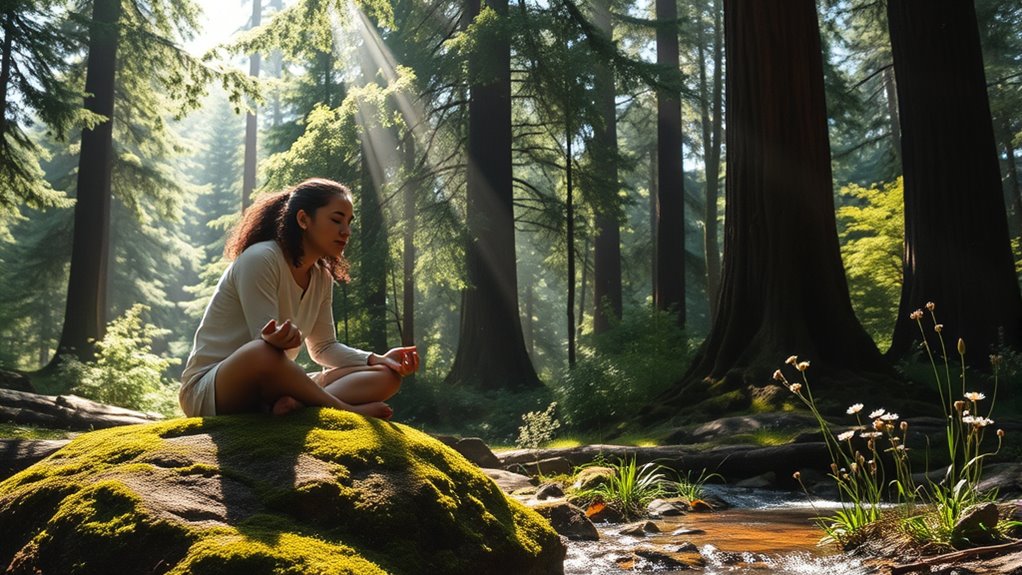
Mindfulness has long been embraced as a powerful spiritual practice that fosters inner peace and self-awareness. When you dedicate time to mindful awareness, you open yourself to a range of meditation benefits that extend beyond simple relaxation. Regular practice helps you cultivate a deeper connection with your inner self, allowing you to observe your thoughts and emotions without judgment. This heightened state of consciousness can serve as a catalyst for spiritual awakening, guiding you toward a more profound understanding of your purpose and place in the universe. As you become more present in each moment, you’ll notice an increased sense of clarity, compassion, and acceptance, which are essential components of spiritual growth.
Engaging in mindfulness isn’t just about calming your mind; it’s also about transforming how you relate to the world around you. The act of being fully present in your daily activities can help you recognize the interconnectedness of all things, fostering a sense of unity and belonging. Over time, this shift in perception can lead to a spiritual awakening—a moment when you feel a deep recognition of your true nature beyond the ego or superficial identities. This awakening often comes with a sense of liberation, as you realize that many of your worries and fears stem from a disconnection from your authentic self. Mindfulness, consequently, isn’t merely a mental exercise; it’s a pathway to discovering the essence of your being and aligning your life with your spiritual values.
As you incorporate mindfulness into your routine, you’ll likely notice a gradual transformation that influences your emotional resilience and mental clarity. Meditation benefits become more apparent as you deepen your practice, making it easier to stay centered amidst life’s chaos. These benefits include reduced stress, improved focus, and a greater capacity for compassion—qualities that are essential on your journey toward spiritual awakening. By consistently practicing mindfulness, you reinforce your awareness of the present moment, helping you shed illusions and superficial attachments. This ongoing process nurtures your spiritual evolution, guiding you toward a more authentic, fulfilled existence. Ultimately, mindfulness becomes an indispensable tool for awakening, allowing you to experience life with greater depth, purpose, and peace.

Retrospec Sedona Zafu Meditation Cushion with Buckwheat Hull Fill – Adjustable Yoga & Pilates Equipment Support – 17in Crescent Cotton Cover
NATURAL COMFORT & SUPPORT: Filled with sustainable buckwheat hulls, this meditation cushion elevates your practice by aligning your…
As an affiliate, we earn on qualifying purchases.
As an affiliate, we earn on qualifying purchases.
Frequently Asked Questions
Can Mindfulness Be Practiced Without a Spiritual Context?
Yes, you can practice mindfulness without spirituality by focusing on secular mindfulness techniques. You don’t need a spiritual context to benefit from mindfulness; it’s about paying attention to your breath, sensations, or thoughts in the present moment. Many people use mindfulness without linking it to any spiritual beliefs, finding it helps reduce stress, improve focus, and increase overall well-being without involving spirituality.
How Does Mindfulness Differ Across Various Spiritual Traditions?
You’re in for a world of differences when exploring mindfulness across spiritual traditions. Like a chameleon changing colors, it adapts through meditative techniques and cultural variations. In Buddhism, it emphasizes awareness and compassion, while in Christianity, it centers on prayerful presence. Hinduism blends it with yoga, and Taoism sees it as harmony with nature. Each tradition shapes mindfulness uniquely, reflecting its spiritual roots and cultural nuances.
Is Mindfulness Effective for Mental Health Improvement?
Yes, mindfulness is effective for mental health improvement. By practicing meditation benefits like increased mental clarity, you can reduce stress, anxiety, and depression. Regular mindfulness exercises help you stay present, improve emotional regulation, and foster a sense of calm. You’ll notice better focus and resilience over time, making it a valuable tool for maintaining mental well-being. Incorporate mindfulness into your routine to experience these positive mental health benefits firsthand.
What Are Common Misconceptions About Mindfulness as a Spiritual Practice?
Think of mindfulness as a toolbox, not a magic wand. Many believe it’s solely a spiritual practice, but secular mindfulness adapts techniques from different cultures without religious ties. A common misconception is that it requires deep meditation or spiritual beliefs, but it’s simply about being present. Cultural adaptations make mindfulness accessible to everyone, showing it’s more about mental clarity than spiritual enlightenment.
How Long Does It Take to Experience Spiritual Benefits From Mindfulness?
You might start noticing spiritual benefits from mindfulness within a few weeks, but timing expectations vary. Some experience early spiritual milestones, like increased peace or clarity, in just a month, while others may take several months or longer. Consistent practice is key, and patience helps you deepen your connection. Remember, everyone’s journey is unique, so focus on progress rather than specific timelines for spiritual growth.

Guided Mindfulness Meditation Series 2
As an affiliate, we earn on qualifying purchases.
As an affiliate, we earn on qualifying purchases.
Conclusion
Embracing mindfulness gently guides you toward a deeper sense of connection and peace. As you nurture this practice, it softly weaves into every moment, enriching your spiritual journey without demanding perfection. With patience and kindness, you discover that the path unfolds naturally, inviting you to listen more closely to your inner voice. In this gentle awakening, you find solace and clarity, knowing that each mindful breath brings you closer to a richer, more harmonious existence.

my mind.: A guided mindfulness journal for self-awareness
As an affiliate, we earn on qualifying purchases.
As an affiliate, we earn on qualifying purchases.

BangBangDa Desktop Meditation Yoga Zen Garden Kit Japanese Tabletop Rock Sand Chakra Shrine Altar Japanese Zen Decor Home Office Desk Zen Gifts for Women Man Birthday w/Rake Tool Accessories Bonsai
ELEVATE YOUR MINDFULNESS – This is a set of rustic yoga meditation decorations designed to inspire a relaxing…
As an affiliate, we earn on qualifying purchases.
As an affiliate, we earn on qualifying purchases.