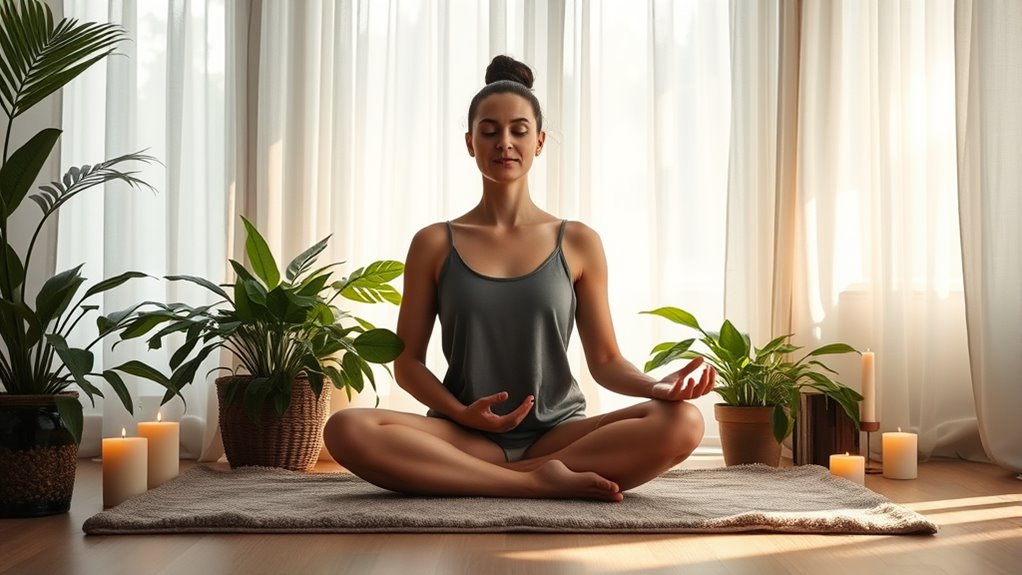

Practicing meditation regularly helps you cultivate self-awareness by clarifying your thoughts, emotions, and habits. Through mindful breathing and focused attention, you become more aware of your internal states and emotional triggers. This awareness allows you to observe feelings with curiosity and acceptance, reducing impulsive reactions. Over time, you’ll gain deeper insight into your motivations and reactions, improving your ability to respond intentionally. Keep exploring how consistent meditation can transform your internal understanding and personal growth.
Key Takeaways
- Regular meditation enhances self-awareness by clarifying thoughts, emotions, and habits through mindful observation.
- Mindful breathing anchors attention to the present, reducing distractions and increasing internal awareness.
- Recognizing emotional triggers and reactions during meditation fosters deeper emotional insight and regulation.
- Consistent practice reveals underlying motivations and feelings, supporting personal growth and conscious decision-making.
- Developing self-awareness through meditation improves interpersonal relationships, resilience, and overall well-being.
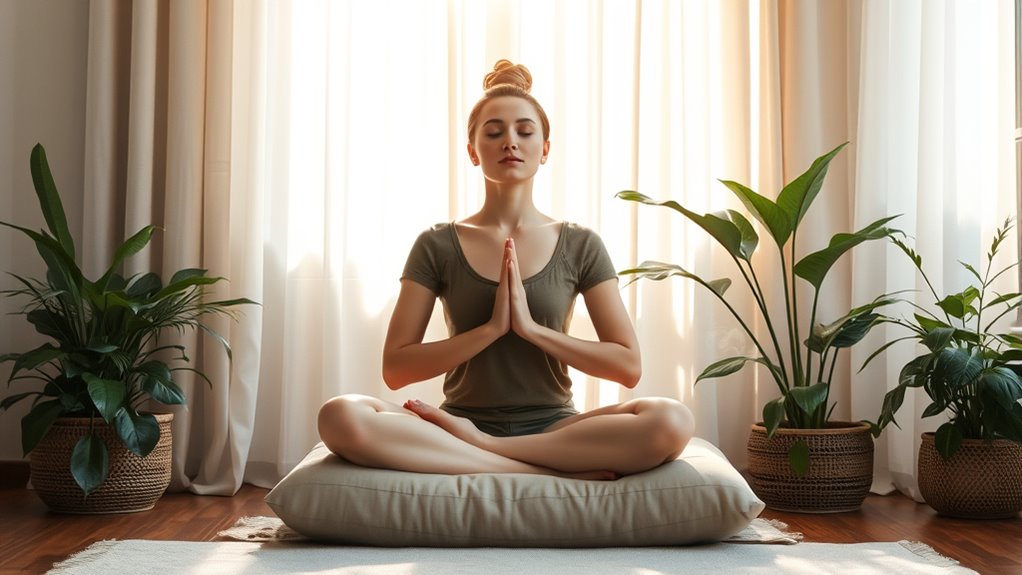
Meditation offers a powerful way to deepen your understanding of yourself and foster greater self-awareness. When you practice regularly, you develop a clearer sense of your thoughts, emotions, and habits. One of the most effective techniques to enhance this process is mindful breathing. By focusing your attention on each inhale and exhale, you anchor yourself in the present moment, reducing distractions and mental noise. As you breathe mindfully, you start noticing the subtle shifts in your emotional landscape—how certain situations trigger specific feelings, or how your body responds to stress. This awareness allows you to observe your emotional patterns without judgment, which is *essential* for cultivating emotional insight. Over time, mindful breathing becomes a tool for tuning into your inner world, helping you recognize underlying feelings that might otherwise go unnoticed.
As you deepen your practice, you’ll find that emotional insight grows more accessible. Instead of reacting impulsively to your emotions, you begin to understand them more clearly. You might notice a wave of irritation rising during a busy day or a sense of sadness when you reflect on certain memories. Recognizing these emotions as they arise is the first step toward managing them effectively. Meditation teaches you to approach your feelings with curiosity and acceptance, rather than suppression or denial. This shift not only fosters emotional resilience but also helps you identify the root causes of your reactions. The more you explore your emotional landscape through meditation, the better equipped you are to respond intentionally rather than impulsively. Additionally, understanding your PlayStation support hours and other service schedules can help you plan your leisure time more effectively, ensuring you enjoy your activities without unexpected interruptions.
Practicing mindful breathing and cultivating emotional insight aren’t just about calming your mind—they’re about building a foundation of self-knowledge that influences all areas of your life. As you become more aware of your internal states, you gain insight into your motivations, desires, and fears. This awareness empowers you to make conscious choices instead of operating on autopilot. It also enhances your ability to connect with others, as understanding your own emotions creates empathy and patience. Meditation, *thus*, becomes a journey inward, revealing the intricacies of your inner world. With consistent effort, you’ll find it easier to navigate life’s challenges with clarity and compassion. Ultimately, cultivating self-awareness through mindful breathing and emotional insight transforms the way you experience yourself and your interactions, leading to a more authentic and fulfilling life.
Frequently Asked Questions
How Long Should I Meditate Daily to See Results?
You should aim for at least 10-15 minutes of daily practice to notice results. Consistent meditation duration helps build self-awareness and reduces stress over time. If you can, gradually increase your meditation time to 20-30 minutes for deeper benefits. The key is regularity, so find a duration that fits your schedule and stick with it. Over weeks, you’ll start experiencing clearer insights and greater emotional balance.
Can Meditation Help With Specific Mental Health Issues?
Yes, meditation can help with specific mental health issues by improving emotional regulation and reducing stress. By practicing mindfulness techniques regularly, you can better manage anxiety, depression, and mood swings. Meditation trains your mind to stay present and respond calmly to challenging thoughts. Incorporate daily sessions, even just 10-15 minutes, to experience these benefits over time and support your mental well-being effectively.
Is It Necessary to Meditate in Silence?
No, you don’t have to meditate in silence. Imagine you’re a time traveler, exploring different eras with mindful breathing or guided imagery. Silence isn’t necessary; you can focus on your breath or visualize calming scenes to cultivate self-awareness. Guided imagery, in particular, helps deepen your meditation, making it more engaging and effective. As long as you’re present and relaxed, the environment, silent or not, supports your practice.
What Are Common Obstacles in Developing Self-Awareness?
You might face obstacles like wandering thoughts or emotional reactions that hinder self-awareness. To overcome this, practice mindful breathing to stay present and grounded. Emotional regulation can be challenging, but consistent meditation helps you observe feelings without judgment, enhancing self-awareness. Recognize these barriers, be patient, and keep practicing, knowing that developing self-awareness is a gradual process that strengthens with your dedication and mindful efforts.
How Can I Stay Motivated to Practice Regularly?
Think of your meditation journey as tending a garden; staying motivated is watering your plants daily. To keep your spirits high, incorporate mindfulness techniques into your meditation routines, making each session a invigorating breeze. Set small, achievable goals and celebrate progress, transforming each practice into a rewarding adventure. Remember, consistency is your compass—trust it to guide you through even the stormiest days toward deeper self-awareness.
Conclusion
By practicing meditation regularly, you open a deeper understanding of yourself, noticing your thoughts and emotions without judgment. This growing self-awareness helps you navigate life’s challenges with clarity and calmness. So, why not make meditation a daily habit? Isn’t it worth investing a few minutes each day to discover a more mindful, authentic version of yourself? Embrace the journey inward—you might be surprised at what you uncover.