To tap into your intuition and achieve creative flow, start by practicing mindfulness techniques like focusing on your breath or sensations to quiet mental chatter. Establish routines—dedicate specific times and spaces for your art—that signal your brain it’s time to create. Combining these habits helps you bypass your inner critic and access spontaneous, authentic expression effortlessly. Keep exploring these methods, and you’ll uncover deeper flow states that enhance your artistry naturally.
Key Takeaways
- Artists cultivate regular creative routines and dedicated spaces to prime the subconscious for spontaneous insights.
- Mindfulness techniques like breath awareness help quiet mental chatter, facilitating intuitive expression.
- Starting sessions with brief mindful breathing clears mental clutter, creating optimal conditions for flow.
- Consistent habits and routines act as cues, signaling the brain to enter a creative, receptive state.
- Emphasizing authentic, spontaneous work reduces self-criticism, allowing intuition and natural creativity to surface.
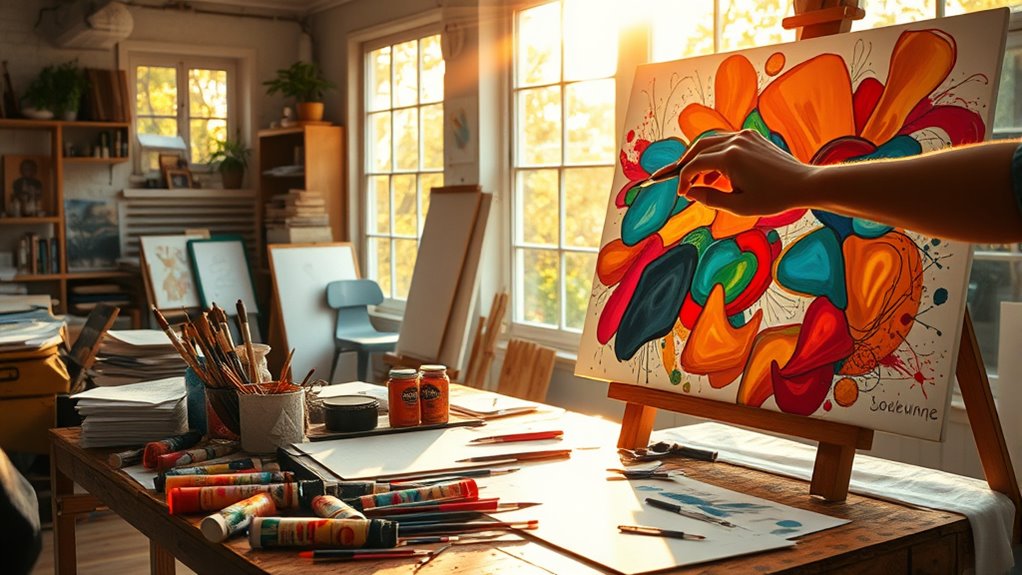
Creative flow states occur when you’re fully immersed in an activity, feeling a sense of effortless focus and energized engagement. When you experience these moments, time seems to fade away, and your work flows seamlessly from your mind to your hands. Achieving this state often involves cultivating specific habits and mental practices, such as mindfulness techniques and creative routines, that help you get out of your own way. These tools don’t just boost productivity—they release your intuitive side, allowing your creativity to surface naturally.
Creative flow emerges when you’re fully immersed, effortlessly focused, releasing your intuition and allowing natural creativity to surface.
Mindfulness techniques are especially effective in guiding you into flow. By paying close attention to your breath, sensations, and present environment, you quiet the mental chatter that can block your creative energy. A simple practice like focusing on your breath for a few minutes can clear mental clutter, making space for ideas to emerge without judgment. When you’re mindful, you become more aware of your impulses, allowing you to act instinctively rather than overthinking every move. This heightened awareness helps you tap into your intuition, fostering a more spontaneous and authentic creative process.
In addition to mindfulness, establishing consistent creative routines can prime your mind for flow. Routines create a predictable environment where your subconscious knows it’s time to create, reducing resistance and hesitation. For example, setting aside a specific time each day, having a dedicated workspace, or starting with a familiar warm-up activity signals to your brain that it’s time to enter a creative mode. Over time, these routines become cues that trigger your intuitive insights, helping you slip more easily into flow states. The key is to keep these routines simple and enjoyable, so they become a natural part of your creative life rather than a burdensome obligation.
You’ll find that combining mindfulness techniques with well-designed routines creates a powerful feedback loop. When you start your creative session with a few mindful breaths, you clear mental barriers and become more receptive to your inner voice. Following that, engaging in your routine reinforces a sense of readiness and confidence, making it easier to stay in the zone. As you practice this combination, you’ll notice your ability to access flow states becomes more consistent, and your work feels more intuitive and authentic.
Ultimately, entering creative flow states is about cultivating awareness and consistency. By integrating mindfulness techniques into your daily habits and establishing supportive routines, you create an environment where your intuition can flourish. These practices help you bypass the inner critic and tap into a pure, spontaneous creative energy that elevates your work to new levels of originality and fulfillment.
Frequently Asked Questions
How Can Beginners Access Creative Flow States Effectively?
To access creative flow states effectively, you should start by establishing habitual routines that signal your mind it’s time to focus. Incorporate mindfulness exercises, like deep breathing or meditation, to clear mental clutter and increase awareness. Stay consistent with these practices, so your creativity becomes more spontaneous. Over time, you’ll find it easier to enter flow, releasing your intuition and boosting your artistic expression effortlessly.
Are There Specific Environments That Facilitate Flow for Artists?
Setting a serene, supportive space sparks your creative spirit. A studio atmosphere filled with calm cues like cozy corners, clutter-free counters, and calming ambient lighting creates a conducive environment. Soft shadows and gentle glows help you focus, free from distractions. When your surroundings are soothing and structured, you naturally slip into flow, allowing your intuition to lead your artistry effortlessly. Your environment becomes a catalyst for continuous, creative flow.
Can Flow States Help Overcome Creative Blocks?
Flow states can definitely help you overcome creative blocks. When you practice mindfulness, you become more aware of your thoughts and feelings, making it easier to reconnect with your inspiration. Developing emotional resilience allows you to handle setbacks without frustration. By intentionally entering flow, you tap into your intuition, unleashing new ideas and freeing yourself from barriers that hinder your creativity. Keep practicing these skills to stay in your creative flow.
What Role Does Meditation Play in Entering Flow?
A journey of a thousand miles begins with a single step, and meditation is that step toward flow. When you practice mindfulness and breath awareness, you clear mental clutter, making it easier to enter the zone. Meditation helps you stay present, reduce distractions, and tap into your intuition, allowing creativity to flow naturally. It’s a powerful tool to deepen your connection with your craft and release your full potential.
How Do Different Art Forms Influence the Flow Experience?
Different art forms influence your flow experience by encouraging interdisciplinary collaboration and exposing you to diverse cultural influences. When you blend music, dance, painting, or writing, you tap into new perspectives that deepen your immersion. Cultural influences shape your creativity, making the process more meaningful. This variety fosters spontaneous inspiration and helps you stay engaged, ultimately enhancing your ability to enter and sustain a flow state during artistic creation.
Conclusion
When you embrace creative flow states, you access a superpower that transforms you into an unstoppable creative force—like a lightning bolt bursting through the sky of your imagination. Your intuition becomes a blazing rocket propelling your art to new galaxies, leaving ordinary creativity in the dust. So immerse yourself, tap into that infinite well of inspiration, and watch your artistic genius explode into a universe of brilliance you never thought possible. The only limit is how high you can soar!