To stay centered amid chaos, you can use grounding rituals that engage your senses and bring you back to the present moment. Focus on deep breathing, connect with nature by walking barefoot or observing your environment, and incorporate sensory awareness like textures, scents, and sounds. Visualize calming scenes or perform gentle movements to promote inner calm. Creating a personal sanctuary and establishing routines with aromatherapy can also help. Keep exploring these practices to deepen your sense of stability and peace.
Key Takeaways
- Engage your senses by focusing on physical sensations, sights, sounds, tastes, or smells to anchor yourself in the present moment.
- Create a dedicated grounding space with calming scents, lighting, and ritual objects to reinforce stability and mindfulness.
- Practice visualization techniques, such as imagining peaceful scenes with all senses, to quickly restore calm amid chaos.
- Incorporate movement like slow stretches, barefoot walking, or body scans to enhance physical awareness and inner balance.
- Connect with nature regularly through outdoor activities or mindful observation to reduce stress and strengthen emotional resilience.

ENSO Zen Garden for Desk, Japanese Bamboo Sand Tray Therapy Kit
- Therapist-Recommended for Calm: Supports emotional regulation and stress relief
- Engage Your Senses: Feel textures and watch patterns form
- Calming Desk Escape: Provides tactile mindfulness and anxiety relief
As an affiliate, we earn on qualifying purchases.
As an affiliate, we earn on qualifying purchases.
Understanding the Power of Grounding Techniques

Grounding techniques are powerful tools that help you reconnect with the present moment, especially during times of stress or anxiety. When your energy shifts or you feel overwhelmed, these practices strengthen your emotional resilience, enabling you to stay centered. By focusing on physical sensations or the environment, you interrupt spiraling thoughts and regain control. This process helps you build a buffer against emotional upheavals, allowing you to respond thoughtfully instead of react impulsively. Over time, grounding techniques enhance your ability to manage stress, fostering a sense of stability amid chaos. They serve as a reminder that you can anchor yourself in the now, regardless of external circumstances. Developing this skill empowers you to navigate life’s challenges with greater calm and clarity. Recognizing the importance of mind-body connection can deepen your grounding practice and support overall well-being. Incorporating neuroscience insights into your routine can further reinforce the effectiveness of these techniques.

InnoGear 400ml Aromatherapy Essential Oil Diffuser 10 Oils Gift Set, Dark
- Proper Refill Instructions: Use measuring cup, keep water below MAX line
- Avoid Circuit Damage: Refill with power off, drain from drain side
- Multiple Timer Settings: 4 timers: Continuous, 1H, 3H, 6H
As an affiliate, we earn on qualifying purchases.
As an affiliate, we earn on qualifying purchases.
Simple Breathing Exercises to Center Your Mind

You can quickly center your mind by practicing deep breathing techniques that focus on your breath. As you become more aware of each inhale and exhale, you’ll notice a sense of calmness settling in. By intentionally slowing your breath, you create a peaceful space to ground yourself in the present moment. Incorporating breath control techniques can further enhance your ability to stay centered amidst chaos.
Deep Breathing Techniques
Deep breathing techniques offer a simple yet powerful way to calm your mind and regain focus in stressful moments. By practicing mindful breathing, you bring your attention to each inhale and exhale, anchoring yourself in the present. This focus helps reduce stress and prevents your mind from spiraling into chaos. To start, breathe in slowly through your nose, feeling your chest rise, then exhale fully through your mouth. Repeat this process, emphasizing slow, deliberate breaths. Deep breathing signals your nervous system to relax, lowering tension and fostering clarity. Incorporating these exercises into your daily routine can build resilience, making it easier to stay centered during challenging times. Essential oils can complement these practices by supporting relaxation and mental clarity. Simple, intentional breaths can transform overwhelming moments into opportunities for grounding and calm, especially when combined with mindfulness techniques.
Mindful Breath Awareness
Building on the calming power of deep breathing, mindful breath awareness encourages you to focus fully on each inhale and exhale. By paying close attention to your breathing, you develop a heightened sense of breathing awareness that anchors you in the present moment. As you breathe in, notice the sensation of air filling your lungs, and as you breathe out, observe the release of tension. This simple practice helps quiet distracting thoughts and calms your nervous system. You can do this anywhere—sitting quietly or walking. The key is to stay attentive to your breath without trying to control it. With consistent mindful breath, you create a steady anchor, making it easier to stay centered amid chaos and stress. Incorporating lifestyle techniques can further enhance your ability to remain centered and focused during challenging times.
Calmness Through Inhalation
To cultivate calmness through inhalation, simple breathing exercises can be highly effective in centering your mind. Focus on breath control by slowing your inhalation, allowing air to fill your lungs gradually. Use inhalation techniques like deep, diaphragmatic breaths to promote relaxation and clarity. As you breathe in, imagine drawing in calmness and positive energy; hold briefly at the top of your inhale. Then, exhale slowly, releasing tension and stress. Consistently practicing these controlled inhalations helps anchor your awareness and creates a sense of stability amid chaos. Keep your attention on each breath, noticing the sensation of air entering and leaving your body. Over time, this practice enhances your ability to stay present, grounded, and centered in challenging moments. Incorporating mindful breathing techniques can further deepen your sense of tranquility and resilience, especially as research suggests that rhythmic breathing can support metabolic states like ketosis, which promote mental clarity.

Retrospec Sedona Meditation Cushion, Buckwheat Pillow, Meditation Pillow
- Natural Buckwheat Filling: Supports spine and hips during meditation
- Customizable Firmness: Unzip to add or remove hulls
- Eco-Friendly Cotton Cover: Machine washable and durable
As an affiliate, we earn on qualifying purchases.
As an affiliate, we earn on qualifying purchases.
Connecting With Nature for Emotional Stability

Connecting with nature can profoundly boost your emotional stability by grounding you in the present moment. When you engage in a nature connection, you tap into the calming energy of the outdoors, which helps build emotional resilience. Spend time walking barefoot on grass, sitting under a tree, or simply observing the natural world around you. These activities allow you to detach from daily stressors and reconnect with the earth’s grounding influence. As you immerse yourself in nature, you’ll notice your mood stabilizing and your anxiety decreasing. Regularly practicing this connection strengthens your ability to cope with chaos and uncertainty. Engaging with mindful decluttering strategies and caring for plants can also enhance your sense of grounding and well-being. Ultimately, embracing nature’s tranquility offers a powerful way to nurture your emotional well-being and stay centered amid life’s challenges.

HCAKLBL Serenity Growth Meditation Figurine – Abstract Resin Yoga Sculpture for Mindfulness & Inner Peace, Aesthetic Home Decor Statue for Living Room, Bedroom, Desk, Relaxation Gift
- Inner Calm and Balance: Promotes mindfulness and relaxation
- Unique Artistic Design: Abstract figure with leaf-inspired hair
- Premium Resin Craftsmanship: Durable, lightweight, finely detailed
As an affiliate, we earn on qualifying purchases.
As an affiliate, we earn on qualifying purchases.
The Art of Sensory Awareness
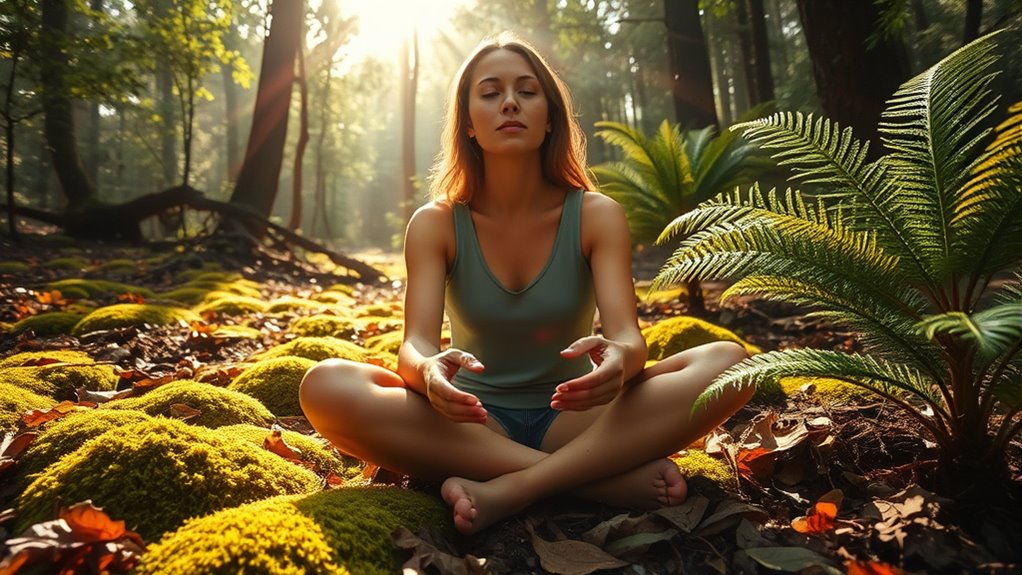
Start paying attention to how your body feels in the present moment—notice the sensations in your hands, feet, or chest. Engage your senses by focusing on sounds, smells, or textures around you to anchor yourself. Practice mindful observation by calmly observing your surroundings without judgment, helping you stay grounded and aware. Incorporating seasonal variations into your awareness can deepen your connection with the environment and enhance your mindfulness practice. Recognizing the nutrient-rich ingredients in your surroundings can further support your sensory engagement and overall grounding efforts.
Noticing Physical Sensations
Being present in the moment often begins with simply paying attention to what you feel physically. When your mind is overwhelmed by chaos or sensory overload, tuning into your body can help ground you. Focus on the sensations you experience—your feet on the ground, the pressure of your hands, the rise and fall of your breath. Physical awareness anchors you, reducing the noise of external stimuli and calming your mind. Notice how your body reacts in different situations, without judgment. This practice helps you stay centered even amid chaos, giving you a clear point of reference. Cultivating this sensory awareness can enhance your ability to manage stress and develop resilience. Additionally, understanding how automation is transforming industries can help you see that change is inevitable and often beneficial, which can foster a more adaptable mindset. By cultivating this awareness, you create a foundation for resilience, allowing you to navigate stress with a heightened sense of presence and control.
Engaging Your Senses
Once you’ve tuned into your body’s sensations, you can deepen your grounding by actively engaging your senses. Focus on what you see, hear, touch, taste, and smell around you. If you’re experiencing auditory distraction or sensory overload, try to find a quiet space for sensory deprivation, which helps reset your awareness. For example, close your eyes to minimize visual input or block out noise with earplugs. Engage your sense of touch by feeling textures or temperature. Smell a familiar scent or savor a small taste. This intentional sensory focus heightens your awareness and anchors you in the present moment, making it easier to stay centered amidst chaos. Using earplugs for concerts can be particularly effective in reducing sensory overload and creating a calm environment. By consciously activating your senses, you create a more stable connection to yourself and your environment.
Mindful Observation Techniques
Mindful observation techniques invite you to intentionally focus your awareness on your immediate environment with clarity and purpose. By practicing sensory engagement, you sharpen your ability to stay present amid chaos. Pay close attention to what you see, hear, touch, smell, and taste, without judgment or distraction. This deepens your connection to the moment and grounds you in reality.
Consider these practices:
- Observe the texture of an object in detail
- Listen to the subtle sounds around you
- Notice the colors and shapes in your surroundings
- Feel the temperature or weight of items
- Smell and savor fleeting scents
Through mindful observation, you cultivate a heightened sensory awareness that anchors you, helping you stay centered and resilient in stressful moments.
Using Visualization to Find Inner Calm

Visualization is a powerful tool that can help you quickly find a sense of inner calm amid chaos. By practicing visualization meditation, you use mental imagery techniques to create peaceful scenes that soothe your mind. To do this effectively, choose calming images, such as a quiet beach or a lush forest. Focus on these visuals, engaging all your senses to deepen the experience. Here’s a simple grid to guide your mental imagery:
| Scene Selection | Sensory Details | Breathing Focus |
|---|---|---|
| Beach | Waves, sand | Inhale, exhale slowly |
| Forest | Birds, leaves | Deep breaths |
| Mountain View | Air, silence | Calm breathing |
Use this structure to anchor yourself and restore tranquility quickly. Incorporating these techniques can also contribute to your overall well-being by reducing stress and promoting emotional resilience. Developing a consistent meditation practice can further enhance your ability to stay centered during challenging times.
Incorporating Movement for Grounding

Incorporating movement into your grounding practice can considerably enhance your sense of stability and presence. Movement therapy encourages physical grounding, helping you connect with your body and the present moment. By moving intentionally, you release tension, improve circulation, and anchor yourself amid chaos. Try these techniques:
- Slow, deliberate stretches to feel your muscles and joints.
- Gentle walking barefoot to connect with the earth.
- Breath-focused movement like yoga or tai chi.
- Dancing or free movement to express emotion and release stress.
- Body scans to notice sensations and foster awareness.
- Incorporating Kia Tuning enhancements can also serve as a metaphor for fine-tuning your mental and physical balance, making it easier to stay centered.
These practices help you stay centered, reduce anxiety, and reinforce your connection to the here and now. Movement therapy integrates physical grounding seamlessly into your routine, making it easier to find calm in turbulent times.
Creating a Personal Sanctuary for Peace

Have you ever considered how creating a dedicated space can transform your sense of peace amid daily chaos? A personal sanctuary offers a quiet retreat where mindful meditation becomes effortless, helping you build emotional resilience. To create this space, choose calming elements like soft lighting, plants, or meaningful objects. Keep it clutter-free to promote clarity and focus. Regularly spend time there, practicing deep breathing or mindful meditation to center yourself. This sanctuary becomes your go-to for grounding, providing stability when life feels overwhelming. Use the table below for ideas to personalize your space:
| Element | Purpose |
|---|---|
| Soft lighting | Creates a peaceful ambiance |
| Comfortable chair | Encourages relaxation during meditation |
| Meaningful objects | Foster emotional resilience |
| Plants | Promote calm and connection |
Mindful Journaling as a Grounding Practice

Mindful journaling offers a simple yet powerful way to ground yourself amid life’s chaos. By putting pen to paper, you boost your emotional resilience and deepen self-awareness, helping you process feelings and regain clarity. Regular journaling encourages honesty and reflection, making it easier to identify patterns and triggers that disrupt your peace. It’s a personal space to acknowledge worries and celebrate small victories, fostering resilience over time. To get started, consider these practices:
Mindful journaling strengthens resilience and self-awareness amidst life’s chaos.
- Write without judgment or editing
- Focus on your breathing and sensations before journaling
- Set a specific time daily to build consistency
- Use prompts to explore emotions deeply
- Review past entries to track growth and insights
Mindful journaling becomes a tool for staying centered, even amid chaos.
Incorporating Aromatherapy and Scent-Based Rituals

Aromatherapy and scent-based rituals can enhance your grounding practices by creating calming and focused environments. You might choose essential oil blends that resonate with your intentions or design scented spaces that promote relaxation. Incorporating meditation techniques with specific aromas can deepen your connection and bring a sense of balance.
Essential Oil Blends
Essential oil blends serve as powerful tools for grounding rituals by harnessing the natural aromas that influence mood and energy. By carefully combining scents, you create a personalized aromatherapy layering experience that helps you stay centered. These blends can include calming lavender, grounding cedarwood, or invigorating citrus, tailored to your needs. Using essential oil blends during meditation or daily routines enhances your connection to the present moment. Experiment with different combinations to find what resonates most. Keep in mind, layering scents thoughtfully amplifies their grounding effects. Incorporate these blends into your ritual practices to cultivate calmness and stability amid chaos. Whether diffusing or applying topically, your scent choices can markedly boost your sense of balance and focus.
Scented Ritual Spaces
Creating a dedicated scented ritual space transforms your environment into a sanctuary for grounding and mindfulness. You can craft this space by incorporating elements that foster relaxation, such as candles, incense, or essential oil diffusers. These scented ritual spaces enhance your environment with an aromatic ambiance that promotes calmness and focus. When you engage in scent-based rituals here, you anchor yourself amidst the chaos and create a peaceful retreat. Choose scents like lavender, sandalwood, or citrus to evoke specific feelings of tranquility or clarity. Regularly maintaining this space helps reinforce your grounding practice, making it easier to reconnect with your center whenever chaos arises. With intentionality and consistency, your scented ritual space becomes a powerful tool for staying grounded and mindful.
Aromatherapy Meditation Techniques
Incorporating scent into your meditation practice can deepen your sense of relaxation and focus. Using aromatherapy during meditation enhances the aromatherapy benefits, helping you stay grounded amid chaos. To maximize these effects, adopt a comfortable meditation posture—sit upright with relaxed shoulders and closed eyes. Choose essential oils like lavender for calming or eucalyptus for clarity. You can diffuse the scent or apply a few drops to your wrists or temples. Focus on your breath, inhaling the scent deeply to anchor your mind. Incorporate these techniques regularly to cultivate a peaceful state.
- Use a diffuser to fill your space with calming aromas
- Apply essential oils to pulse points before meditation
- Combine guided meditation with scent cues
- Experiment with different scents for specific effects
- Maintain a consistent meditation posture for stability
Establishing a Daily Routine for Lasting Balance

Starting a daily routine that promotes lasting balance can considerably improve your overall well-being. Begin each day with mindful eating, truly focusing on the flavors, textures, and sensations of your food. This practice grounds you in the present moment and fosters gratitude. Incorporate gratitude journaling into your evening routine by writing down three things you’re thankful for, helping shift your mindset toward positivity. Establish consistent times for waking, meals, and sleep to create a sense of stability. Dedicate a few minutes daily to breathing exercises or gentle stretches to anchor your day. Over time, these small, intentional habits become anchors that help you stay centered amid chaos, cultivating resilience and inner peace.
Frequently Asked Questions
How Long Should a Grounding Session Typically Last?
The current question about how long a grounding session should last depends on what feels effective for you. Generally, a session duration of 5 to 20 minutes works well, giving you enough time to center yourself without feeling drained. You can adjust the length based on your needs, but aim for an effective length that helps you regain calm and clarity. Listen to your body and modify accordingly for the best results.
Can Grounding Rituals Be Adapted for Children or Seniors?
You can easily adapt grounding rituals for children and seniors by making them simple, engaging, and senior-friendly. Use children adaptations like colorful visuals, storytelling, or gentle movement, while senior-friendly practices might include seated exercises, breathing techniques, or familiar objects. Both groups benefit from clear instructions and a calm environment, helping them feel safe and centered. By customizing these practices, you make certain everyone can find calm amidst life’s chaos.
Are There Specific Times of Day Best for Grounding Practices?
You might find that the best times for grounding practices vary, but many prefer morning routines to start the day with calm and clarity. Evening practices can help you unwind and release stress before sleep. It’s all about listening to your body’s signals and choosing moments when you can focus without distractions. Whether morning or night, consistent grounding helps you stay centered and resilient through life’s ups and downs.
How Do I Maintain Consistency With Grounding Routines?
You can maintain consistency with grounding routines by integrating mindfulness into your daily life and customizing rituals to suit your needs. Set a specific time each day, like mornings or evenings, and stick to it. Use reminders or cues to trigger your practice, making it a seamless part of your routine. Over time, these habits become automatic, helping you stay centered regardless of chaos, through personalized, mindful grounding.
Can Grounding Techniques Be Combined With Meditation or Prayer?
Did you know that combining mindfulness with visualization enhances emotional resilience in 78% of people? You can easily integrate grounding techniques with meditation or prayer by combining mindfulness with visualizations of calming scenes or affirmations. This fusion helps you stay centered amidst chaos, creating a powerful practice that boosts focus and calm. By blending grounding practices with your spiritual or meditative routines, you deepen your sense of stability and inner peace.
Conclusion
Did you know that practicing grounding techniques can reduce stress by up to 60%? By integrating simple rituals like mindful breathing, connecting with nature, or creating a personal sanctuary, you can stay centered even in chaos. These practices help you regain control and find inner calm amid daily challenges. Start small today—your mental clarity and emotional resilience will thank you, making chaos easier to manage and peace more accessible.