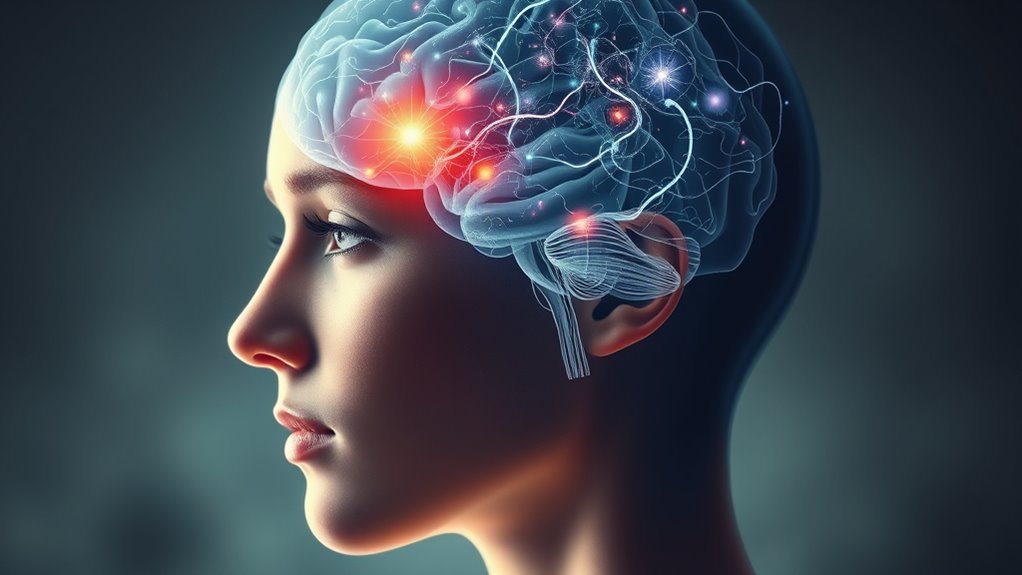

Your subconscious mind acts as a hidden guide, quietly shaping your beliefs, emotions, and reactions without your awareness. It influences how you perceive the world and respond to situations, often operating on autopilot based on past experiences and conditioning. By paying attention to dreams and symbols, you can uncover its messages and begin reprogramming limiting patterns. Understanding this inner guide can empower you to transform your life—keep exploring to discover how to access this powerful resource.
Key Takeaways
- The subconscious mind influences behaviors, beliefs, and emotions without conscious awareness, shaping daily life and perceptions.
- Dream analysis reveals hidden fears, desires, and unresolved conflicts encoded in symbols and stories during sleep.
- Decoding subconscious messages empowers self-awareness, helps reprogram negative patterns, and supports personal growth.
- Our subconscious is conditioned by childhood, societal influences, and past experiences, often operating on autopilot.
- Understanding and harnessing the subconscious enables intentional life-shaping and deeper self-understanding.

Have you ever wondered how your mind processes thoughts and feelings without you even realizing it? The subconscious mind operates beneath your conscious awareness, silently shaping your behaviors, beliefs, and emotional responses. It’s like a vast, hidden guide that influences your daily life without you noticing. One way to tap into this hidden realm is through dream analysis. When you sleep, your mind continues to work, often communicating through symbols and stories in your dreams. These nocturnal visions can reveal underlying thoughts, fears, and desires that your conscious mind might ignore or suppress. By paying attention to your dreams and interpreting their messages, you gain insight into your subconscious programming — the deeply embedded patterns that steer your actions and perceptions. Understanding that dreams often contain symbolism allows for a deeper interpretation of their messages. Dream analysis offers a unique window into this subconscious realm. For instance, recurring dreams or vivid symbols often point to unresolved conflicts or core beliefs that influence your waking life. When you learn to decode these symbols, you begin to understand the messages your subconscious is trying to communicate. This process isn’t about fortune-telling but about self-awareness. It helps you identify the subconscious programming that might be holding you back or causing emotional distress. Recognizing these hidden influences empowers you to challenge and reprogram limiting beliefs, paving the way for personal growth. It’s like unlocking a secret manual that explains why you react a certain way or why specific situations trigger strong emotions.
Dreams reveal hidden thoughts and fears, unlocking your subconscious patterns for deeper self-awareness and growth.
Understanding your subconscious mind also means acknowledging how it’s been conditioned over the years. From childhood experiences to societal influences, your subconscious absorbs countless messages that shape your worldview. These ingrained patterns often run on autopilot, guiding your decisions and reactions without your conscious input. By consciously exploring these influences — whether through dream analysis, meditation, or reflective practices — you can begin to reprogram your subconscious. This reprogramming process involves replacing negative or limiting beliefs with positive, empowering ones. It’s a deliberate effort to rewrite the scripts stored deep within your mind, ultimately leading to greater self-control and emotional resilience.
In essence, your subconscious mind is like an internal architect, designing the blueprint of your reality. You might not always see it, but its influence is undeniable. By engaging in practices like dream analysis and understanding subconscious programming, you can start to decipher this hidden blueprint. Doing so allows you to take charge of your inner world, shaping your future with greater awareness and intention. Recognizing the power and subtlety of your subconscious isn’t just fascinating — it’s essential for transforming your life from the inside out.
Top picks for "subconsciou mind hidden"
Open Amazon search results for this keyword.
As an affiliate, we earn on qualifying purchases.
Frequently Asked Questions
Can the Subconscious Mind Influence Physical Health?
Yes, your subconscious mind can influence your physical health through the mind-body connection. When your subconscious programming is positive, it promotes healing and well-being. Conversely, negative beliefs or stress can lead to health issues. By consciously reprogramming your subconscious, you can enhance your body’s ability to recover and stay healthy. Your thoughts and beliefs deeply impact your physical state, highlighting the importance of nurturing a healthy subconscious mindset.
How Can I Access My Subconscious Thoughts?
To access your subconscious thoughts, start by soothing your mind through meditation, which stimulates hippocampus functions, helping you uncover hidden memories. Practice mindful awareness, focusing on feelings and sensations, enabling subconscious programming to surface naturally. Keep a journal nearby to jot down spontaneous thoughts or dreams. Over time, these techniques reveal your subconscious insights, releasing understanding and guiding your conscious decisions with clarity and confidence.
Is the Subconscious Responsible for Habits?
Yes, your subconscious is responsible for habits. It drives habit formation by creating automatic behaviors through repeated actions, making them effortless over time. When you perform a task repeatedly, your subconscious stores it as a cue-response pattern, so you don’t need to consciously think about it. This process helps conserve mental energy, allowing you to focus on new challenges while your habits operate seamlessly in the background.
Can Subconscious Beliefs Change Over Time?
Yes, your subconscious beliefs can change over time. Research suggests belief flexibility is possible, especially when you actively work on mindset evolution through new experiences and conscious effort. By challenging old patterns and adopting positive affirmations, you reshape your subconscious, leading to growth. Keep an open mind and stay committed to change, and you’ll find your deep-seated beliefs becoming more adaptable, ultimately guiding you toward personal transformation.
What Role Does the Subconscious Play in Dreams?
Your subconscious plays a crucial role in dreams through subconscious processing and dream symbolism. It interprets unresolved emotions, fears, and desires, often presenting them as vivid images and symbols. These dreams act as messages from your subconscious, helping you process experiences and feelings you might not be fully aware of. By paying attention to dream symbolism, you gain insight into your inner thoughts, fostering personal growth and emotional clarity.
Conclusion
Your subconscious mind quietly shapes your reality, often unnoticed, like a silent architect behind the scenes. While your conscious thoughts may seem dominant, it’s the hidden layers that truly steer your actions and beliefs. Recognizing this contrast empowers you to harness your subconscious, transforming hidden fears into strengths. Embrace the mystery within; it’s the unseen guide that can lead you toward growth and fulfillment, proving that sometimes, what’s beneath the surface holds the greatest power.