
To achieve deep, restorative sleep, focus on balancing warm feet with a cool room. Warming your feet increases blood flow and signals your body to wind down, while a cooler environment helps lower your core temperature for better sleep quality. Use socks or foot massages to warm your feet before bed, then lower your thermostat or use fans to cool the air. If you stay curious, you’ll discover more simple ways to optimize your sleep temperature for restful nights.
Key Takeaways
- Warming your feet increases blood flow, signals the body to lower core temperature, and accelerates sleep onset.
- Cooler room temperatures (60-67°F) promote deeper, restorative sleep by supporting natural thermoregulation.
- Combining foot warmth with a cool sleeping environment optimizes sleep quality and reduces awakenings.
- Use breathable bedding and proper ventilation to maintain a comfortable, cool sleep setting.
- Establishing routines that warm extremities before cooling the environment helps achieve deep, restful sleep.

Busy Socks Winter Warm Thermal Socks for Men Women Extra Thick Insulated Heated Crew Boot Socks for Extreme Cold Weather, Medium, 1 Pair Black
SIZE- Medium fits for (US Men Shoe Size 6-9.5, Women Shoe Size 7-9.5), Large fits for (US Men…
As an affiliate, we earn on qualifying purchases.
As an affiliate, we earn on qualifying purchases.
How Body Temperature Regulates Your Sleep Cycle
Your body temperature plays a crucial role in regulating your sleep cycle because it naturally fluctuates throughout the day. This fluctuation is guided by your circadian rhythms, which coordinate your internal clock with the external environment. During the day, your body warms up, promoting alertness and activity. As evening approaches, your body begins to cool down, signaling that it’s time to wind down. Thermoregulation helps maintain this balance, ensuring your body cools sufficiently to initiate sleep. When your core temperature drops, you’re more likely to feel sleepy, and warming up again signals wakefulness. This interplay between circadian rhythms and thermoregulation orchestrates your sleep-wake cycle, making temperature regulation essential for healthy, restorative sleep. Additionally, optimizing whole-home water systems can help improve sleep quality by ensuring hydration, which is critical for maintaining proper body temperature. Maintaining a comfortable ambient temperature in your sleep environment can further enhance relaxation and support deeper sleep cycles. Furthermore, debt management strategies can alleviate financial stress, contributing to a more restful night’s sleep. The use of zero-gravity recliners can also promote better sleep positioning, allowing your body to relax fully and support optimal thermoregulation. Incorporating best watering pots into your home can also enhance your indoor environment, making it more conducive to relaxation and sleep.

LEVOIT Tower Fan for Bedroom, 90° Oscillating Standing Fan with 28dB Quiet for Sleep, 25ft/s Velocity, 12H Timer, 5 Speeds 4 Modes, Remoter, Bladeless Room Fan for Home, Office, Indoor, 36 inch, White
𝙎𝙖𝙮 𝙂𝙤𝙤𝙙𝙗𝙮𝙚 𝙩𝙤 𝙏𝙧𝙖𝙙𝙞𝙩𝙞𝙤𝙣𝙖𝙡 𝙁𝙖𝙣𝙨: Our innovative airflow design combines a curved air inlet and unique multi-blade design,…
As an affiliate, we earn on qualifying purchases.
As an affiliate, we earn on qualifying purchases.
Why Warm Feet Help You Fall Asleep Faster
Warming your feet before bed can considerably speed up the process of falling asleep because it helps signal to your body that it’s time to wind down. Foot warmth boosts blood flow to your extremities, which in turn helps lower core body temperature—a key factor in sleep readiness. When your feet are warm, your body perceives a sense of comfort, enhancing overall sleep comfort. This increased warmth triggers dilation of blood vessels in your feet, promoting heat transfer and signaling your brain that it’s time for rest. Additionally, using ergonomic accessories can further enhance your relaxation routine. As a result, you fall asleep faster and experience more restful sleep. Keeping your feet warm is a simple yet effective way to improve your sleep onset, making it easier to drift into deep, restorative sleep. Furthermore, understanding the impact of digital concepts on your overall health can further enhance your sleep quality. Incorporating eco-friendly practices in your bedtime routine can also create a calming atmosphere conducive to sleep. Moreover, maintaining a comfortable environment is crucial, as proper ventilation can significantly affect your overall sleep experience. Utilizing smart kitchen gadgets can also help you prepare calming herbal teas, promoting relaxation before bedtime.

Snuggle Sac Natural Viscose Cooling Comforter Queen Size, Lightweight Breathable Silky Cooling Bedding with Q-Max>0.45 for Bedroom, Home Decor, Hot Sleepers & Night Sweats, Cool Gray 90"x90"
Breathable Plant-Based Cooling: Snuggle Sac cooling comforter features Q-Max >0.45 fabric that rapidly absorbs heat and lowers skin…
As an affiliate, we earn on qualifying purchases.
As an affiliate, we earn on qualifying purchases.
How Cooler Bedrooms Promote Deeper Sleep
Cooling your bedroom can substantially enhance the quality of your sleep because lower temperatures help regulate your body’s internal processes. When your sleep environment is cooler, your body naturally lowers its core temperature, signaling it’s time to rest deeply. This promotes longer REM cycles and improves overall sleep quality. Additionally, smart thermostats can help you maintain a consistent cool temperature throughout the night. Your bedding choices also matter—light, breathable materials prevent overheating and keep you comfortable throughout the night. Proper care for bedding can also prolong its lifespan, ensuring you enjoy a restful sleep every night. Additionally, portable power solutions can help ensure you have reliable fans or cooling devices to maintain your ideal sleep environment. Studies show that a cool sleep environment can also reduce insomnia symptoms and enhance relaxation. Maintaining a clean environment can further improve air quality, which is crucial for better sleep hygiene.
| Sleep Environment | Bedding Choices |
|---|---|
| Keep room between 60-67°F | Use natural fibers like cotton or linen |
| Minimize noise and light | Choose lightweight, moisture-wicking sheets |
| Guarantee proper ventilation | Avoid heavy, insulating blankets |

Zuacs Dual Motor Power Lift Chair 26" Extra Wide Recliner Chair for Elderly with Headrest, Flip Arm Storage,Massage & Heat,Oversized Lay Flat Recliner with Cupholders,USB Ports,Type C,Zero Gravity
Dual-Motor Lift Chair for Elderly:Dual-motor structure, enabling the backrest and footrest to be adjusted independently in position.The power…
As an affiliate, we earn on qualifying purchases.
As an affiliate, we earn on qualifying purchases.
Easy Ways to Warm Your Feet Before Bed
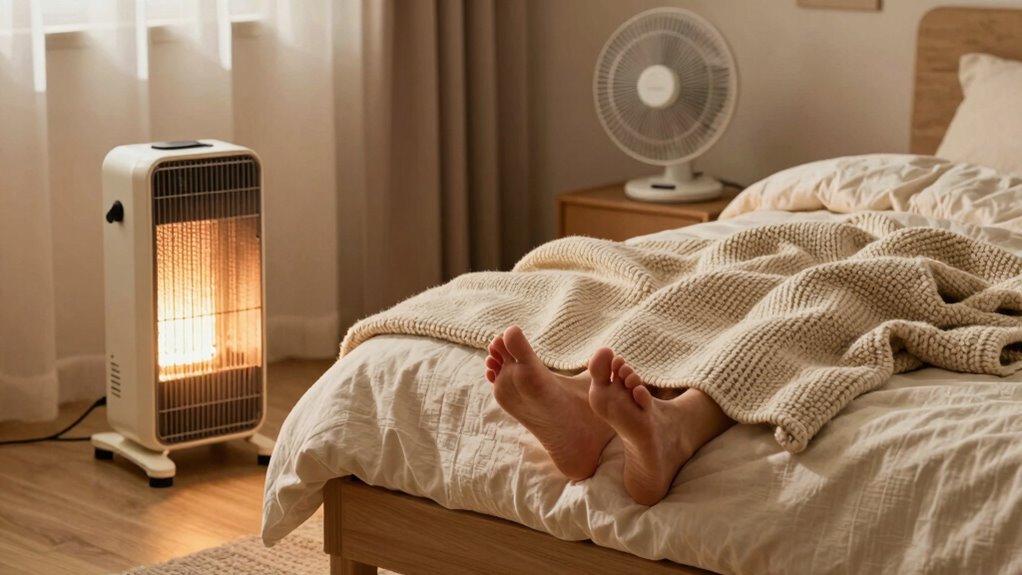
Warming your feet before bed can help you fall asleep faster and sleep more soundly. You can try wearing warm socks, taking a soothing warm bath, or giving yourself a relaxing foot massage. These simple methods are easy to incorporate into your nightly routine and can make a big difference in your sleep quality. Additionally, personalization increases engagement rates in your overall bedtime routine, making it more enjoyable and effective. Incorporating techniques from auditory processing disorder sound therapy can further enhance your relaxation before sleep. Moreover, maintaining an optimal sleep environment, such as ensuring cool air circulation, can significantly improve your overall sleep experience. Consider integrating creative gear into your bedtime routine, like calming sound machines, to support a more restful atmosphere. Creating a toxin-free space in your home can also contribute to better sleep quality.
Use Warm Socks
Putting on a pair of cozy, warm socks before bed is one of the simplest ways to raise your overall body temperature and promote better sleep. Warm socks improve sleep comfort by keeping your feet warm, signaling to your brain that it’s time to relax. When your feet stay warm, blood vessels in that area dilate, helping heat circulate throughout your body. This process encourages your core temperature to drop gradually, making it easier to fall asleep and stay asleep longer. Additionally, maintaining a comfortable blood glucose level can contribute to better sleep quality. For a truly enjoyable experience, consider incorporating movie-night planning tips that create a cozy atmosphere in your bedroom. Choose thick, soft socks made from natural fibers like wool or cotton for maximum warmth and comfort. Wearing warm socks is a small, easy step that can markedly enhance your sleep quality by maintaining ideal temperature balance overnight. Furthermore, understanding the impact of temperature on sleep can further enhance your bedtime routine. Incorporating cooking techniques to prepare warm drinks or snacks can also create a cozy environment that promotes relaxation before sleep. Additionally, maintaining a comfortable contrast ratio in your bedroom’s lighting can help set the mood for a restful night.
Take a Warm Bath
Taking a warm bath before bed is an effective way to raise your foot temperature and promote relaxation. It’s a simple yet powerful relaxation technique that can signal your body it’s time to wind down. To maximize the benefits, incorporate these bath rituals:
- Use gentle, calming scents like lavender or chamomile to enhance relaxation.
- Keep the water comfortably warm—not hot—to avoid overstimulation.
- Spend around 15-20 minutes soaking, focusing on relaxing your feet and legs.
This routine helps lower your core body temperature afterward, making it easier to fall asleep. A warm bath can unwind tense muscles and clear your mind, creating a perfect environment for deep sleep. Consistently practicing this relaxation technique can markedly improve your sleep quality.
Practice Foot Massage
Practicing foot massage is a simple and effective way to warm your feet before bed, helping you relax and prepare for sleep. By stimulating foot pressure points, you can access reflexology benefits that promote circulation and comfort. Use gentle pressure to massage areas linked to your core temperature, encouraging warmth. Here’s a quick guide:
| Foot Area | Benefit |
|---|---|
| Arch | Enhances circulation, warms feet |
| Toes | Activates reflex points for relaxation |
| Heel | Stimulates blood flow |
| Ball of Foot | Promotes overall relaxation |
Focusing on these pressure points can make your feet feel warmer and more relaxed, making it easier to drift into a deep, restful sleep.
Natural Tips to Cool Your Bedroom Environment
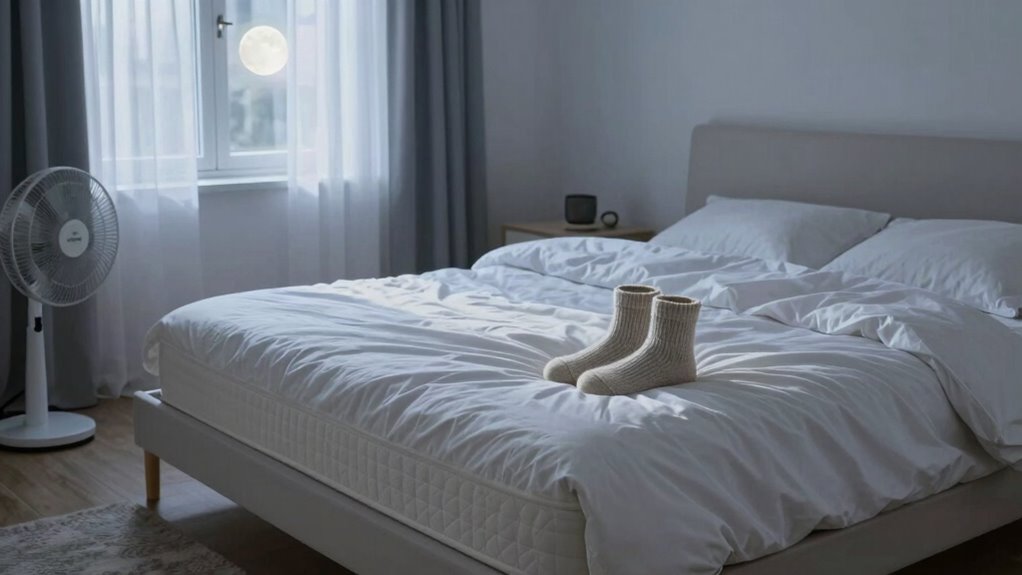
When the heat rises, small changes can make a big difference in cooling your bedroom naturally. Start by adjusting your sleep position; sleeping on your back with arms and legs spread out helps air circulate and reduces heat buildup. Choose a mattress material like latex or gel-infused memory foam, which stay cooler than traditional options. To optimize your environment:
- Use a fan or ceiling fan to promote airflow.
- Keep blinds or curtains closed during the day to block out heat.
- Opt for lightweight, breathable bedding like cotton sheets.
These tips work together to create a cooler sleeping space, helping you stay comfortable and sleep better through warm nights.
Common Sleep Disruptions Caused by Temperature Mistakes

When your bedroom gets too hot, you might find it hard to stay still or fall asleep, leading to restless nights. Conversely, cold air can wake you up or make it difficult to stay warm enough to rest comfortably. Both mistakes in temperature control disrupt your sleep and leave you feeling exhausted.
Overheating Causes Restlessness
Overheating during sleep is a common culprit behind restlessness and frequent awakenings. When your body gets too warm, it disrupts your sleep cycle and hampers effective temperature regulation, causing you to toss and turn. To prevent this, consider these key factors:
- Inappropriate Bedding: Heavy blankets trap heat, making it harder to stay cool.
- Room Temperature: A room that’s too warm interferes with your body’s ability to cool down naturally.
- Sleepwear Choices: Wearing thick or non-breathable fabrics traps heat, increasing discomfort.
Keeping your environment cool and choosing breathable sleepwear support your body’s natural temperature regulation, helping you stay asleep longer and enjoy more restorative rest.
Cold Air Disrupts Sleep
Have you ever woken up feeling cold and unable to fall back asleep? Cold air can considerably disrupt your sleep hygiene, making it harder to stay asleep through the night. When your environment is too chilly, your body struggles to maintain a comfortable core temperature, causing frequent awakenings. This disturbance not only hampers your rest but also impacts dream enhancement, preventing you from reaching deeper sleep stages associated with vivid dreams. To improve sleep quality, keep your room at a steady, cool temperature—around 65°F (18°C)—without it becoming too cold. Proper temperature regulation helps you stay cozy, supports uninterrupted sleep, and creates ideal conditions for restorative rest and better dreaming. Remember, maintaining consistent sleep hygiene involves balancing room temperature to avoid the disruptive effects of cold air.
How to Combine Warm Feet and Cool Air for Better Rest
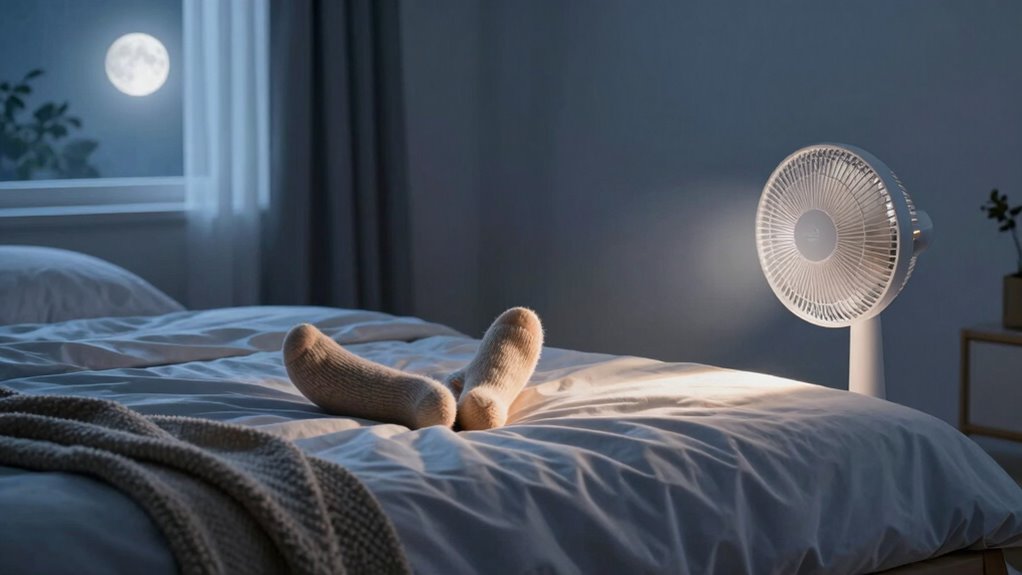
To improve your sleep, try balancing warm feet with cool air. This harmony creates an ideal sleep environment, promoting deep, restful sleep. Start by establishing calming bedtime rituals, like a warm foot soak or wearing socks, to warm your feet. Then, cool the room with a fan or breathable bedding to lower your overall body temperature. Here are three ways to combine these elements effectively:
Balance warm feet with cool air for restful, deep sleep through calming rituals and a comfortable, ventilated environment.
- Use socks or a heating pad on your feet before bed, then turn down the thermostat.
- Keep your bedroom well-ventilated or use a fan to maintain cool air.
- Create a consistent sleep routine that signals your body to relax, balancing warm extremities with a cool environment.
This approach helps your body naturally regulate temperature for better rest.
Signs Your Sleep Temperature Needs Adjustment
If you find yourself tossing and turning or waking up feeling unrefreshed, your sleep temperature might not be just right. Your sleep position can reveal clues—if you’re frequently flipping or shifting, you may be too hot or cold. Pay attention to how your bedding material feels; heavy, synthetic fabrics can trap heat, making you uncomfortably warm, while lightweight or breathable fabrics help keep you cool. If you wake up sweaty or cold, it’s a sign your current setup isn’t regulating your temperature effectively. Also, notice if you’re constantly adjusting your covers or struggling to find comfort. These signs suggest it’s time to tweak your sleep environment—adjust your bedding, change your sleep position, or set your room temperature to better support deep, restful sleep.
Frequently Asked Questions
Can Temperature Changes Improve Sleep Quality for Insomniacs?
Yes, adjusting your sleep temperature can improve sleep quality for insomniacs. Maintaining ideal sleep temperature helps regulate your body’s internal clock and promotes relaxation. Cooler air around your room and warm feet can signal your body it’s time to sleep, aiding insomnia relief. By creating a comfortable sleep environment, you’re more likely to fall asleep faster and enjoy deeper, more restorative sleep throughout the night.
How Does Humidity Affect Sleep Temperature and Comfort?
Humidity impacts your sleep comfort by influencing moisture regulation and temperature perception. Too much moisture makes you feel clammy, disrupting sleep, while too little dries out your skin and nasal passages, causing discomfort. Balancing humidity levels enhances comfort, helping you maintain ideal body temperature. When humidity is just right, your body can regulate moisture efficiently, supporting better sleep quality and preventing overheating or chills throughout the night.
Are There Specific Sleep Products Designed for Temperature Regulation?
Yes, there are sleep products designed for temperature regulation. Sleep technology includes cooling pillows, mattresses with temperature-controlled layers, and breathable bedding materials that help maintain ideal sleep temperatures. These products actively wick away heat, promote airflow, and keep you cool or warm as needed. By choosing the right bedding materials and sleep tech, you can enhance comfort, improve sleep quality, and achieve that perfect balance of warmth and coolness for deep, restful sleep.
Does Aging Impact the Body’s Ability to Regulate Sleep Temperature?
As you age, your body’s ability to regulate sleep temperature diminishes due to age-related thermoregulation changes. For example, an elderly person might find it harder to stay warm at night, disrupting sleep patterns. These altered elderly sleep patterns can cause frequent awakenings or difficulty falling asleep. To counter this, you can use warm socks or adjust room temperature, helping your body maintain ideal sleep conditions despite aging’s effects.
Can Temperature Adjustments Help With Sleep Disorders Like Sleep Apnea?
Temperature adjustments can help with sleep disorders like sleep apnea by supporting your sleep cycle through better thermal regulation. Cooler air can promote deeper sleep, while warm feet encourage vasodilation, aiding your body’s natural temperature shifts. These changes may reduce nighttime awakenings and improve overall sleep quality. By maintaining ideal thermal regulation, you can create a more conducive environment for restful sleep, even with sleep apnea challenges.
Conclusion
Picture slipping into your cozy bed, your feet warm and inviting, while a gentle breeze cools your room just enough to lull you into deep, restful sleep. When you tune your sleep temperature—keeping your feet warm and the air cool—you create the perfect environment for peaceful nights and energized mornings. Embrace these simple tricks, and soon you’ll drift into a world of serene slumber, waking refreshed and ready to face a new day.