
📊 Full opportunity report: Quiet GPUs for Local AI: Acoustic and Thermal Roundup on ThorstenMeyerAI.com — validation score, market gap, and execution plan.
TL;DR
This article reviews the most silent and thermally efficient GPUs for local AI in 2026, emphasizing undervolting and cooling strategies. Key picks include the RTX 5090 and RTX 4090, with practical recommendations for quiet operation.
In 2026, the most powerful consumer GPUs for local AI—such as the RTX 5090 and RTX 4090—can be configured for near-silent operation through undervolting and optimized cooling, despite their high thermal output.
This roundup assesses GPUs based on their acoustic and thermal performance under sustained AI inference loads, emphasizing that cooler, undervolted cards paired with high-quality cooling solutions can significantly reduce noise levels. The RTX 5090, with 32GB of VRAM and a 575W TDP, is identified as the top choice for a single-GPU AI rig, especially when power-capped to around 70%. The RTX 4090 and used RTX 3090 offer cost-effective alternatives, with the latter providing excellent VRAM-per-dollar value. Mid-tier options like the RTX 5080 and RTX 4060 Ti focus on efficiency and low heat output for smaller models. The RTX PRO 6000 Blackwell with 96GB VRAM is highlighted for professional applications demanding maximum memory capacity.
Quiet GPUs
for local AI.
The GPU makes ~70% of your heat and most of your noise. But here’s the secret: the chip doesn’t decide how loud your card is — the cooler design and your power settings do. Match your VRAM tier in Part 2, then make it quiet.
Capping to 70–80% sheds a huge amount of heat for almost no inference loss — because inference is memory-bound. A capped 5090 is dramatically cooler & quieter than stock. Do this first.
Within one GPU model, partner cards differ enormously. For a single card, a large triple-fan open-air with zero-RPM idle runs slow & quiet. For multi-GPU, the calculus flips →
With room to breathe, a large triple-fan open-air cooler spreads heat across a big fin stack and runs its fans slowly. The quietest choice — what most people should buy.
Why Quiet GPU Operation Matters for Local AI
Reducing noise and heat in local AI setups improves workspace comfort, lowers energy costs, and extends hardware lifespan. Proper undervolting and cooling strategies make high-performance GPUs viable for prolonged, quiet operation, making AI hardware more accessible and practical for everyday use.
Apple 2026 MacBook Pro Laptop with Apple M5 Pro chip with 15-core CPU and 16-core GPU: Built for AI, 14.2-inch Liquid Retina XDR Display, 24GB Unified Memory, 1TB SSD, Wi-Fi 7; Space Black
FAST RUNS IN THE FAMILY — The 14-inch MacBook Pro with the M5 Pro or M5 Max chip...
As an affiliate, we earn on qualifying purchases.
As an affiliate, we earn on qualifying purchases.
2026 GPU Landscape for Local AI Workstations
As AI models grow larger and more demanding, GPUs with higher VRAM and efficiency are essential. Historically, high-performance GPUs generate significant heat and noise, limiting their suitability for sit-at-your-desk setups. Recent advances emphasize undervolting and advanced cooling to mitigate these issues, with the RTX 5090 leading the consumer market. Previous generations like the RTX 3090 and 4090 remain relevant for budget-conscious builders, while professional-grade cards like the RTX PRO 6000 Blackwell cater to enterprise needs."Proper undervolting paired with high-quality cooling can transform even the hottest GPUs into near-silent workhorses, making high-performance local AI feasible in everyday environments."
— Thorsten Meyer, AI hardware expert

Gelid Solutions GP-Extreme Thermal Pad 80 x 40 x 0.5 mm Excellent Heat Conduction, Ideal Gap Filler Easy Installation Thermal Conductivity 12W
ULTIMATE THERMAL CONDUCTIVITY: With a thermal conductivity of 12W / mK, the GP-EXTREME offers first-class performance.
As an affiliate, we earn on qualifying purchases.
As an affiliate, we earn on qualifying purchases.
Uncertainties in Long-Term Reliability and Real-World Use
While undervolting and cooling strategies are proven to reduce noise, the long-term effects on GPU lifespan and stability under continuous AI workloads can be further supported by resources like best thermal paste and pads for high-TDP GPUs. Additionally, the availability of well-cooled, quiet variants from different manufacturers varies, and real-world performance can differ based on build quality and ambient conditions.
undervolting GPU for silent operation
As an affiliate, we earn on qualifying purchases.
As an affiliate, we earn on qualifying purchases.
Next Steps for Quiet Local AI GPU Setups
Expect continued refinement in cooling solutions and undervolting techniques, making high-end GPUs more accessible for quiet operation. Hardware manufacturers may also introduce more models optimized for low noise and heat, expanding options for users. Monitoring upcoming GPU releases and cooling innovations will be key for builders aiming for silent, high-performance AI rigs.
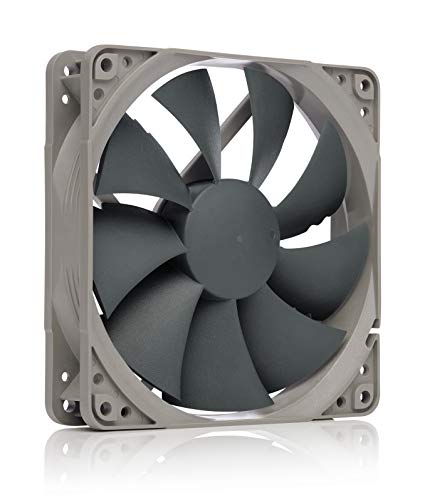
Noctua NF-P12 redux-1700 PWM, High Performance Cooling Fan, 4-Pin, 1700 RPM (120mm, Grey)
High performance cooling fan, 120x120x25 mm, 12V, 4-pin PWM, max. 1700 RPM, max. 25.1 dB(A), >150,000 h MTTF
As an affiliate, we earn on qualifying purchases.
As an affiliate, we earn on qualifying purchases.
Key Questions
How effective is undervolting in reducing GPU noise and heat?
Undervolting can significantly cut heat output and fan noise by lowering power consumption, often with minimal impact on inference speed, especially when paired with good cooling solutions.
Which GPU models are best suited for quiet AI workstations in 2026?
The RTX 5090 with power capping and a quality cooler is the top choice, followed by the RTX 4090 and used RTX 3090 for budget builds. Mid-tier options like the RTX 5080 and RTX 4060 Ti prioritize efficiency and low noise.
Can high-performance GPUs operate quietly during sustained workloads?
Yes, with proper undervolting, power capping, and high-quality cooling, even top-tier GPUs can run quietly during long inference sessions.
What are the main factors influencing GPU noise levels?
The GPU's cooler design, fan quality, power settings, and undervolting practices are the primary factors affecting noise during operation.
Are professional-grade GPUs necessary for quiet, high-capacity local AI setups?
Not necessarily; high-end consumer GPUs with proper tuning and cooling can achieve similar quiet performance. Professional GPUs like the RTX PRO 6000 Blackwell are suited for enterprise environments requiring maximum VRAM and stability.
Source: ThorstenMeyerAI.com