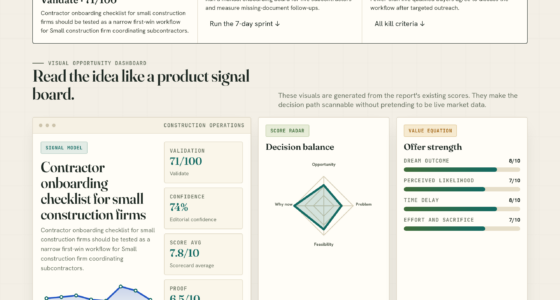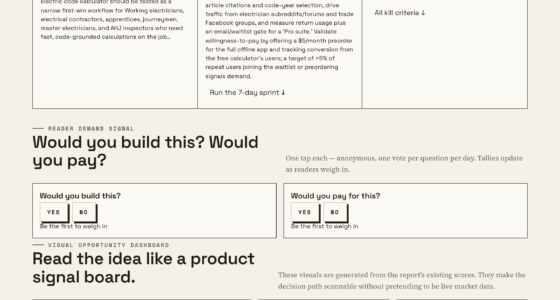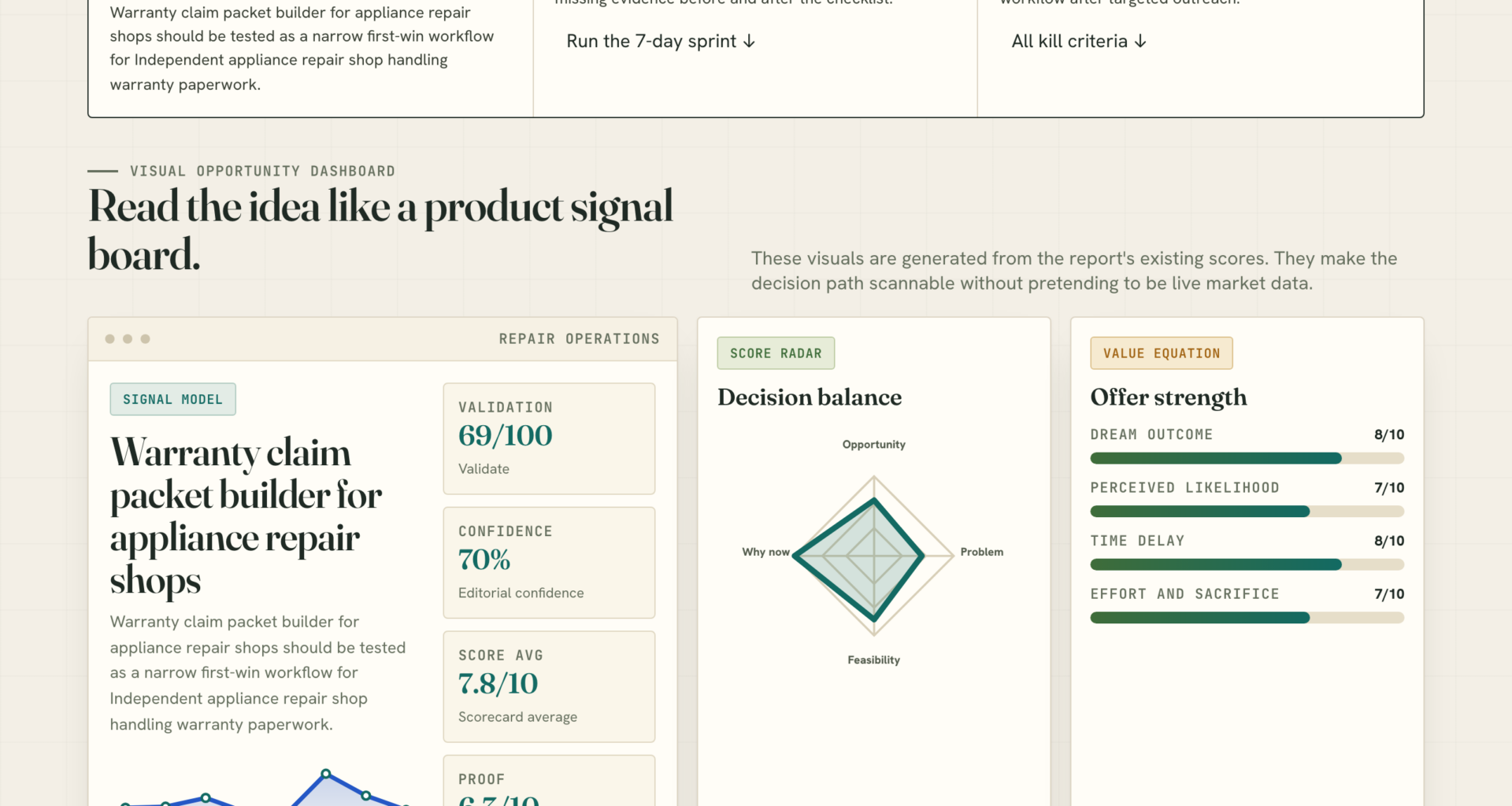

📊 Full opportunity report: Warranty claim packet builder for appliance repair shops on IdeaNavigator AI — validation score, market gap, and execution plan.

Turn your quiet moments into listening time
- Thousands of audiobooks, podcasts and originals
- Listen on your phone, tablet or Echo — also offline
- Cancel anytime
TL;DR
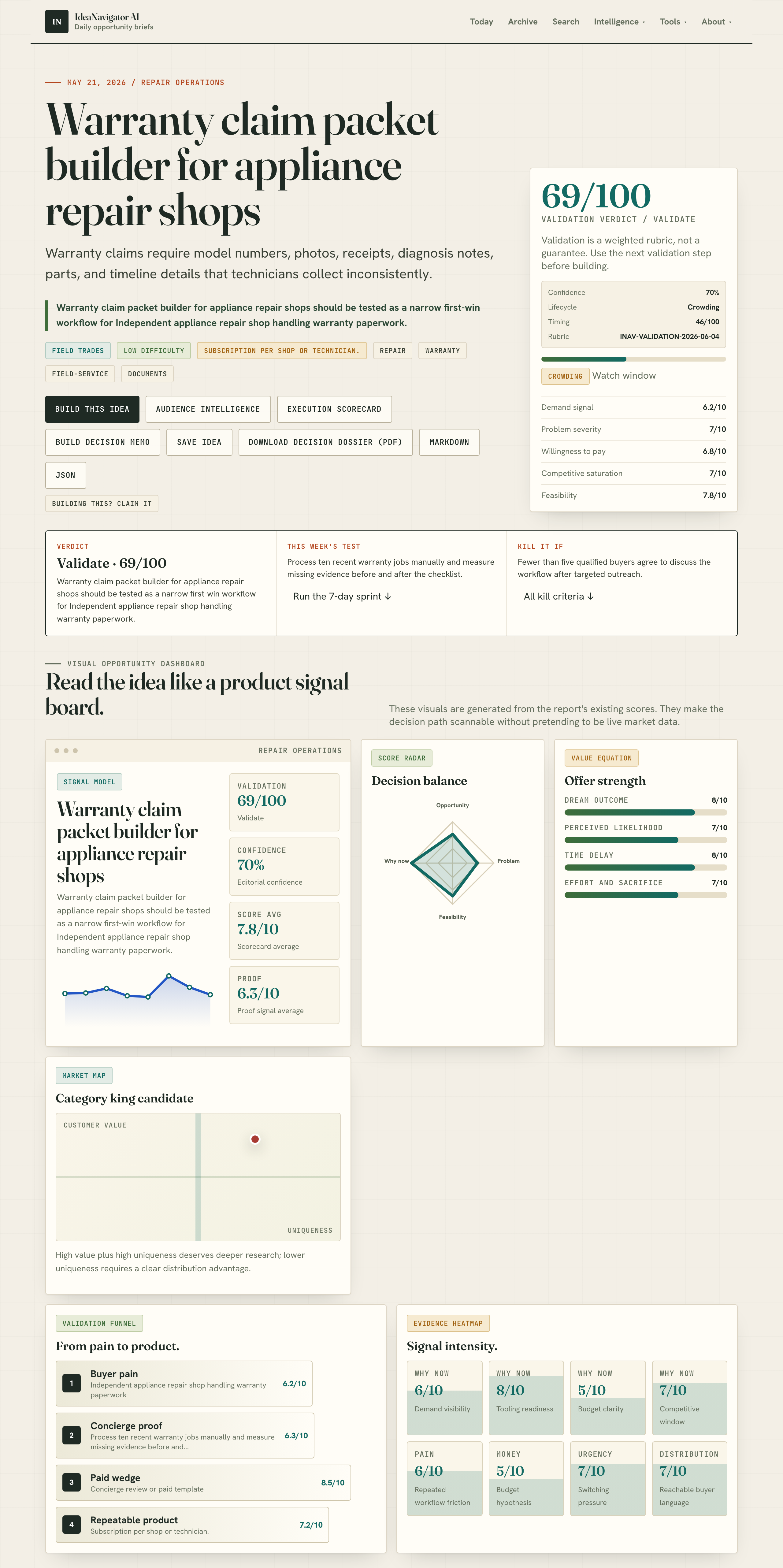
A prototype for a warranty claim packet builder is being tested for independent appliance repair shops. It aims to streamline documentation, improve claim accuracy, and reduce rework. The initial test involves processing ten recent warranty jobs to measure effectiveness.
A new warranty claim packet builder tool is being tested with independent appliance repair shops to streamline the process of collecting and organizing documentation for warranty claims. This development aims to address common issues with inconsistent evidence collection and reduce rework, which can impact margins and operational efficiency.
The proposed tool prompts technicians to gather required evidence, such as model numbers, photos, receipts, diagnosis notes, parts used, and timeline details, and then exports a comprehensive, warranty-ready claim summary. The initial testing involves processing ten recent warranty jobs manually to establish baseline data on missing evidence, then measuring improvements after implementing the checklist.
According to sources familiar with the project, the prototype will be available for subscription-based use, with pricing structured per shop or technician. The goal is to validate the workflow by demonstrating reduced missing evidence and faster claim preparation, ultimately helping repair businesses protect margins and reduce claim rework.
Potential Impact on Independent Appliance Repair Shops
If successful, this tool could significantly improve the efficiency and accuracy of warranty claim submissions for small repair businesses. By standardizing evidence collection, shops can reduce claim rejections, rework, and delays, leading to cost savings and better cash flow. This development also reflects a broader trend toward digitizing and automating administrative workflows within repair operations, which could set new industry standards.
Products Worth Considering

Garmin Forerunner 165 GPS Running Smartwatch, 43 mm, Black

Philips Sonicare ProtectiveClean 5300 Rechargeable Electric Toothbrush with 3 Brush Heads, Black

Fitbit Versa 4 Health and Fitness Smartwatch with GPS, Heart Rate and Sleep Tracking, Alexa, Water Resistant, Black
As an affiliate, we earn on qualifying purchases.
Industry Need for Better Warranty Documentation Processes
Independent appliance repair shops often face challenges in assembling complete warranty claim packets due to inconsistent documentation practices. Currently, technicians collect evidence manually, which can lead to missing information and increased rework. The opportunity for a dedicated, workflow-driven packet builder arises from the need to streamline this process. This initiative follows broader efforts to improve operational efficiency in the repair sector, especially as warranty claims become more scrutinized and complex.
“The idea is to create a guided process that helps technicians gather all necessary evidence upfront, reducing the back-and-forth with warranty providers.”
— an anonymous researcher
Uncertainties Around Implementation and Effectiveness
It is not yet clear how well the prototype will perform in real-world settings or how much it will reduce claim rework. The testing phase is still ongoing, and results are pending. Additionally, questions remain about the integration of this tool into existing workflows and whether it will be adopted broadly by repair shops.
Next Steps for Validation and Deployment
The next steps include completing the initial testing phase by processing the ten warranty jobs with and without the checklist, then analyzing the data to measure improvements. Based on these results, developers plan to refine the tool and prepare for a broader pilot. If successful, a commercial launch could follow within the next several months, with ongoing updates based on user feedback.
Key Questions
How will the warranty claim packet builder improve my repair shop’s workflow?
The tool prompts technicians to collect all required evidence systematically, reducing the chance of missing information and speeding up the claim process.
Is this tool available for use now?
It is currently in the testing phase and not yet available for general use. Further validation is planned before a wider rollout.
Will this replace manual documentation completely?
The goal is to supplement existing practices with a guided workflow that improves completeness and consistency, not entirely replace manual efforts.
What is the cost structure for using this tool?
The proposed pricing model involves a subscription fee per shop or technician, but exact costs are still under development.
How will this impact warranty claim rejections?
By ensuring more complete and accurate documentation upfront, the tool aims to reduce claim rejections due to missing evidence, thereby improving approval rates.
Source: IdeaNavigator AI