📊 Full opportunity report: VigilSAR: The Object That Isn’t Transmitting on ThorstenMeyerAI.com — validation score, market gap, and execution plan.
TL;DR
VigilSAR is a radar-based platform that detects ships and aircraft without transponder signals, crucial for maritime security and safety. Its core capability is demonstrated using publicly available Sentinel-1 SAR data, with broader commercial and defense applications in development.
VigilSAR has announced a new platform capable of detecting objects in radar imagery that do not broadcast transponder signals, a development that could significantly enhance maritime security and safety. This capability is based on publicly available Sentinel-1 SAR data, making its core function verifiable, though broader commercial deployment remains in progress.
The VigilSAR platform combines synthetic-aperture radar (SAR) detection with data fusion from transponder signals such as AIS and ADS-B, as well as open-source information, to identify vessels or aircraft that are present but not reporting. Its key feature is detecting ‘dark’ objects—those visible on radar but lacking transponder data—highlighting potential illegal activities like smuggling, fishing violations, or vessels in distress.
While VigilSAR’s detection and classification techniques employ established AI and remote sensing methods, the core innovation lies in its ability to fuse multiple data sources to isolate anomalies—objects seen on radar without corresponding transponder signals. The demonstrable foundation of this capability is based on Sentinel-1’s open, public SAR data, which allows verification of detection performance, although the full commercial system’s reach and pricing are not yet publicly available.
VigilSAR — the object that isn’t transmitting
Radar sees through cloud and darkness, when cameras can’t. Fuse it with transponder data and the signal is the one detection no transponder explains.
Independent commentary on public positioning, produced with AI assistance under human editorial oversight. The views are the author’s own and may change. This does not verify or endorse VigilSAR’s capabilities, contracts, or performance. Capabilities on Sentinel-1 / Copernicus reflect a free, public data foundation; commercial-constellation and air-gapped-deployment references reflect stated positioning, not independently demonstrated fact. ISR and related technologies may be subject to export controls and dual-use regulations — lawful, ethical use is solely the operator’s responsibility. Nothing here is an offer, pricing, or operational/safety/legal advice. AI detection and classification can err and require human verification. Product and company names are trademarks of their respective owners; mention does not imply endorsement.
Why Detecting Non-Transmitting Objects Matters
This development enhances maritime domain awareness by enabling authorities to identify vessels that are intentionally hiding or disabling their transponders. Such ‘dark’ vessels are often involved in illegal fishing, sanctions evasion, or smuggling. The capability also supports search and rescue operations by locating vessels in distress with disabled transponders. Its all-weather, day-and-night operation overcomes the limitations of optical imagery, making it a vital tool for security, law enforcement, and safety agencies worldwide.

SI-TEX T-760 Compact Color Radar w/4kW 18 Dome – 7 Touchscreen Marine, Boating Equipment
NEW
As an affiliate, we earn on qualifying purchases.
As an affiliate, we earn on qualifying purchases.
Background on SAR and Maritime Monitoring
Synthetic-aperture radar (SAR) provides all-weather, day-and-night imaging by emitting microwave signals and reading their return, unlike optical satellites that rely on visible light. Historically, SAR has been used for broad surveillance, but interpreting its signals required advanced AI for object detection and classification. VigilSAR builds on this by integrating data fusion techniques that correlate radar detections with transponder signals, enabling the identification of objects that are visible but not reporting.
The platform’s foundation on Sentinel-1 data, a publicly accessible resource from the European Space Agency, ensures transparency and verifiability of its core detection capabilities. While the broader commercial deployment and integration with other satellite constellations are still evolving, the core detection concept has been demonstrated in controlled settings.
“VigilSAR’s core strength is its ability to fuse radar detections with other signals, revealing vessels that are intentionally ‘dark’ and hiding their identity.”
— Thorsten Meyer, remote sensing expert
AIS transponder blocker
As an affiliate, we earn on qualifying purchases.
As an affiliate, we earn on qualifying purchases.
Unverified Aspects and Development Status
While VigilSAR’s detection capability based on Sentinel-1 data has been demonstrated, the full extent of its operational deployment, commercial availability, and integration with other satellite constellations remains unconfirmed. Pricing details and exact performance metrics in diverse environments are not publicly disclosed. Additionally, the platform’s effectiveness against sophisticated concealment tactics is still under evaluation.

Airborne Maritime Surveillance Radar: Volume 1, British ASV Radars in WWII 1939-1945 (Iop Concise Physics)
As an affiliate, we earn on qualifying purchases.
As an affiliate, we earn on qualifying purchases.
Next Steps for VigilSAR Deployment and Validation
VigilSAR plans to expand its commercial offerings, integrating additional satellite data sources and refining its AI algorithms for improved detection accuracy. Field testing with government and industry partners is expected to validate its operational utility. Further transparency regarding pricing and deployment timelines is anticipated as the platform matures.
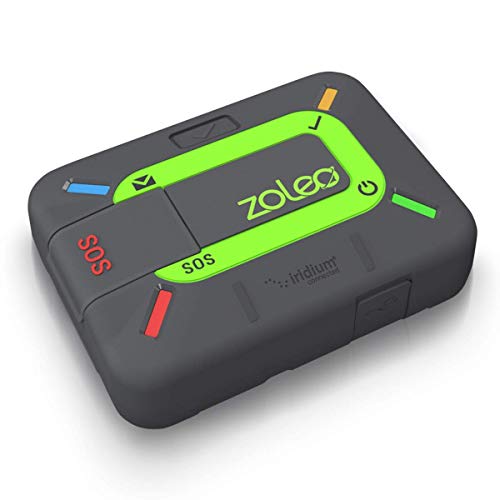
ZOLEO Satellite Communicator – Two-Way Global SMS Text Messenger & Email, Emergency SOS Alerting, Check-in & GPS Location – Android iOS Smartphone Accessory
Global satellite messaging: Stay connected beyond cell coverage, use ZOLEO with your smartphone to transmit text messages and…
As an affiliate, we earn on qualifying purchases.
As an affiliate, we earn on qualifying purchases.
Key Questions
How does VigilSAR detect vessels without transponder signals?
It uses synthetic-aperture radar (SAR) to identify objects based on their radar signatures, then fuses this data with transponder signals like AIS and ADS-B to find anomalies—objects visible on radar but not reporting transponder data.
Is VigilSAR currently available for commercial or government use?
The core detection capability demonstrated using Sentinel-1 data is verified, but full commercial deployment, including pricing and integration, is still in development.
What are the main applications of VigilSAR?
Its primary applications include maritime security, law enforcement, fisheries regulation, search and rescue, and monitoring illegal activities like smuggling and illegal fishing.
What limitations does VigilSAR face?
Its effectiveness depends on data fusion accuracy and may be challenged by vessels employing advanced concealment tactics. Its performance outside controlled demonstrations is still being evaluated.
Why is detecting non-transmitting objects important?
Because vessels that go dark can be involved in illegal activities or pose safety risks; detecting them enhances law enforcement, safety, and environmental protection efforts.
Source: ThorstenMeyerAI.com