
📊 Full opportunity report: Keeping A Visual Record Of Eczema And Psoriasis on IdeaNavigator AI — validation score, market gap, and execution plan.

Turn your quiet moments into listening time
- Thousands of audiobooks, podcasts and originals
- Listen on your phone, tablet or Echo — also offline
- Cancel anytime
TL;DR
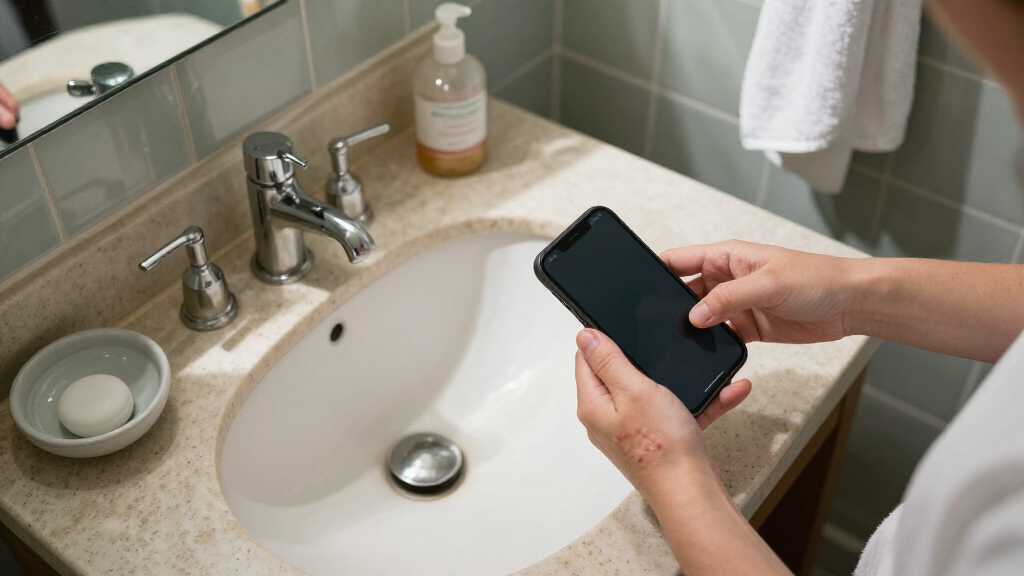
A proposed photo journal would guide adults with eczema or psoriasis to take weekly, consistently framed skin photos and record possible triggers. The idea has not yet been tested; its proposed first validation step is a one-month pilot with 15 eczema patients and feedback from their dermatologists.
IdeaNavigator AI has proposed a guided photo journal for adults with eczema or psoriasis to document skin flares between dermatology visits. The concept would pair weekly, consistently framed photos with dated notes about possible triggers, but the product has not been clinically or commercially validated.
In its proposal, IdeaNavigator AI says the tool is intended to address a specific difficulty: patients may have trouble remembering when a flare began, what might have preceded it, and whether treatment appeared to help by the time they see a dermatologist. The proposal suggests a dated record could give patients a more organized account than memory alone, but does not establish that photos would improve diagnosis or care.
IdeaNavigator AI describes a suggested minimum product that would prompt users to take a photo each week with guidance on framing and lighting. It would arrange the images in a side-by-side timeline and let users add a note about a possible trigger for each entry. The proposal also describes a paid subscription for unlimited history, exports and a visit-preparation PDF; it specifies no pricing, launch date or operating product.
As a first test, IdeaNavigator AI suggests recruiting 15 people with eczema to record photos weekly for one month. The proposal says the team would then ask their dermatologists whether the timeline changed the appointment and measure participants’ willingness to pay. This is a proposed research plan, not a completed study; no results are reported, and the plan does not include a psoriasis-specific pilot.
A More Dated Record Between Visits
If a tool like this proves useful, it could help patients bring a clearer account of changes between appointments, particularly when a flare has improved or shifted before the consultation. Dated images and brief notes may help structure a discussion about symptoms and treatment history. Whether they offer information that a clinician would find useful remains an open question.
The value would depend on more than storing photographs. Images can vary with lighting, camera distance, angle and body position, which can make comparisons difficult. IdeaNavigator AI’s proposal includes prompts intended to make capture more consistent, but provides no evidence that they would achieve reliable comparisons or that a timeline would alter clinical decisions. The proposed pilot would begin to test whether dermatologists find the record helpful during visits.
The proposal also raises practical questions for users: a photo journal could involve sensitive health information, and a subscription model could limit access for people unwilling or unable to pay. IdeaNavigator AI’s description does not set out privacy protections, data storage practices or an alternative free tier. Those details would matter to patients deciding whether to store skin images in an app.
skin care photo journal for eczema
As an affiliate, we earn on qualifying purchases.
As an affiliate, we earn on qualifying purchases.
The Proposed Workflow and Pilot
IdeaNavigator AI frames the idea as a narrow tool for adult patients tracking chronic skin conditions between dermatology appointments, rather than as a treatment or diagnostic service. Its proposed use is to collect progress images and personal notes that patients could review or bring to a visit. The description does not include automated image analysis, treatment recommendations or a link to a clinician’s medical record.
The proposal’s rationale is that phone cameras and cloud storage make it easier to keep dated images, while teledermatology appointments may ask patients to share progress pictures. These are reasons IdeaNavigator AI gives for exploring the workflow, not evidence that patients consistently take comparable photos or that clinicians need a dedicated journal. The proposal identifies chronic skin-condition self-management as its market but provides no market-size figures or user research.
IdeaNavigator AI’s suggested one-month test would focus on eczema patients. The proposal says it would examine whether people keep up with weekly logging, whether dermatologists say the timeline changed the visit, and whether participants express willingness to pay. These are proposed measures; no recruitment figures, clinician responses or payment findings are reported.
As an affiliate, we earn on qualifying purchases.
Clinical Value and Privacy Unresolved
IdeaNavigator AI’s description reports no trial, user study, dermatologist interview or commercial launch. It does not say whether the proposed pilot has been funded or scheduled, how participants would be recruited, or how many dermatologists would review the timelines. The one-month plan may indicate initial usability and clinician feedback, but would not by itself establish long-term adherence or effects on health outcomes.
Other details remain unspecified in the proposal, including how the app would protect and store intimate health images, whether users could delete or export all of their data, and what the subscription would cost. It also does not explain how the product would handle different skin tones, body sites, changing camera conditions or users who cannot take weekly photos. While the concept names both eczema and psoriasis, its outlined pilot is limited to eczema patients.
lighting and framing guide for skin photos
As an affiliate, we earn on qualifying purchases.
As an affiliate, we earn on qualifying purchases.
A Small Eczema Pilot Would Test Use
IdeaNavigator AI identifies a proposed pilot as the next step: 15 eczema patients would log weekly photos for one month. The proposal says the team would then seek their dermatologists’ views on whether the timeline affected the appointment and ask participants about willingness to pay. No start date or completion date is announced in the description.
Any follow-up would need to report whether participants maintained the routine, how clinicians assessed the records and what privacy and pricing arrangements a product would use. Until those details and pilot results are available, the photo journal remains a product concept rather than a validated tool for eczema or psoriasis care.
Source: IdeaNavigator AI proposal
As an affiliate, we earn on qualifying purchases.
Key Questions
Is the eczema and psoriasis photo-journal app available?
The IdeaNavigator AI proposal does not report a launched product or give an availability date. It describes a possible minimum version and a plan to test the idea.
How would the proposed journal work?
According to the IdeaNavigator AI proposal, it would prompt users to take weekly photos using framing and lighting guidance, then organize them into a dated timeline with a note about a possible trigger for each entry.
Has the photo journal been shown to improve care?
No results are reported in the proposal. Its suggested pilot would ask dermatologists whether a timeline changed the visit, but the study has not been reported as completed.
Who would take part in the proposed test?
IdeaNavigator AI suggests a test involving 15 people with eczema logging photos weekly for one month. The proposal does not describe a psoriasis-specific pilot.
What would the subscription include?
The proposal describes a subscription for unlimited history, exports and a visit-preparation PDF. Pricing and privacy terms are not specified.
Source: IdeaNavigator AI
Fall Picks
fall essentials
As an affiliate, we earn on qualifying purchases.