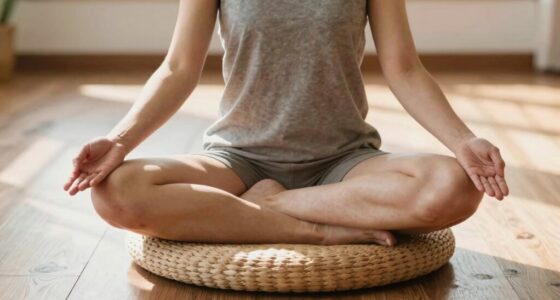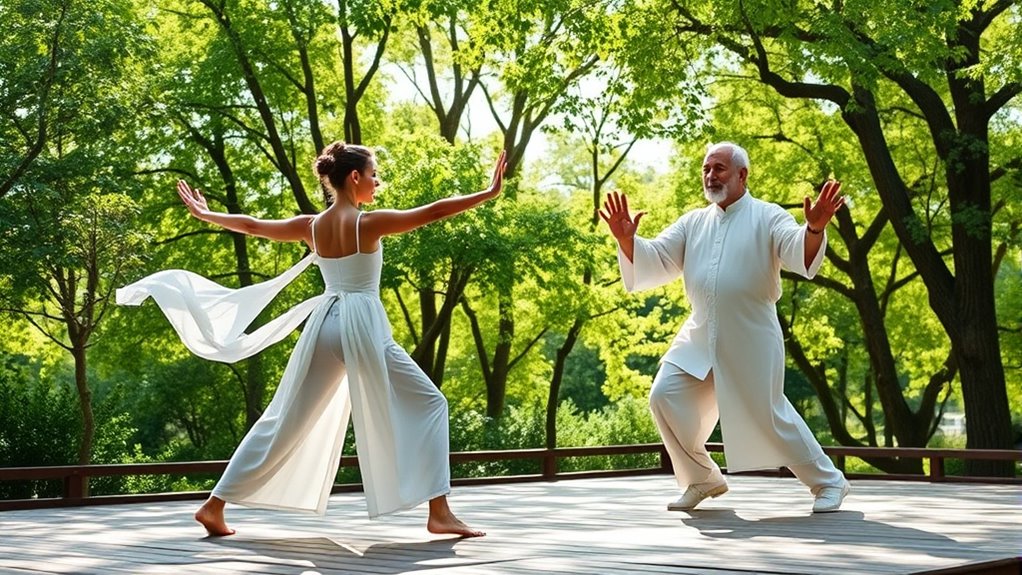

Mindful movement like yoga and Tai Chi combines breath awareness and proper posture to improve your physical stability, mental clarity, and emotional relaxation. By syncing breath with movement, you learn to stay present, reduce stress, and foster resilience. These practices don’t need special equipment and can easily fit into your daily routine. Continuing your exploration will reveal how these techniques can transform your overall well-being and become lasting habits you enjoy.

Turn your quiet moments into listening time
- Thousands of audiobooks, podcasts and originals
- Listen on your phone, tablet or Echo — also offline
- Cancel anytime
Key Takeaways
- Mindful movement integrates breath awareness and proper posture to enhance focus, relaxation, and physical stability.
- Practices like yoga and Tai Chi synchronize breath with slow, intentional movements to deepen the mind-body connection.
- Regular mindful movement reduces stress, sharpens mental clarity, and promotes emotional resilience.
- These practices are accessible, require no special equipment, and can be incorporated into daily routines for long-term well-being.
- They foster inner peace, vitality, and improved physical health through sustained present-moment awareness.

Have you ever wondered how movement can transform your mind and body? When you engage in mindful movement practices like yoga or Tai Chi, you’re not just exercising; you’re cultivating a deep connection with yourself. It all begins with breath awareness. By paying close attention to your breathing, you create a foundation of calm and focus. Notice how each inhale fills your lungs and energizes you, while each exhale releases tension. This heightened awareness of your breath anchors you in the present moment, allowing your mind to settle and your body to relax. As you deepen your breath awareness, you’ll find that your movements become more intentional and fluid.
Connecting breath awareness with movement fosters calm, focus, and a deeper mind-body connection.
Posture alignment plays a fundamental role in mindful movement. When you focus on maintaining proper posture, you support your body’s natural balance and reduce strain. Whether you’re holding a yoga pose or flowing through Tai Chi sequences, aligning your head, shoulders, and hips ensures you’re engaging muscles correctly. Proper posture not only enhances your physical stability but also promotes mental clarity. When your body is aligned, you’re less likely to experience fatigue or discomfort, which helps sustain your practice longer. Over time, this awareness of posture spills over into daily life, encouraging healthier habits and a more confident presence.
In practices like yoga, integrating breath awareness with posture alignment transforms simple stretches into powerful tools for self-discovery. As you move through poses, focus on how your breath guides each transition. For example, inhale as you lengthen your spine, and exhale as you deepen into a stretch. This synchronization deepens your mind-body connection and amplifies the benefits of each movement. Similarly, in Tai Chi, slow, deliberate motions are performed with an emphasis on breath and alignment, creating a meditative rhythm that calms your nervous system. The gentle, flowing movements foster mindfulness and help you develop a greater sense of harmony within yourself.
As you continue exploring mindful movement, you’ll notice how these practices influence your mental state—reducing stress, sharpening focus, and cultivating resilience. The combined attention to breath awareness and posture alignment turns physical activity into a form of meditation, fostering a sense of inner peace and physical vitality. Incorporating these principles into your routine doesn’t require fancy equipment or hours of time; just a mindful intention to stay present with each breath and movement. Over time, you’ll discover that this simple yet profound approach can elevate your overall well-being and help you move through life with greater ease and awareness.
As an affiliate, we earn on qualifying purchases.
Frequently Asked Questions
How Does Mindful Movement Benefit Mental Health?
Mindful movement helps improve your mental health by reducing stress and enhancing emotional resilience. When you practice intentionally, you become more aware of your body and emotions, which allows you to manage stress better. This increased awareness fosters a sense of calm and stability, helping you bounce back from emotional setbacks. Regular mindful movement creates a positive cycle, strengthening your mental well-being and making you more resilient to life’s challenges.
Can Beginners Safely Practice Advanced Mindful Movement Techniques?
Yes, beginners can safely practice advanced mindful movement techniques by focusing on risk management and using progression strategies. Start slow, listen to your body, and avoid pushing too hard too soon. Gradually increase complexity and intensity, ensuring proper form and breathing. Seeking guidance from experienced instructors helps prevent injury and build confidence. Remember, patience and mindful awareness are key to safely advancing your practice over time.
What Equipment Is Necessary for Practicing Mindful Movement at Home?
For practicing mindful movement at home, you need a simple home setup with a quiet space and a yoga mat for comfort and stability. Essential accessories include comfortable clothing, optional blocks or straps for support, and a timer or music to set a calming atmosphere. You don’t need much—just focus on creating a peaceful environment that helps you stay present and engaged during your practice.
How Does Mindful Movement Compare to Traditional Exercise?
Mindful movement emphasizes a strong mind-body connection and movement precision, making it different from traditional exercise. While traditional workouts focus on intensity and calorie burn, mindful movement encourages awareness and controlled, deliberate motions. You’ll find that it promotes relaxation, improves balance, and enhances mental clarity. It’s less about pushing yourself to the limit and more about cultivating presence and intentional movement, helping you connect deeply with your body and mind.
Are There Specific Health Conditions That Benefit Most From Mindful Movement?
You’ll find that mindful movement greatly benefits those with stress reduction needs and flexibility improvement. If you struggle with anxiety, depression, or chronic stress, practicing yoga or Tai Chi can help calm your mind and lower stress levels. Additionally, people with joint issues or limited mobility often see gains in flexibility and range of motion. These gentle practices support overall well-being, making them ideal for various health conditions.
As an affiliate, we earn on qualifying purchases.
Conclusion
By embracing mindful movement, you open yourself to a world of calm and clarity, much like a gentle stream flowing steadily through a landscape. These practices aren’t just exercises; they’re pathways to deeper self-awareness and balance. As you incorporate yoga, tai chi, or other mindful activities into your routine, you’ll find yourself more present and centered. Stay committed, and watch how your mind and body harmonize, turning everyday moments into opportunities for peace and growth.
breath awareness meditation tools
As an affiliate, we earn on qualifying purchases.
As an affiliate, we earn on qualifying purchases.
As an affiliate, we earn on qualifying purchases.
Fall Picks
fall essentials
As an affiliate, we earn on qualifying purchases.