
📊 Full opportunity report: Where To Check Cash-Pay Prices For Ozempic And Other GLP-1s on IdeaNavigator AI — validation score, market gap, and execution plan.

Turn your quiet moments into listening time
- Thousands of audiobooks, podcasts and originals
- Listen on your phone, tablet or Echo — also offline
- Cancel anytime
TL;DR
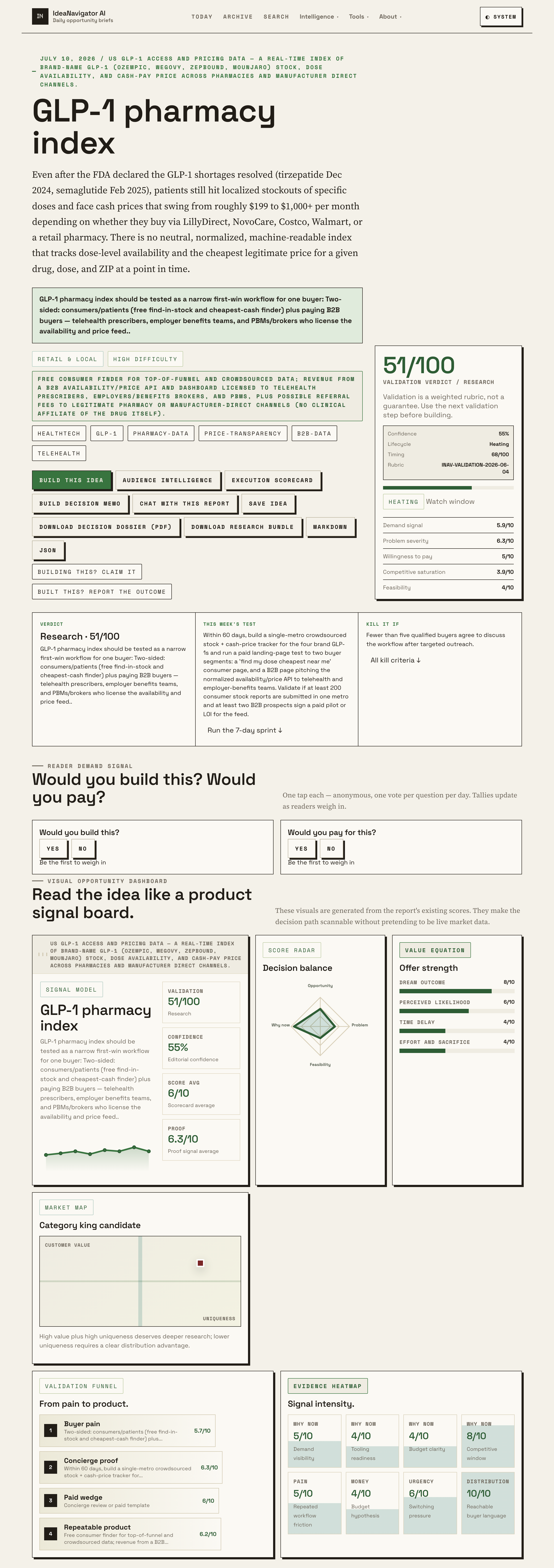
Cash prices for brand GLP-1 drugs can vary widely by medication, dose, pharmacy and location, while patients may still encounter local stock gaps. Manufacturer direct programs and pharmacy price listings offer places to check, but no single normalized index currently tracks both dose-level availability and legitimate cash prices across channels.
Cash prices for brand GLP-1 drugs can range from about $199 to more than $1,000 a month, depending on the drug, dose and purchasing channel, while patients may still find particular doses unavailable locally. A proposed pharmacy index would compare prices and stock by drug, dose and ZIP code, filling a gap for patients and organizations that need more consistent access data.
The proposed index would cover four brand-name medicines: Ozempic and Wegovy, which contain semaglutide, and Zepbound and Mounjaro, which contain tirzepatide. Its free consumer search tool would show reported availability and cash prices, drawing on manufacturer programs such as LillyDirect and NovoCare, pharmacy channels including Costco and Walmart, and publicly listed discount prices. Users would search by medication, dose and ZIP code.
The proposal says prices differ substantially among these channels, but does not provide a dated, dose-by-dose comparison or detail the eligibility rules attached to each quoted price. The approximately $199-to-$1,000-plus monthly range is presented as an overall estimate, not a guarantee of what a patient will pay. Patients would need to check current terms and confirm the price with the dispensing pharmacy or manufacturer program.
To test the idea, its proponents propose building a tracker in one metropolitan area and soliciting crowdsourced stock reports. A separate business service would sell normalized price and availability data to telehealth prescribers, employer benefits teams, pharmacy benefit managers and brokers. The proposed 60-day test sets targets of 200 consumer stock reports in one metro and paid pilots or letters of intent from at least two business prospects.
Why Dose-Level Price Data Matters
Patients comparing cash-pay options may have to check several websites and call pharmacies to find both an affordable price and the specific dose they need. A listing that covers a drug but not the required dose may not help someone trying to fill a prescription. A regularly updated search tool could make comparisons easier, provided its listings are current and clearly explain restrictions, availability and the basis for each price.
The proposal says GLP-1 drugs account for roughly 20% of pharmacy spending among employers, but gives no survey, time period or methodology for that figure. It proposes selling price and availability data to employer and benefits buyers, but does not provide evidence that organizations have agreed to pay for the service.
From Shortages to Scattered Listings
The proposal describes a market that has moved from broad shortage concerns toward fragmented local availability and pricing. It says the FDA declared tirzepatide shortages resolved in December 2024 and semaglutide shortages resolved in February 2025. Those milestones do not establish that every pharmacy has every dose in stock: local supply can vary, and a patient may need a particular strength.
Manufacturer direct programs and cash-pay offers through retailers have added purchasing channels. The proposal also points to the TrumpRx portal, which it dates to February 2026, as part of this changing landscape. It says compounding deadlines pushed compounders out, but does not specify which deadlines or describe their effects. The proposed index would compare prices and stock across these channels.
Questions About Price and Stock Accuracy
The proposal does not report that the index has launched, that its data has been independently checked, or that any business buyer has agreed to pay for the feed. It also does not explain how often prices and inventory would be refreshed, how crowdsourced reports would be verified, or how listings would distinguish a cash price from a discounted offer with eligibility conditions. Those details matter because both stock and program terms can change.
It is also unclear how the service would define a “legitimate” lowest price across channels, whether all four drugs and doses would be available in its initial coverage, and whether the reported monthly price range applies to the same dose or purchasing conditions. The proposed employer spending figure lacks a stated source and time frame. The stated FDA shortage-list dates describe regulatory status, not a guarantee of local availability.
A 60-Day Test for Demand
The next proposed step is a single-metro pilot that combines public price listings with patient-submitted reports for the four medicines. The test would also present separate offers: a consumer page for finding a dose and cash price nearby, and a business pitch for access to the normalized data feed.
The proposal says the pilot would be considered validated if it attracts at least 200 stock reports in 60 days and secures a paid pilot or letter of intent from at least two prospective business buyers. No launch date, participating metro, named partners or confirmed results are provided. Until those details emerge, patients should verify current prices and dose availability directly with the relevant pharmacy or manufacturer program.
Source: IdeaNavigator AI
Key Questions
Where can I check cash prices for Ozempic and other brand GLP-1 drugs?
Check the relevant manufacturer program, such as NovoCare or LillyDirect, and pharmacy listings from retailers such as Costco and Walmart. Confirm the current price and terms directly with the provider; prices may depend on the drug, dose and eligibility conditions.
Does a resolved FDA shortage mean my dose is in stock?
No. The shortage-list dates cited in the proposal do not confirm that a particular pharmacy has a specific dose available. Check with the pharmacy about the exact medication and dose before making plans.
Is the proposed GLP-1 pharmacy index available now?
The proposal describes a product to test, including a single-metro pilot. It does not say that the index has launched or provide a website for patients to use.
What price does the reported $199-to-$1,000-plus range describe?
It is a broad estimate of monthly cash prices across channels, not a quote for a particular drug, dose or patient. The proposal does not give a date or comparison conditions for that range, so check the current price for your prescription with the provider.
Source: IdeaNavigator AI
Evergreen bestsellers Picks
bestsellers
As an affiliate, we earn on qualifying purchases.