🔍 Read the full analysis: 50 Superintelligence Signs: Is Artificial Intelligence Near AGI? on ThorstenMeyerAI.com

Turn your quiet moments into listening time
- Thousands of audiobooks, podcasts and originals
- Listen on your phone, tablet or Echo — also offline
- Cancel anytime
TL;DR
A review of 18 claims highlighted in researcher Alan D. Thompson’s 2026 superintelligence tracker classified seven as verified, five as vendor claims, three as based on a single source and three as disputed or contradicted. The tracker lists two of 50 indicators as achieved, but its broad “partially achieved” category includes early research and funded programs, not proof that superintelligence is near.
A review of 18 prominent claims in researcher Alan D. Thompson’s 50-sign superintelligence tracker found seven verified, five supported only by company claims, three based on a single source and three disputed or contradicted, according to an October 26 report by ThorstenMeyerAI.com. The findings do not establish that artificial superintelligence is near: Thompson’s tracker records two indicators as achieved, while its broad “partially achieved” category covers work that can be far from the stated outcome.
Thompson, an Australian AI consultant who publishes The Memo newsletter, tracks 50 indicators ranging from mathematical results and automated research to household robots and more speculative milestones. His October video montage presents developments from January through October 2026. The tracker labels 33 indicators partially achieved and 15 not achieved, alongside the two marked achieved.
In an August correction note cited by ThorstenMeyerAI.com, Thompson says partial progress includes “funded programs, research infrastructure, formal scientific missions, and enabling work.” That definition means an orange status is not a measure of proximity to completion. The report gives the example of two exoplanet candidates identified with Claude Code, which Thompson places under an indicator about colonizing a planet beyond Earth; identifying candidates is not colonization.
The report’s clearest verified examples involve results that can be checked by outside experts or against formal records. It cites mathematicians Terence Tao, Don Knuth and Tim Gowers discussing AI contributions, while noting qualifications about human guidance, existing literature and the kinds of problems involved. Other prominent claims, including some model performance results, remain company-reported rather than independently reproduced. The review says the assessed claims cluster most strongly in mathematics, a validated physics calculation and regulatory filings.
Whose superintelligence?
One word, very different bars
Dr Alan D. Thompson's ASI starts where Google DeepMind's scale puts "Expert AGI". The same model can be "early ASI" on one scale and a strong but narrow AGI candidate on another.
- Median human50th percentileThompson: AGIa machine at the level of an average (median) humanDeepMind: Competent AGIat least the 50th percentile of skilled adults
- Expert90th percentileThompson: ASIexpert-human level in practically any fieldDeepMind: Expert AGIat least the 90th percentile of skilled adults
- Virtuoso99th percentile—DeepMind: Virtuoso AGIat least the 99th percentile of skilled adults
- Beyond every human100%—DeepMind: Superhuman (Level 5)outperforms 100% of humans
- Beyond organisations2026 report—DeepMind: ASImore capable than large organisations of humans
Thompson’s tracker status as of 26 October 2026. DeepMind rows: “Levels of AGI” (2023) and, for the last row, “From AGI to ASI” (June 2026). OpenAI’s Charter: AGI = “highly autonomous systems that outperform humans at most economically valuable work”.
Sources: LifeArchitect.ai ASI checklist (26 Oct 2026), AGI countdown, Morris et al., Levels of AGI (2023), Genewein et al., From AGI to ASI (2026), OpenAI Charter.
Powered by Thorsten Meyer AI
Why the ASI Label Is Contested
The tracker’s headline framing can shape public expectations about how close AI systems are to broad, autonomous capability. But its labels depend on a definition of superintelligence that differs from those used by major AI labs. A list that counts early programs and enabling research as partial progress may be useful for monitoring activity, yet it cannot by itself show that a system can perform the listed task reliably.
That distinction matters for readers weighing claims about jobs, research and safety. The report says there is no visible break in the US unemployment rate attributable to AI and no verified AI-run company worth a billion dollars. It also reports no household robots deployed at scale. Those observations do not settle AI’s future economic effects, but they underline the distance between selected demonstrations and broad real-world deployment.
Products Worth Considering
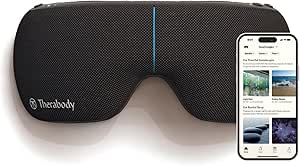
Therabody SmartGoggles 2nd Gen Heated Eye and Temple Massager

Garmin Venu 3 Fitness Smartwatch, 45 mm, Black

Philips Sonicare 5950 Rechargeable Electric Toothbrush with 2 Brush Heads, Navy
As an affiliate, we earn on qualifying purchases.
Different Tests for Superintelligence
Thompson defines artificial general intelligence as a machine performing at the level of an average, or median, human, and artificial superintelligence as a machine performing at expert-human level in practically any field. Google DeepMind’s 2023 framework separates “Expert” performance, at the 90th percentile of skilled adults, from “Virtuoso” at the 99th percentile and “Superhuman,” which exceeds human performance. On that scale, Thompson’s definition of ASI is closer to Expert AGI than to superhuman capability.
DeepMind’s June 2026 report describes superintelligence as a system more capable than large organizations of humans. OpenAI’s charter, meanwhile, defines AGI around highly autonomous systems that outperform humans at most economically valuable work. These differences make labels such as “early ASI” hard to compare without specifying the benchmark. Thompson calls Claude Mythos Preview and GPT-6 Astra early ASI; that is his assessment, not a shared industry finding.
Thompson also runs a separate countdown to AGI that he places at 99%. He says the remaining step is a robot completing multi-step fine assembly, such as putting together furniture, with average-human reliability. That percentage is a feature of his own framework, not an independently validated estimate of the probability or timing of AGI.
“documented material progress toward an indicator, including funded programs, research infrastructure, formal scientific missions, and enabling work”
— Alan D. Thompson, in an August correction note on his tracker
What the Evidence Does Not Show
The review’s classifications apply to 18 selected claims, not every item in the 50-sign tracker. The source material does not provide enough detail here to independently assess all 18 underlying papers, data sets or filing records. Nor does a verified result in a narrow mathematical task show that a model can perform across practically any field.
The report says Anthropic’s best internal model scored 62.8% on a test for which the company estimated that a full replacement for its researchers would require at least 85%. The result and threshold are attributed to Anthropic; the available account does not specify the test’s full methodology or establish how performance would generalize to research work. The timeline for broader capabilities, the reliability of systems outside controlled tasks and the eventual effect on employment remain unclear.
Evidence to Watch in Future Claims
The next useful measure will be whether claims are accompanied by public methods, reproducible results and independent evaluation—not simply a status color or a company announcement. For research milestones, that means checking what a model produced, what human guidance was involved, and whether outside specialists can confirm the result.
Readers can also watch for progress on the practical capabilities Thompson’s own countdown identifies, including reliable fine assembly by robots. The tracker is a continuing list rather than a confirmed forecast. Any new assertion that a system has reached AGI or ASI will need to be judged against a stated definition, the task actually completed and evidence that the result holds beyond a single demonstration.
Key Questions
Does the tracker show that superintelligence has arrived?
No. Thompson’s tracker marks two of 50 indicators achieved, 33 partially achieved and 15 not achieved. Those categories are his framework, and partial progress can include funding or enabling work rather than completion.
How many claims in the report were verified?
The report reviewed 18 claims and classified seven as verified, five as vendor claims, three as resting on a single source and three as disputed or contradicted.
Why do researchers disagree about what counts as ASI?
They use different thresholds. Thompson defines ASI by expert-level performance across practically any field, while DeepMind describes superintelligence in relation to the capabilities of large human organizations. A claim needs a stated definition to be compared meaningfully.
What evidence would make a claim more convincing?
Public methods, reproducible results and independent checks can help distinguish demonstrated capabilities from company claims or one-off examples. The level of human coaching and the scope of the task also matter.
Source: ThorstenMeyerAI.com