
📊 Full opportunity report: When One Agent Isn’t Enough: Claude Now Builds Its Own Team Of Agents On The Fly on ThorstenMeyerAI.com — validation score, market gap, and execution plan.

Turn your quiet moments into listening time
- Thousands of audiobooks, podcasts and originals
- Listen on your phone, tablet or Echo — also offline
- Cancel anytime
TL;DR
Claude now constructs its own team of agents dynamically during tasks, addressing limitations of single-agent workflows. This new feature aims to improve performance on complex, high-value projects by orchestrating specialized subagents.
Anthropic has announced that its AI model, Claude, can now automatically build and manage its own team of specialized agents during high-value, complex tasks. This development marks a significant step in AI orchestration, enabling Claude to better handle tasks that exceed the capabilities of a single agent, thereby improving accuracy and reliability.
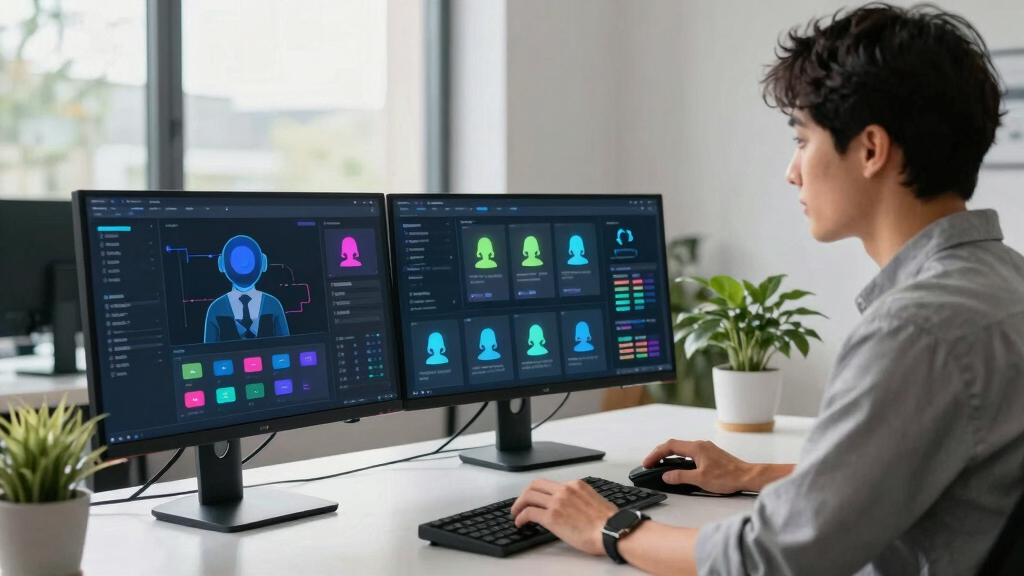
The new feature, called dynamic workflows, allows Claude to generate custom orchestration scripts — akin to an organizational chart — that spawn multiple subagents, each with focused roles. These subagents can operate independently, with some handling preliminary work and others performing critical judgment or verification. The process involves Claude writing small JavaScript programs that coordinate these agents, deciding which model to use for each task and whether agents should run in isolated environments to prevent interference.
According to Anthropic, this capability is especially useful for complex, high-stakes projects such as deep research, fact-checking, or code refactoring, where single-agent workflows tend to underperform due to issues like partial work, self-bias, and goal drift. The system can also resume interrupted workflows, making it suitable for long-running tasks. The company emphasizes that this approach uses more tokens and is intended for high-value tasks, not simple or casual queries.
When one agent isn’t enough: Claude now builds its own team on the fly
Skills package what you know; loops decide how far you delegate over time. Dynamic workflows are the third axis — within a single task, Claude writes its own harness and assembles a temporary team of subagents. Think of it as Claude drawing an org chart for one job.
The shift is from prompting a worker to commissioning a team — more output, more cost, and a manager’s judgment required. Reach for a workflow when a task is big, parallel, adversarial, or judgment-heavy — and when you can feel a single agent getting lazy, grading its own homework, or losing the plot. Bound it (token budgets, pilot first) — workflows can spawn hundreds of agents and burn far more tokens. For everything else, don’t hire five people to change a lightbulb.
Implications for AI Task Management
This innovation allows AI to handle complex workflows that previously required human oversight or multiple separate tools. By autonomously assembling specialized teams, Claude can improve accuracy, reduce errors, and manage long or multi-stage projects more effectively. For organizations, this could mean more reliable automation in research, verification, and software development, potentially reducing the need for extensive human intervention in complex tasks.
Products Worth Considering

Philips Sonicare 5950 Rechargeable Electric Toothbrush with 2 Brush Heads, Navy

Levoit Core 400S-P Smart Air Purifier for Large Rooms

Oura Ring 5 Smart Ring, Silver, Size 10
As an affiliate, we earn on qualifying purchases.
Evolution from Static to Dynamic AI Orchestration
Prior to this development, Claude operated primarily as a single-agent system, executing tasks within a fixed context window. While effective for straightforward applications, this approach struggled with long, complex, or adversarial projects, often suffering from partial work, bias, and loss of focus. Anthropic’s previous work introduced static workflows—predefined scripts that coordinated multiple agents—but these required manual setup and lacked flexibility.
The new dynamic workflow feature automates this process, enabling Claude to generate and adapt its own orchestration scripts in real-time, tailored to the specific task. This marks a significant evolution in AI capability, moving from static, manually configured workflows to autonomous, on-the-fly team building.
“This feature allows Claude to reason about its own work structure, assembling specialized agents for complex tasks, much like a human team lead.”
— Thorsten Meyer, AI researcher at Anthropic
Unresolved Questions About Workflow Reliability
It is not yet clear how well the autonomous team-building performs across diverse real-world scenarios, or how it compares quantitatively to traditional multi-step human workflows. The scalability and robustness of the system in long-term or highly adversarial tasks remain to be tested in broader deployments.
Next Steps in Deploying Autonomous Agent Teams
Anthropic plans to further refine the dynamic workflow system through real-world testing and gather user feedback. Expect to see broader availability of the feature and potential integration into enterprise AI solutions. Researchers will also likely explore performance metrics and limitations in varied complex tasks.
Key Questions
How does Claude build its own team of agents?
Claude generates small JavaScript programs called workflows that spawn and coordinate multiple subagents, each with a specific role, to handle different parts of a complex task.
What kinds of tasks benefit most from this new feature?
High-value, multi-stage projects such as research synthesis, fact-checking, code refactoring, and detailed analysis are most suited to dynamic workflows.
Does this increase the cost or complexity of using Claude?
Yes, because it uses more tokens and computational resources, and requires careful setup. However, it aims to improve accuracy and reliability for complex tasks, offsetting these costs.
Is this feature available to all users now?
As of October 2023, it is being announced and tested; broader availability will depend on further development and user feedback.
What are the limitations of autonomous team building in AI?
Potential limitations include handling unanticipated scenarios, managing resource consumption, and ensuring the quality of outputs in highly adversarial or unpredictable environments.
Source: ThorstenMeyerAI.com