
📊 Full opportunity report: Acoustic Dampening, Placement, and the “Rig in the Closet” Setup on ThorstenMeyerAI.com — validation score, market gap, and execution plan.
TL;DR
This article explains how relocating AI workstations to separate rooms and using proper ventilation can drastically reduce noise. Acoustic foam alone is less effective than placement and isolation. Proper airflow is critical for enclosed setups.
Placing high-power AI workstations in separate rooms or enclosures with proper ventilation significantly reduces noise levels, according to recent expert guidance. This approach is more effective than traditional acoustic foam treatments and is increasingly adopted by professionals working with noisy, heat-generating hardware.
Experts emphasize that the most effective way to reduce noise from AI workstations is to move the equipment out of the immediate workspace, such as into a closet or separate room, and run it headless over a network connection. This method eliminates the need for complex acoustic treatments and directly addresses the primary source of airborne noise—fans and GPU hum. However, placing a hot, high-power machine in an enclosed space presents heat management challenges. To prevent overheating, proper ventilation is essential, including passive vents or active exhaust fans that maintain airflow without introducing noise. Special purpose-built soundproof cabinets with integrated cooling solutions are available but can be costly. The ‘rig in the closet’ setup is practical but requires careful planning to ensure adequate heat dissipation while maintaining low noise levels.In addition to placement and ventilation, mechanical decoupling—such as rubber feet or anti-vibration pads—can mitigate structure-borne noise transmitted through floors or desks. Acoustic foam and barriers, while common, are less effective than physical separation and proper airflow management. The key takeaway is that reducing noise fundamentally relies on distancing the source from the user and ensuring efficient heat removal, rather than solely relying on soundproofing materials.
Acoustic dampening
& the rig in the closet.
The most powerful noise fix isn’t a material — it’s a floor plan. A rig you can’t hear because it’s in another room beats any amount of foam. Tap the approaches in Part 1 to see what actually works.
(another room)
(levers 1–4)
(door / barrier)
(acoustic foam)
Contain the noise, not the heat
Why Placement and Ventilation Outperform Foam Treatments
Understanding that moving the workstation to another room and ensuring proper ventilation are the most effective noise reduction strategies shifts the approach from costly acoustic treatments to practical placement solutions. This is especially relevant for AI professionals and enthusiasts who need quiet work environments without sacrificing performance. Proper placement not only minimizes noise but also prevents overheating, extending hardware lifespan and maintaining optimal heat dissipation. As AI hardware becomes more powerful and heat-intensive, these strategies will become increasingly essential for sustainable, quiet workflows.
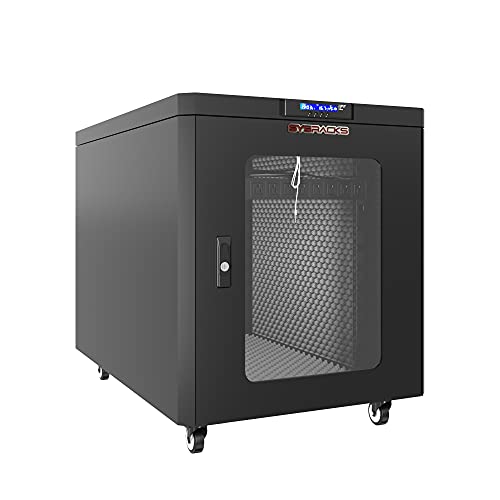
Sysracks Soundproof Server Rack Quiet - Acoustic Sound Proof Cabinet for Servers - Up to 36% Noise Reduction - Locking Server Enclosure - Silent Networking Cabinet - Noise Sound Dampening Box (15U)
- Rack Size: 15U Soundproof Cabinet
- Dimensions: 26in W x 35in D x 36in H
- Temperature Control: LED screen with 2 fans
As an affiliate, we earn on qualifying purchases.
As an affiliate, we earn on qualifying purchases.
The Evolution of Noise Management in High-Power AI Hardware
Traditionally, users relied on acoustic foam and sound barriers to dampen noise from their workstations. However, recent expert advice highlights that these treatments are secondary to physical separation and airflow management. The concept of placing hardware in separate rooms or enclosures with dedicated ventilation has gained traction, especially with the rise of high-power GPUs that generate significant heat and noise. This shift aligns with broader trends in data centers and professional environments where noise and heat are managed through strategic placement and engineered cooling solutions. The idea of a 'rig in the closet' has emerged as a practical compromise, combining noise isolation with heat dissipation, provided that airflow is carefully managed.
"The most effective way to silence a noisy AI rig isn't foam or barriers—it's moving the hardware into another room and ensuring it has proper ventilation."
— Thorsten Meyer, AI hardware expert

Easy Cloud Computer Fan with AC Plug, 120mm Variable Speed Axial Muffin PC Fan with Controller 120V 110V 220V Small 12V Case Cooling for PC Server Cabinet DVR TV Router Receiver Xbox Greenhouse
- Adjustable Fan Speed: Customize cooling intensity as needed
- AC Power Compatibility: Operates via AC outlet with controller
- Long-lasting Bearings: Dual-ball bearings last 50,000 hours
As an affiliate, we earn on qualifying purchases.
As an affiliate, we earn on qualifying purchases.
Unresolved Challenges in Enclosed 'Rig in the Closet' Setups
While the advantages of placement and ventilation are clear, specifics about optimal airflow configurations, noise levels achievable with commercial soundproof cabinets, and long-term hardware reliability in enclosed environments remain under discussion. The effectiveness of DIY solutions versus professional enclosures varies, and the cost-benefit balance is still being evaluated. Additionally, the precise impact of different ventilation methods on noise suppression and heat dissipation is an area of ongoing research.

2 Pack Studio Monitor Isolation Pads for Speakers 3-5 Inches Sound Insulation Studio Foam Prevents Vibrations Acoustic Speaker Isolation Pad High Density Fits Most Stands
- Enhanced Sound Clarity: Reduces vibrations for cleaner sound
- Universal Compatibility: Fits most studio monitors and brands
- Adjustable Angle Design: Allows precise monitor positioning
As an affiliate, we earn on qualifying purchases.
As an affiliate, we earn on qualifying purchases.
Next Steps for Implementing Quiet AI Workstations
Practitioners should focus on designing dedicated, ventilated enclosures or rooms for their AI hardware, prioritizing airflow and heat dissipation. Future developments may include more affordable, integrated soundproof and cooling solutions tailored for high-power hardware. As awareness grows, more detailed guidelines and commercial products are expected to emerge, making quiet, high-performance AI workstations accessible to a broader audience.

Kinupute Mini PC AI Server, AI Computing Workstation, AI MAX+ 395(126TOPS,16C/32T), Win-11 Pro, Radeon 8060S GPU, 128G LPDDR5X-8400, 8T M.2 SSD, 10G+2.5G LAN, Quad Screen, 4xM.2 PCIe 4.0 Slots, WiFi 7
- AI Max+ 395 CPU: 16 cores, 32 threads, up to 5.1 GHz
- Integrated Radeon 8060S GPU: 40 CUs, RDNA 3.5 architecture
- High TOPS AI Performance: 126 TOPS total, 50+ TOPS NPU
As an affiliate, we earn on qualifying purchases.
As an affiliate, we earn on qualifying purchases.
Key Questions
Why is moving the rig to another room more effective than acoustic foam?
Moving the rig away from your workspace removes the primary source of airborne noise, which foam cannot block. Foam only absorbs reflections within a room but does not stop sound from passing through walls or barriers.
What are the main challenges of placing a high-power rig in a closet?
The key challenge is heat buildup. Without proper ventilation, the enclosed space can trap heat, causing the hardware to throttle and increasing fan noise. Proper airflow management is essential to prevent overheating.
Are soundproof cabinets worth the investment?
Yes, for those needing both noise reduction and heat dissipation, purpose-built soundproof cabinets with integrated cooling provide an effective solution, though they can be costly.
Can I use DIY solutions for ventilation in an enclosed setup?
Yes, passive vents or quiet exhaust fans can be used, but careful planning is required to balance airflow with noise levels. Proper placement and possibly ducting are recommended for best results.
Is acoustic foam completely useless?
No, acoustic foam helps reduce echo and reflections within a room but does not significantly block sound transmission from the source. It is most effective when combined with physical separation and proper ventilation.
Source: ThorstenMeyerAI.com