

📊 Full opportunity report: Build, Rent, Or Quantize: Cutting Your Memory Bill Without Cutting Capability on ThorstenMeyerAI.com — validation score, market gap, and execution plan.
TL;DR
With rising memory costs in AI, users can choose to build their own hardware, rent cloud services, or apply quantization techniques to reduce memory needs. Quantization offers a cost-effective third option that can lower expenses without significant quality loss.
Recent advances in AI model optimization reveal that quantization techniques can dramatically reduce memory requirements, offering a third lever alongside building and renting. This shift comes amid the 2026 memory crunch, where costs for storing and processing large models have surged, making it essential for users to adapt.
The core of the development is the emergence of quantization methods that shrink model size with minimal quality loss. Weight quantization, such as Q4_K_M, compresses model parameters from 16-bit to 4-bit, reducing memory by nearly 4× while maintaining about 95% of the original accuracy. Additionally, FP8 KV-cache quantization, exemplified by Google’s TurboQuant, halves the memory needed for key-value caches, enabling longer contexts and better performance on existing hardware.
These techniques are not yet universally integrated into inference frameworks but are validated and available through community forks and upcoming official updates. Their adoption allows models that previously required more memory to run efficiently on less capable hardware or cloud instances, offering a significant cost advantage during the ongoing memory shortage.
Build, rent, or quantize
Memory got expensive everywhere — to buy and to rent. Most people argue build-vs-rent and miss the cheapest lever: shrink how much memory the work needs in the first place. Cut the bill without cutting capability.
For steady, high-utilization, private work. ~½ the lifetime cost of cloud. Right-size, used 3090s, or Apple unified memory. Capital up front.
For elastic, spiky, uncertain work. Can’t buy half a cluster for two weeks. But the bill creeps up — rent defensively: reserve, right-size, monitor.
Make the model need less memory — modern compression does it at little quality cost. The one move that lowers the bill in both venues.
★ the underused multiplierThe mistake the squeeze punishes hardest is solving a memory problem by buying more memory, when you could have needed less. Build when ownership pays, rent when flexibility pays — and quantize always, because shrinking the requirement is the only lever that makes both cheaper at once, and the only one that’s nearly free. The first question is never “build or rent” — it’s “how little memory can this take?” Next: when does cheap memory come back?
Impact of Quantization on AI Memory Costs
Quantization offers a cost-effective way to extend the capabilities of existing hardware and cloud resources without additional investment. It shifts the memory requirement downward, making high-capacity models accessible on hardware that was previously insufficient. This is particularly important during the 2026 memory crunch, where hardware prices and scarcity are driving up expenses for AI deployment.
By leveraging these techniques, organizations can reduce their operational costs, improve efficiency, and maintain performance levels, which is vital in a market facing hardware shortages and rising prices.

NEURAL PROCESSING UNITS: THE COMPLETE GUIDE TO AI ACCELERATION HARDWARE: TOPS Performance, Model Optimization, INT8 Quantization, and Efficient AI Inference for Embedded and Mobile Systems
As an affiliate, we earn on qualifying purchases.
As an affiliate, we earn on qualifying purchases.
The 2026 Memory Crunch and AI Optimization Strategies
The ongoing 2026 memory crunch has been diagnosed as a widespread increase in costs for both buying and renting AI hardware, with cloud prices rising and hardware shortages intensifying. Historically, building custom hardware was the most economical long-term solution for steady workloads, but the rising costs of memory and compute resources have shifted the landscape.
In response, the industry has explored various strategies, including renting cloud instances for variable workloads and applying software techniques like quantization to shrink model size. Recent developments, such as Google’s TurboQuant, exemplify how these methods can be combined for maximum effect, enabling models to operate efficiently on less memory and hardware.
“TurboQuant can compress key-value caches to about 3 bits per token, enabling longer contexts and higher efficiency without sacrificing accuracy.”
— Google’s AI Research Team

Nstallmates Big Blue Universal Compression Tool
- Includes Big Blue Universal Compression Tool: Contains 1 compression tool
- Adapter Compatibility: Supports BNC, F, and RCA connectors
- Spring Loaded Design: Features spring-loaded mechanism
As an affiliate, we earn on qualifying purchases.
As an affiliate, we earn on qualifying purchases.
Limitations and Future Adoption of Quantization
While quantization techniques like TurboQuant are validated and promising, they are not yet integrated into mainstream inference frameworks such as vLLM or Ollama. The timeline for widespread adoption remains uncertain, and the actual performance impact may vary across models and use cases. Overselling quantization as a universal solution risks overestimating its effectiveness, especially when pushing below Q4 levels where quality degradation becomes noticeable.
Additionally, some techniques like Mixture-of-Experts (MoE) models improve speed but do not necessarily reduce memory footprint, adding complexity to the decision-making process.
FP8 KV-cache optimization hardware
As an affiliate, we earn on qualifying purchases.
As an affiliate, we earn on qualifying purchases.
Upcoming Developments and Integration Timeline
The next steps involve the official release and integration of TurboQuant into major inference frameworks, expected later in 2026, along with broader community adoption. Users should monitor updates from Google and framework developers, and consider adopting current best practices—like Q4 weight quantization combined with FP8 KV-cache—to optimize their models now. Further research may refine these techniques, making them more accessible and effective for diverse workloads.
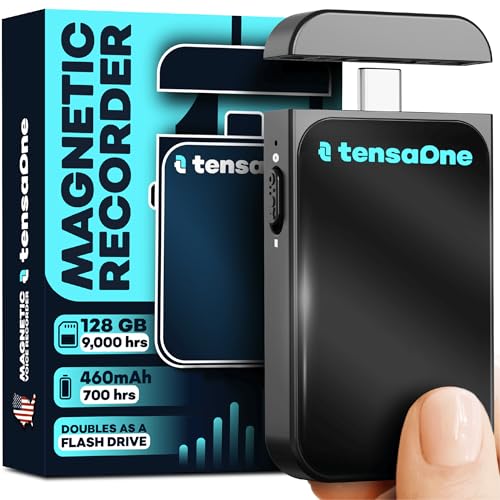
TensaOne Voice Activated Recorder Mini Audio Magnetic Recording Device
- Voice-Activated Recording: Starts and stops automatically with sound
- Manual Recording Mode: Record anytime with a simple button
- AI Noise Reduction: Filters background noise for clear audio
As an affiliate, we earn on qualifying purchases.
As an affiliate, we earn on qualifying purchases.
Key Questions
How does quantization reduce model size without losing much accuracy?
Quantization compresses model weights from 16-bit to 4-bit (Q4), reducing memory by nearly 4× while maintaining about 95% of the original accuracy, because the loss introduced is minimal and acceptable for most practical purposes.
Can I apply these techniques to any AI model now?
Current methods like Q4 weight quantization are available for some models, but not yet universally integrated into all inference frameworks. Community forks and upcoming official updates are making these techniques more accessible.
Will quantization affect model performance on reasoning or coding tasks?
Quantization, especially below Q4, can degrade performance on reasoning and coding tasks. It is recommended to use validated levels like Q4 or higher to balance size reduction and quality.
What is the significance of TurboQuant, and when will it be available?
TurboQuant is a cutting-edge compression technology that reduces key-value cache size by about 6×, enabling longer contexts with minimal quality loss. It is expected to be integrated into mainstream frameworks later in 2026.
Does quantization eliminate the need to build or rent hardware?
No, quantization is a technique to optimize existing hardware and cloud resources. Building or renting remains relevant depending on workload stability and cost considerations.
Source: ThorstenMeyerAI.com