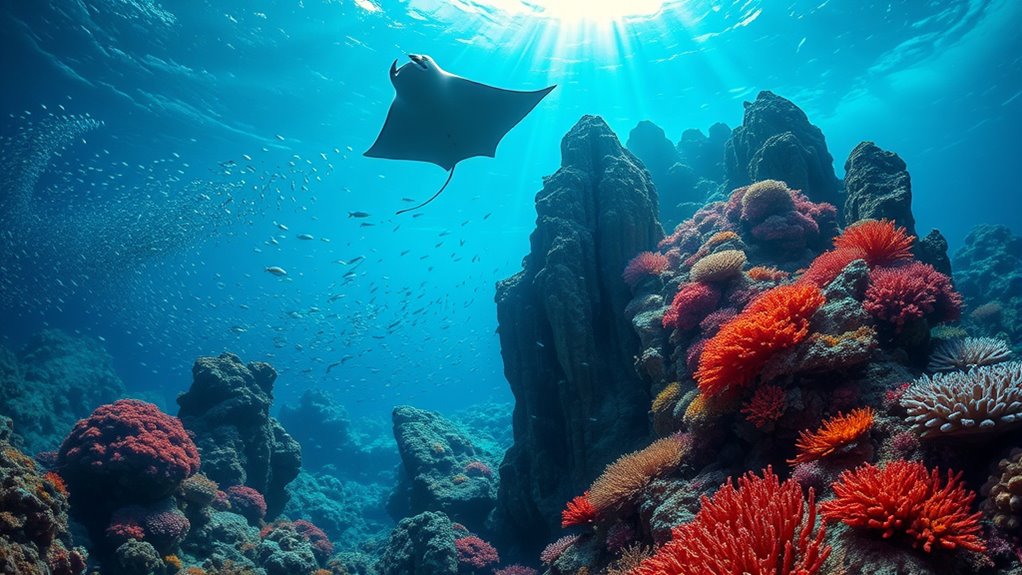

Deep ocean exploration reveals some of Earth’s most hidden worlds, unveiling unique habitats and life forms adapted to extreme conditions like darkness, immense pressure, and cold temperatures. Using advanced submersibles, ROVs, and autonomous robots equipped with high-resolution cameras and tools, you can explore areas once thought unreachable. These innovations allow scientists to map seafloor topography, find new species, and understand deep-sea ecosystems better. Keep exploring to discover how technology is unlocking the ocean’s deepest secrets.
Key Takeaways
- Advanced submersibles and ROVs enable access to extreme deep-sea environments previously unreachable.
- Exploration technology allows discovery of new species and mapping of seafloor topography.
- High-pressure-resistant materials and specialized equipment are crucial for deep-sea missions.
- Deep ocean exploration reveals unique ecosystems adapted to darkness and immense pressure.
- Ongoing technological innovations continue to uncover hidden worlds beneath the ocean’s surface.
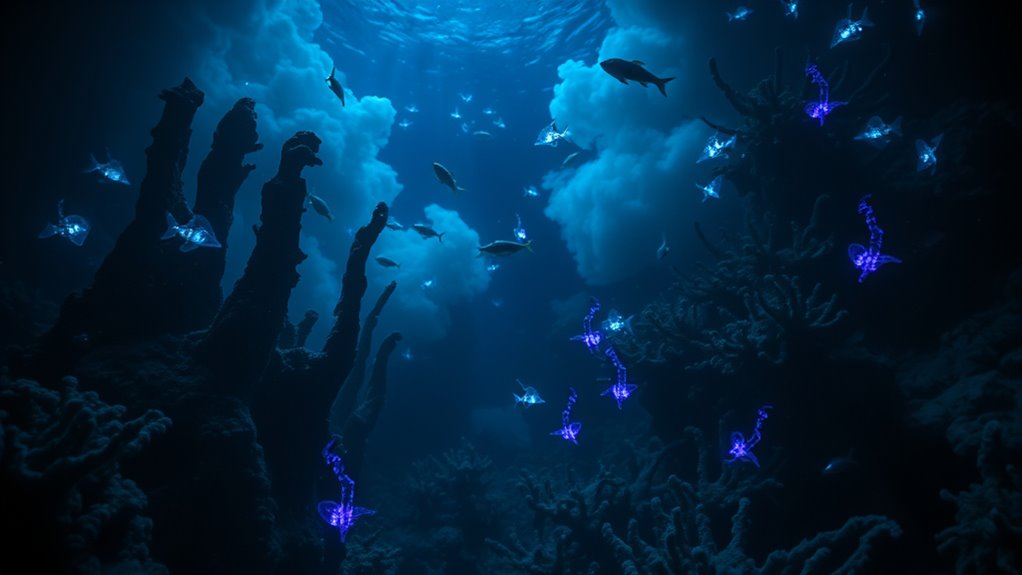
Have you ever wondered what secrets lie beneath the Earth’s surface deep in the ocean’s unexplored depths? The deep ocean is a vast, mysterious domain that remains largely undiscovered, filled with unique environments known as deep sea habitats. These habitats host extraordinary forms of life that have adapted to extreme conditions—darkness, immense pressure, and near-freezing temperatures. Exploring these habitats isn’t easy, but advances in marine technology are making it possible to venture into these hidden worlds. Submersibles, remotely operated vehicles (ROVs), and autonomous underwater robots are designed specifically for these depths, allowing scientists to observe and study without risking human life. You might imagine these machines as the explorers of the deep, equipped with high-resolution cameras, lights, and specialized tools to collect samples and data from otherwise inaccessible environments. Thanks to marine technology, scientists can now map seafloor topography, uncover new species, and understand how deep sea ecosystems function, providing insights that influence everything from climate models to resource management. Recent innovations in pressure-resistant materials have enabled equipment to withstand the crushing pressures of the deep ocean, opening new frontiers for exploration.
The challenges of exploring deep sea habitats are immense. The pressure increases by about one atmosphere every 10 meters of depth, which can crush ordinary equipment. Light barely penetrates beyond a few hundred meters, so illumination is essential for observation and imaging. Marine technology has evolved to overcome these hurdles, incorporating pressure-resistant materials and advanced power systems that can operate for extended periods underwater. These innovations enable detailed surveys and long-term monitoring of deep-sea environments. As you follow the progress of exploration missions, you’ll see how technology continues to push boundaries, revealing ecosystems that were once thought to be unreachable. Each new discovery adds a piece to the puzzle of Earth’s greatest wilderness.

Rinnland Submarine Toy, Submersible Model Toy Deep-sea Probe Toy with Robotic Arms, Adjustable Base, Foldable Design, Transformable Shapes (Orange)
Cool Submarine Toy for Kids: Unlike ordinary submarines, this submarine toy is equipped with a pair of robotic…
As an affiliate, we earn on qualifying purchases.
As an affiliate, we earn on qualifying purchases.
Frequently Asked Questions
How Do Scientists Communicate With Deep-Sea Creatures?
You can’t exactly communicate with deep-sea creatures like humans do, but scientists observe their methods, such as bioluminescent signaling and acoustic communication. These animals use glowing light patterns to send signals or attract mates, while some rely on sound waves to relay messages. Researchers study these natural cues to understand how deep-sea life interacts, helping us learn more about these mysterious, hidden worlds beneath the ocean’s surface.
What Are the Biggest Technological Challenges in Deep Ocean Exploration?
You face major challenges like ensuring submersible durability against extreme conditions. The pressure at great depths demands the use of advanced pressure-resistant materials to prevent crushing. Designing equipment that withstands such intense pressure while remaining functional is tough. Additionally, maintaining reliable communication with surface teams and powering long missions add to these technological hurdles. Overcoming these issues is essential for successful deep ocean exploration.
How Do Deep-Sea Explorers Ensure Their Safety in Extreme Environments?
You stay safe by strictly following safety protocols and emergency procedures designed for extreme environments. Before dives, you undergo thorough training to handle potential risks like pressure changes or equipment failure. You also use specialized suits and submersibles built for deep-sea conditions. Constant communication with your team and emergency readiness drills make certain you’re prepared for any situation, helping you navigate the deep ocean safely and confidently.
What Rare Species Have Been Discovered During Recent Explorations?
Imagine uncovering a treasure chest in the darkness—that’s what recent explorations reveal. You discover bioluminescent organisms that glow like stars, illuminating the abyssal depths. Rare abyssal fish with translucent bodies and glowing fins surprise you, revealing a hidden world. These unique species symbolize the ocean’s mysterious beauty and resilience, reminding you that even in darkness, life thrives in extraordinary ways, waiting for explorers like you to unveil its secrets.
How Does Deep-Sea Exploration Impact Marine Conservation Efforts?
Your deep-sea exploration efforts substantially impact marine conservation by informing marine policy and pollution control strategies. As you discover new species and ecosystems, you provide critical data that help shape regulations to protect vulnerable habitats. This knowledge encourages stricter pollution controls, reduces destructive activities, and promotes sustainable practices. By understanding these hidden worlds, you actively contribute to preserving ocean health and ensuring the longevity of marine biodiversity for future generations.

Underwater Drone, Mini S submarine drone with 4K+EIS Image Stabilization Camera for Real-Time Viewing Depth & Temperature Data, Direct-Connect Remote Controller, Dive to 330ft Underwater, Portable ROV
【More clearer And More Stable】GLADIUS MINI S captures epic moments with 4K HD video and 12 MP photos….
As an affiliate, we earn on qualifying purchases.
As an affiliate, we earn on qualifying purchases.
Conclusion
As you venture into the depths of the ocean, remember that every new discovery reveals a world as mysterious as it is vast. Your curiosity fuels progress, and the ocean’s secrets remind us that “the deeper you go, the more you find.” Keep exploring with wonder and respect, for these hidden worlds hold answers to questions we’ve yet to ask. In the end, the ocean teaches us that the greatest treasures are often buried just beneath the surface.
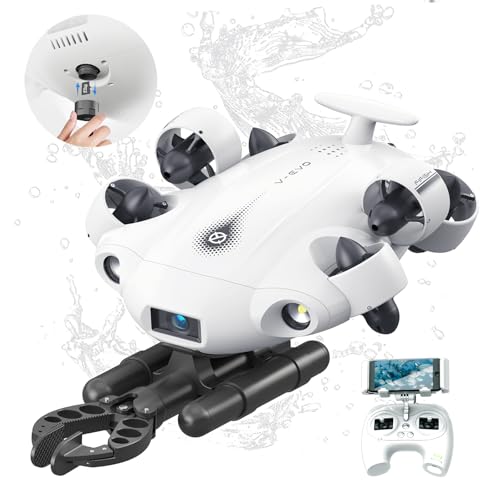
【2025 New】FIFISH V-EVO 4K60FPS Underwater Drone with Robotic Arm, with Removable SD Card, QYSEA AI Vision Lock 360° Omnidirectional Movement Underwater ROV with Depth Hold,330ft Dive
4K 60FPS High Frame-rate Camera: Create epic footage and wonderful underwater moments with V-EVO's upgraded camera system, achieving…
As an affiliate, we earn on qualifying purchases.
As an affiliate, we earn on qualifying purchases.

ODDV 4K60FPS 30MP Action Camera with Front LCD and Touch Rear Screens, Underwater Camera with 5X Zoom, 132FT Waterproof Camera, EIS, WiFi Remote Control(Black)
CAPTURE ADVENTURE IN 4K60FPS: Record stunning 4K60FPS video and 30MP photos with sharp precision. Shoot up to 60…
As an affiliate, we earn on qualifying purchases.
As an affiliate, we earn on qualifying purchases.