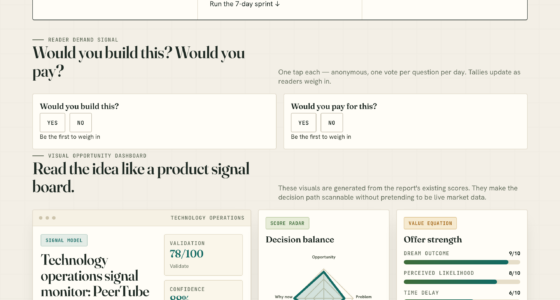

📊 Full opportunity report: Why The Nvidia Open Commons Deal Is A Major AI Industry Milestone on ThorstenMeyerAI.com — validation score, market gap, and execution plan.
TL;DR
Nvidia reportedly plans to acquire Hugging Face for $12.9 billion, aiming to control the open-source AI model ecosystem. This move signifies a strategic effort to defend Nvidia’s GPU dominance and expand its influence in AI software and cloud markets. The deal’s confirmation is pending, but its implications are significant for AI development and regulation.
Nvidia has reportedly agreed in principle to acquire Hugging Face for $12.9 billion, a move that could reshape the AI industry’s infrastructure. This deal, if finalized, would give Nvidia ownership of the leading open-source AI model platform, a critical layer in AI development and deployment. The move is significant because it signals Nvidia’s intent to control the open AI commons, a key resource for the entire industry, and to defend its dominant position in AI hardware and cloud services.
The Information reported that Nvidia and Hugging Face are nearing a deal valued at over $13 billion, with sources from CNBC confirming recent talks and Bloomberg noting the negotiations are close but not yet signed. Neither company has officially confirmed the agreement, and the deal could still fall through. Hugging Face’s valuation has surged from about $4.5 billion in 2023 to an estimated $13 billion in 2025, reflecting the strategic importance of the platform rather than its revenue.
The core reason Nvidia seeks this acquisition is to safeguard its GPU ecosystem amid rising efforts by other major AI players like OpenAI, Google, and Amazon to develop their own chips. By owning Hugging Face, Nvidia aims to maintain its influence over the open AI model ecosystem, which overwhelmingly runs on Nvidia hardware. The platform is where most models are shared, discovered, and run, making it a critical choke point in AI deployment.
Additionally, the deal could help Nvidia re-enter the cloud market, leveraging Hugging Face’s existing role in enabling developers to run models on rented compute resources. It also positions Nvidia to extend beyond hardware into the software and model layers, integrating vertically at the developer discovery point, which is a strategic move to consolidate control across the AI stack.
Reportedly ~$12.9B for Hugging Face — the GitHub of open weights. At ~86× revenue, this only computes as buying the ecosystem, not a software business. Reported, not yet closed.
Implications for AI Infrastructure and Market Power
This potential acquisition is a landmark because it consolidates control over the open-source AI model ecosystem, a foundational layer for AI development worldwide. Nvidia’s move to own the platform where models are shared and discovered effectively grants it influence over the entire AI supply chain, from hardware to software. This could reinforce Nvidia’s dominance in AI hardware sales and cloud services, while also raising concerns about reduced neutrality and increased market concentration.
The deal signals a shift from competition based solely on hardware to a broader strategic influence over AI development infrastructure. For developers and researchers, it could mean changes in how open models are accessed and shared, depending on Nvidia’s stewardship and regulatory responses. For regulators, it raises questions about the impact on market competition and the openness of AI ecosystems.
As an affiliate, we earn on qualifying purchases.
Background of Nvidia and Hugging Face’s Strategic Moves
Nvidia has long been the dominant player in AI hardware, with its GPUs powering most AI workloads globally. Recently, other tech giants like Google and OpenAI have been developing their own chips to reduce dependence on Nvidia, threatening its market position. At the same time, Hugging Face has emerged as a central hub for open-source AI models, hosting thousands of models from labs and developers worldwide, and serving as the de facto distribution point for open weights.
Hugging Face was valued at around $4.5 billion in 2023 and was approached by Nvidia for investment, which it turned down at nearly $7 billion. The company’s rapid valuation increase to over $13 billion in 2025 reflects its strategic importance, not just as a business but as the backbone of open AI model sharing. The reported deal follows a period of intense competition among AI giants seeking control over the open and closed AI ecosystems.
Previous regulatory scrutiny, notably Nvidia’s failed attempt to acquire Arm for $40 billion, underscores the sensitivity of large tech deals at this scale. The potential Nvidia-Hugging Face deal is viewed through a similar lens, with concerns about market dominance and the future of open AI models.
"Nvidia’s move to acquire Hugging Face signals a strategic shift toward controlling the foundational layer of AI development, with implications far beyond just hardware."
— Thorsten Meyer
Hugging Face open-source AI models
As an affiliate, we earn on qualifying purchases.
As an affiliate, we earn on qualifying purchases.
Unconfirmed Status and Regulatory Hurdles
As of now, the deal remains unconfirmed officially by Nvidia or Hugging Face. It is reported to be in the final negotiation stage, but the agreement could still fall apart or face delays. Regulatory approval is a significant unknown, given the history of Nvidia’s failed Arm acquisition and increasing antitrust scrutiny of large tech consolidations. It is unclear how regulators will view Nvidia’s proposed ownership of the open AI commons, especially considering the potential impact on market competition and model neutrality.

Local LLM Inference Optimization: A Comprehensive Guide to Quantization, Hardware Acceleration, and Efficient Private AI Deployment
As an affiliate, we earn on qualifying purchases.
As an affiliate, we earn on qualifying purchases.
Next Steps and Potential Outcomes
The immediate next step is the formal confirmation or rejection of the deal by Nvidia and Hugging Face. If finalized, the deal will likely undergo regulatory review, especially in the U.S. and EU, where antitrust authorities are increasingly scrutinizing large tech mergers. The industry will closely watch how Nvidia manages Hugging Face’s open model ecosystem post-acquisition, particularly regarding transparency, neutrality, and openness. The deal’s success or failure could influence how AI infrastructure evolves in the coming years.

Ultimate Microsoft Certified Azure AI Engineer Associate (AI-102) Certification Guide: Crack AI-102 Certification by Building Generative AI, ... Azure AI Solutions (English Edition)
As an affiliate, we earn on qualifying purchases.
As an affiliate, we earn on qualifying purchases.
Key Questions
What does Nvidia gain from acquiring Hugging Face?
Nvidia gains control over the primary platform for sharing and discovering open-source AI models, strengthening its influence across the entire AI development and deployment pipeline and defending its GPU dominance.
Could this deal reduce competition in AI hardware and software?
Potentially, yes. Concentrating control over the AI model ecosystem could limit alternatives and influence the openness of AI development, raising regulatory and industry concerns.
Will the open-source nature of Hugging Face be maintained?
This remains uncertain. Nvidia has expressed interest in keeping the platform open, but ownership by a dominant hardware company raises questions about potential shifts in governance and openness.
How might regulators respond to this deal?
Regulators may scrutinize the acquisition for potential anti-competitive effects, especially given Nvidia’s market dominance, and could impose conditions or block the deal.
When will we know if the deal is finalized?
The timeline depends on regulatory review and final negotiations. It could take months before a formal decision is announced.
Source: ThorstenMeyerAI.com