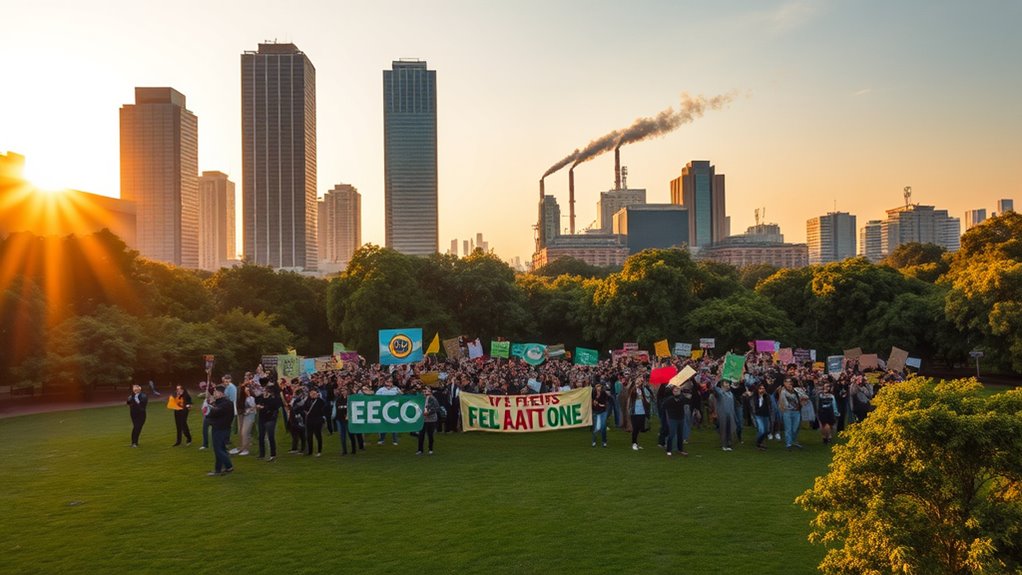

Climate justice asks you to recognize that marginalized communities, especially Indigenous peoples, bear the heaviest burdens yet hold the least power. To take meaningful action, you must respect their sovereignty, include their perspectives in policies like carbon pricing, and support systemic shifts that address inequalities. Doing so guarantees solutions are fair, effective, and inclusive. If you keep exploring, you’ll discover how these principles can reshape climate strategies for lasting impact.
Key Takeaways
- Recognizing Indigenous sovereignty and land rights is essential for equitable and culturally sensitive climate action.
- Fair carbon pricing should include reinvestment in vulnerable communities to ensure justice and reduce disparities.
- Including Indigenous voices in policymaking enhances the effectiveness and fairness of climate solutions.
- Empowering marginalized communities addresses systemic inequalities and promotes sustainable, systemic change.
- Ethical climate action requires shifting power dynamics to prioritize vulnerable populations and uphold environmental and social justice.
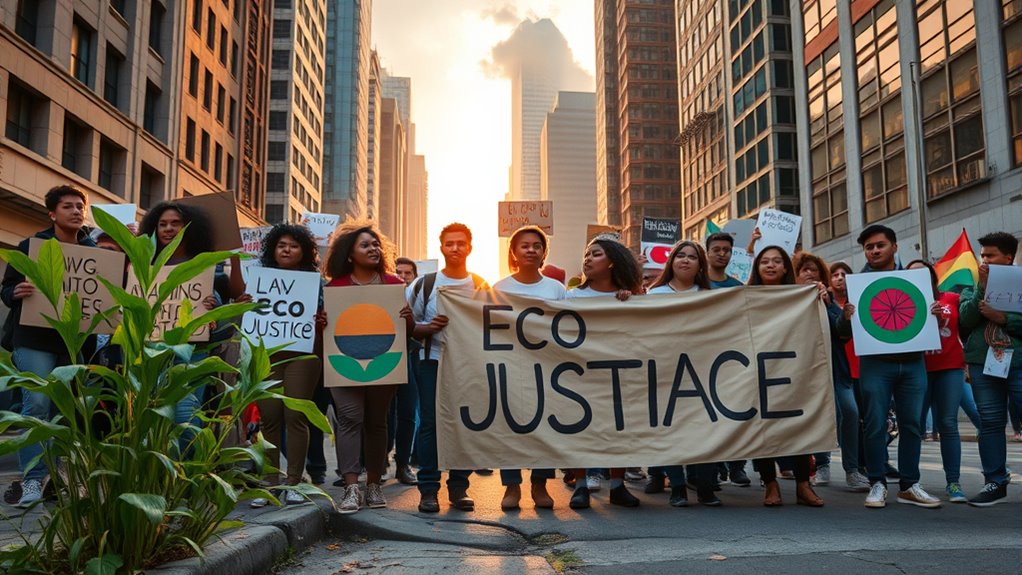
Have you ever wondered who bears the heaviest burden of climate change? It’s often marginalized communities, Indigenous peoples, and those least responsible for the emissions that fuel global warming. Indigenous sovereignty plays a pivotal role here, as many Indigenous communities are on the front lines of climate impacts but lack the authority to manage their lands and resources effectively. Recognizing Indigenous sovereignty means respecting their rights to land, culture, and self-determination, which are essential for implementing sustainable solutions. When Indigenous nations have the power to govern their territories, they can better protect ecosystems, promote traditional ecological knowledge, and contribute to climate resilience. Yet, their voices are frequently ignored in policymaking, perpetuating injustices and undermining efforts to address climate change holistically.
One key tool for promoting climate justice is carbon pricing, which aims to assign a financial cost to carbon emissions. By putting a price on pollution, we create an economic incentive to reduce greenhouse gases, encouraging industries and individuals to adopt cleaner practices. However, the implementation of carbon pricing must be equitable. If not carefully designed, it can disproportionately impact low-income communities who already struggle with high costs of living. To guarantee fairness, revenue generated from carbon pricing should be reinvested into vulnerable communities, supporting clean energy projects, job training, and social programs. This approach helps alleviate the burden on those least responsible for emissions while holding polluters accountable.
Furthermore, integrating Indigenous perspectives into carbon pricing policies can strengthen climate justice. Indigenous communities often have a deep connection to their lands and a vested interest in preserving them. When their sovereignty is respected, they can participate in decision-making processes around carbon markets, ensuring that projects do not infringe on their rights or disrupt their way of life. This inclusion fosters more effective, culturally sensitive solutions that benefit both the environment and Indigenous peoples. Additionally, adopting innovative tuning techniques from the automotive industry can serve as a metaphor for the need to fine-tune policies and systems to achieve better outcomes. Ultimately, climate justice demands a shift in how we approach responsibility and power. It calls for recognizing Indigenous sovereignty, designing fair policies like just carbon pricing, and ensuring that those most impacted have a voice in shaping the future. Only by addressing these interconnected issues can we build a more equitable and sustainable world for everyone.
Frequently Asked Questions
How Do Climate Justice Issues Vary Globally?
You’ll see climate justice issues vary globally because urban adaptation needs differ, with some cities struggling more than others. Technological innovation plays a key role in addressing these challenges, especially in vulnerable regions. In developing countries, you might find limited access to advanced solutions, worsening disparities. Meanwhile, wealthier nations often focus on sustainable urban adaptation projects. Overall, local contexts shape how climate justice manifests worldwide, requiring tailored approaches and innovative strategies.
What Role Do Indigenous Communities Play in Climate Justice?
Indigenous communities play a pivotal role in climate justice by preserving powerful, traditional knowledge and asserting Indigenous sovereignty. You can support their efforts by listening to their stories, respecting their land rights, and amplifying their voices. Their deep connection to the environment offers invaluable insights into sustainable practices. By partnering with Indigenous peoples, you help foster fairness, fuel change, and forge a future where ecological equality and cultural respect thrive.
How Can Youth Activism Influence Climate Policy Changes?
You can influence climate policy changes through youth activism by harnessing youth empowerment and engaging in policy advocacy. Your actions, like organizing protests, spreading awareness, and lobbying decision-makers, put pressure on governments to prioritize climate issues. When you stand up and voice your concerns, you inspire others and create momentum for policy shifts. Your active participation makes a real difference in shaping more sustainable, equitable climate solutions.
What Are the Economic Impacts of Climate Justice Initiatives?
They say “you reap what you sow,” and climate justice initiatives can boost economies by encouraging green investments and implementing carbon pricing. These measures create new jobs, stimulate innovation, and reduce reliance on fossil fuels. While costs may rise initially, long-term benefits include healthier communities and sustainable growth. Your support for these initiatives helps balance economic progress with environmental responsibility, ensuring a resilient future for everyone.
How Is Climate Justice Integrated Into International Law?
You see that climate justice is integrated into international law through legal frameworks that recognize environmental and human rights. You’re likely aware of treaties like the Paris Agreement, which emphasizes global cooperation and accountability. These laws aim to protect vulnerable communities and ensure equitable climate action, embedding principles of human rights into international agreements. As a result, climate justice becomes an essential part of legal commitments worldwide, guiding nations toward fair and sustainable climate policies.
Conclusion
As you consider the path forward, remember that climate justice isn’t just a distant goal—it’s a call to action now. Every choice you make can tip the scales toward equity or deepen the crisis. The future hangs in the balance, and the decisions you make today will shape what’s to come. Will you stand by and watch, or will you step up and guarantee a fair, sustainable world? The moment is here—what will you do?