
To bridge the digital divide, you need to support efforts that expand internet access and improve digital literacy. As you gain access to stronger connections, it’s vital to develop skills that help you navigate online tools, identify reliable information, and stay safe. Community programs, libraries, and nonprofits are great resources for learning digital skills. If you keep exploring, you’ll discover how combining access with education truly opens opportunities for everyone.
Key Takeaways
- Expand affordable internet infrastructure to underserved communities to improve connectivity.
- Offer free digital literacy training through community centers and nonprofit programs.
- Provide affordable devices and technology access to bridge equipment gaps.
- Promote public-private partnerships to develop sustainable solutions for digital inclusion.
- Combine infrastructure development with digital skills education to ensure effective internet use.
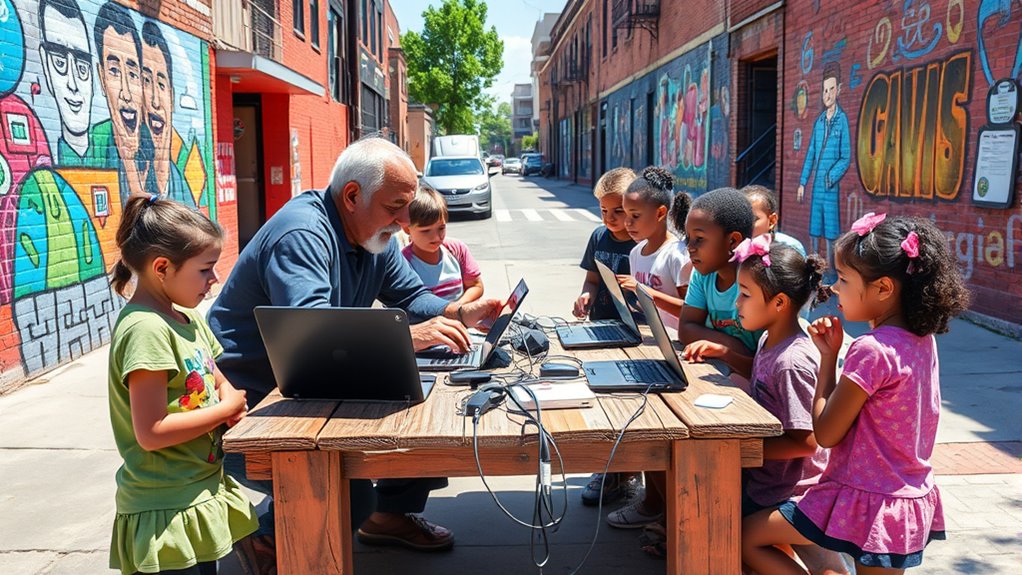
In today’s interconnected world, the digital divide remains a significant barrier that prevents many communities from accessing essential technology and online resources. Without reliable internet access, you might find it difficult to complete school assignments, apply for jobs, or even connect with loved ones. This gap isn’t just about having a device; it’s about the ability to use that device effectively. Digital literacy plays a crucial role here, as it determines how well you can navigate online platforms, evaluate information, and protect your privacy. If you lack these skills, even having internet access won’t fully bridge the divide. That’s why efforts to improve digital literacy are just as vital as expanding internet coverage.
Digital literacy is essential to bridge the gap beyond just providing internet access.
You can start by focusing on community-based initiatives that teach digital skills to those who need them most. Local libraries, community centers, and nonprofits often offer free classes that help you learn how to use the internet safely and efficiently. These programs don’t just teach you how to browse or send emails—they empower you to access government services, utilize online education tools, and protect yourself from scams and misinformation. When you gain digital literacy, you’re no longer passive consumer but an active participant in the digital world. This confidence can open doors to new opportunities, whether it’s learning new skills, finding jobs, or participating in civic activities.
Expanding internet access remains a fundamental part of bridging the digital divide. Governments, private companies, and nonprofit organizations are working together to bring affordable, high-speed internet to underserved areas. These initiatives often involve laying new infrastructure or providing subsidized plans to make connectivity more accessible. As someone impacted by these efforts, you’ll see improvements in your ability to connect without the stress of costly bills or unreliable service. When internet access becomes widespread, it reduces geographical and economic barriers that once kept you from fully participating in the digital economy.
But access alone isn’t enough. You need support to develop digital literacy so you can make meaningful use of the internet. This means understanding how to find credible information, stay safe online, and utilize digital tools to improve your daily life. Additionally, tuning your devices and systems can optimize your online experience and security. By combining better internet access with targeted digital literacy programs, communities can transform from digital “haves” and “have-nots” into inclusive spaces where everyone has the opportunity to thrive. The goal is to ensure that no one is left behind simply because they lack the skills or the connectivity to participate fully in today’s digital society.
Top picks for "bridg digital divide"
Open Amazon search results for this keyword.
As an affiliate, we earn on qualifying purchases.
Frequently Asked Questions
How Can Small Communities Afford Internet Infrastructure Improvements?
You can afford internet infrastructure improvements by leveraging community funding and forming public-private partnerships. Seek grants from government programs or local organizations to support initial costs. Collaborate with private companies to share resources and expertise, reducing expenses. Engaging residents for crowdfunding or donations also boosts funds. By combining these strategies, your community can build reliable internet access without overwhelming budgets, ensuring everyone benefits from improved connectivity.
What Role Do Policymakers Play in Closing the Digital Gap?
Policymakers play a vital role by shaping public policy that prioritizes broadband expansion, ensuring underserved communities get access. They allocate funding, streamline regulations, and partner with private companies to build infrastructure. You can support their efforts by advocating for policies that promote affordable internet and digital inclusion, helping close the digital gap. Their leadership drives equitable access, empowering everyone to benefit from the digital economy.
How Can Schools Ensure Equitable Access to Digital Devices?
Imagine your school as a garden, and digital devices are the seeds. To guarantee all students grow, you must make devices affordable, planting these seeds for everyone. You also need parental involvement to nurture each plant, helping students thrive. By providing affordable devices and engaging parents, you create an equitable environment where every student has the tools and support to succeed in the digital world.
What Are Effective Strategies for Digital Literacy Education?
You can enhance digital literacy by integrating digital skills into your curriculum, ensuring students learn essential tech competencies. Organize community outreach programs to provide hands-on training and resources, making digital skills accessible to all. Encourage peer-led workshops and partner with local organizations to expand learning opportunities. By fostering an inclusive environment and actively engaging your community, you help students develop confidence and competence in steering the digital world.
How Does Bridging the Digital Divide Impact Economic Development?
Imagine opening new doors for everyone—bridging the digital divide boosts digital inclusion, which fuels economic growth. When more people access technology, they can learn, innovate, and contribute more effectively, strengthening local businesses and creating jobs. This inclusive approach encourages a vibrant economy where opportunities are shared widely. You’ll find that fostering digital access doesn’t just connect people; it accelerates economic development, making communities more resilient and prosperous for everyone involved.
Conclusion
You now see how bridging the digital divide isn’t just about access—it’s about opportunity. Did you know that over 40% of households without internet face significant barriers to education and job searches? By working together, you can help close this gap, ensuring everyone has the tools to succeed. Every effort counts in creating a more connected, equitable future. So, take action today—you have the power to make a real difference.