
📊 Full opportunity report: India: Build the Rails First on ThorstenMeyerAI.com — validation score, market gap, and execution plan.

Turn your quiet moments into listening time
- Thousands of audiobooks, podcasts and originals
- Listen on your phone, tablet or Echo — also offline
- Cancel anytime
TL;DR
India has prioritized building a comprehensive digital infrastructure—Aadhaar, UPI, and Direct Benefit Transfer—to deliver targeted social benefits at scale. This strategy aims to reduce leakage and reach nearly everyone, despite modest benefit amounts. The development marks a shift from traditional welfare models used by wealthier nations.
India has built the world’s most ambitious digital public infrastructure, including Aadhaar, UPI, and Direct Benefit Transfer, to deliver targeted benefits directly to citizens. This approach prioritizes infrastructure over generous welfare benefits, aiming to reach over a billion people with minimal leakage, a strategy that is reshaping social welfare delivery in a low-income context.
Over the past decade, India has developed a comprehensive digital ecosystem known as the ‘India Stack,’ which includes Aadhaar, the world’s largest biometric ID system, and UPI, the largest real-time payments network. These systems are designed to be interoperable, scalable, and low-cost, enabling the government to deliver subsidies and benefits directly into bank accounts with high efficiency. The latest phase, ‘DBT 2.0,’ incorporates AI-driven fraud detection and a unified citizen account, further refining the delivery process.
India’s strategy diverges from traditional welfare models used in wealthier countries, which often rely on expensive bureaucracies and physical infrastructure. Instead, India’s approach emphasizes ‘building the plumbing’ first—robust, scalable, and cost-effective digital rails—allowing benefits to be delivered directly to citizens. This has resulted in the transfer of approximately ₹49–50 lakh crore directly to individuals, with an estimated leakage of ₹3.48 lakh crore, representing significant efficiency gains.
On the social side, recent reforms include strengthening the rural employment guarantee scheme (MGNREGA), increasing guaranteed work from 100 to 125 days per year, and launching the IndiaAI Mission, which funds open-source AI models in multiple Indian languages to support informal workers. These initiatives aim to extend the infrastructure’s reach into employment and skills development, despite the benefits remaining modest and targeted rather than universal.
Build the Rails First
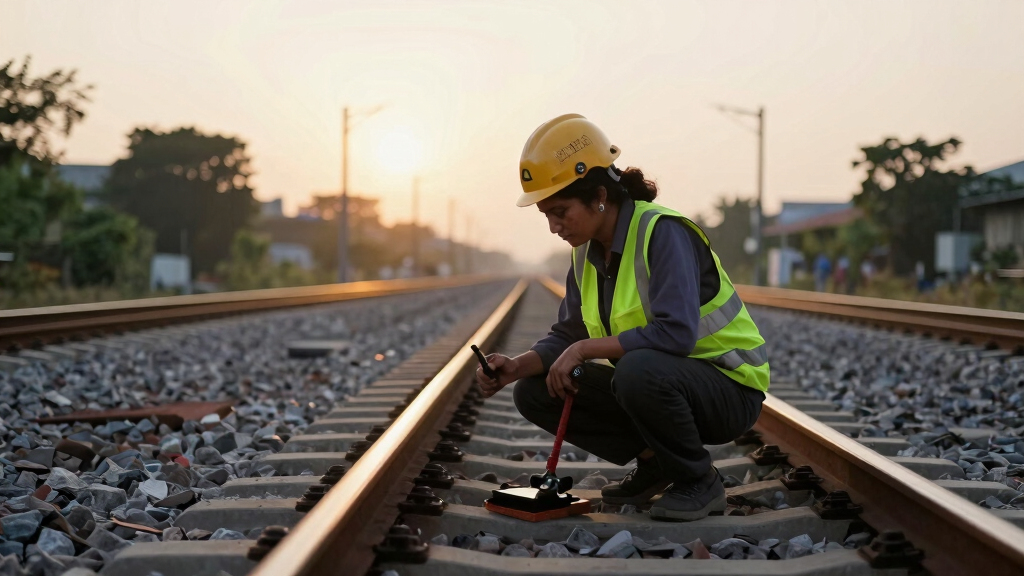
The Global South’s answer is infrastructure: the plumbing, not the payment. India built the world’s best welfare-delivery rails — thin benefits, but delivered to a billion-plus people, with the leakage squeezed out.
Aadhaar~1.42B biometric IDs
UPI payments + Jan Dhan accounts185B+ txns/yr · ~577M accounts
Direct Benefit Transfer (DBT)450+ schemes
Reaches 1.4B citizens directly~₹3.48L cr leakage squeezed out
Independent commentary, produced with AI assistance under human editorial oversight. The views are the author’s own and may change. This is analysis, not policy, economic, investment, or legal advice. Descriptions of Aadhaar, UPI, the JAM trinity and DBT, the rural employment guarantee and its 2025 successor act, the IndiaAI Mission, and BharatGen reflect publicly reported information as of mid-2026 and may change; figures are indicative and several are official self-reported estimates. This phase maps differing approaches and endorses none; characterizations of contested arrangements present competing views, not a verdict. Country, program, and company names are referenced for analysis and imply no affiliation.
Implications of India’s Infrastructure-First Approach
This strategy signifies a fundamental shift in how a low-income country can deliver social benefits at scale. By focusing on building scalable, low-cost digital infrastructure first, India aims to reduce leakage, improve targeting, and create a foundation for future expansion of benefits. It demonstrates that even with limited fiscal capacity, a country can leapfrog traditional welfare models and reach a broad population efficiently. This approach could serve as a model for other developing nations seeking to modernize social delivery systems without heavy bureaucratic costs.
As an affiliate, we earn on qualifying purchases.
Background of India’s Digital Welfare Initiatives
India’s digital infrastructure development began around 2010 with the launch of Aadhaar, followed by the rollout of UPI and Direct Benefit Transfer schemes. These systems were designed to address issues of leakage, ghost beneficiaries, and inefficiency in welfare delivery. Unlike wealthier countries that built expansive welfare states first, India prioritized creating a digital ‘plumbing’ that could be used to deliver benefits directly, with modest amounts initially targeted at specific populations.
Recent reforms include expanding the rural employment guarantee scheme and launching the IndiaAI Mission, which aims to develop inclusive AI models for informal workers. These efforts reflect a broader strategy to embed digital infrastructure into various facets of social and economic life, moving beyond simple cash transfers to include employment and skills development.
“Our digital platforms are designed to reach every citizen efficiently and transparently, reducing leakage and ensuring benefits go directly to those in need.”
— Indian government spokesperson
As an affiliate, we earn on qualifying purchases.
Remaining Challenges and Risks in India’s Digital Strategy
While India’s digital infrastructure is extensive, questions remain about the inclusiveness and effectiveness of benefit delivery at the last mile. Exclusion errors—where some eligible individuals are left out—are a concern, especially for marginalized groups lacking biometric access or mobile connectivity. Additionally, the modest size of benefits and reliance on digital IDs may limit the immediate impact on poverty reduction. The long-term sustainability and scalability of these systems, especially in rural or conflict-affected areas, are still being tested.
digital infrastructure monitoring tools
As an affiliate, we earn on qualifying purchases.
As an affiliate, we earn on qualifying purchases.
Future Developments and Policy Directions for India’s Infrastructure
India is expected to continue expanding its digital infrastructure, including further AI integration and enhancements in the rural employment scheme. The government may also work on reducing exclusion errors and increasing benefit amounts as fiscal capacity grows. Monitoring and evaluating the impact of these systems on poverty and inequality will be critical, alongside efforts to ensure digital inclusion for all citizens. International observers will watch how India’s model influences other developing countries seeking scalable welfare solutions.
As an affiliate, we earn on qualifying purchases.
Key Questions
How effective is India’s digital infrastructure in reducing poverty?
While the infrastructure has significantly improved efficiency and reduced leakage, the modest benefit amounts and targeted nature mean its immediate impact on poverty levels remains limited. Its primary strength lies in delivering benefits directly and transparently to a large population.
What are the main challenges facing India’s digital welfare system?
Key challenges include exclusion of marginalized groups lacking biometric or mobile access, ensuring data privacy and security, and scaling benefits as fiscal capacity increases. Last-mile delivery remains a concern in remote areas.
Can India’s infrastructure model be replicated in other countries?
Yes, especially in low- and middle-income countries with large populations, but adaptation will depend on local technological, institutional, and fiscal contexts. The focus on scalable, low-cost infrastructure offers a promising blueprint.
Will the benefits increase over time?
Potentially, as India’s fiscal capacity grows and technology improves, benefit amounts could be expanded, and coverage widened. The current infrastructure provides a foundation for future scaling.
Source: ThorstenMeyerAI.com
Halloween Picks
halloween
As an affiliate, we earn on qualifying purchases.