
📊 Full opportunity report: Mobilisiert, nicht ausgegeben: Was von Europas €200-Milliarden-KI-Offensive übrig bleibt on ThorstenMeyerAI.com — validation score, market gap, and execution plan.
TL;DR
The European Union announced a €200 billion initiative to boost AI development, but only €50 billion in public funds are confirmed, with most relying on uncertain private investments. The first projects are years away, and the initiative faces structural challenges.
The European Commission announced a plan to ‘mobilize’ €200 billion for artificial intelligence development through its InvestAI program. However, this figure does not represent actual public expenditure but rather a target to attract private investment, which remains largely uncommitted. The first major projects, including AI ‘Gigafactories,’ are still in planning stages and are years from operational deployment. This discrepancy between headline figures and actual funding levels highlights the slow pace and structural challenges facing Europe’s AI ambitions.
The InvestAI initiative aims to leverage approximately €50 billion in public funds to attract up to €150 billion in private capital. Yet, only about €20 billion of public money is earmarked specifically for AI compute infrastructure, with a small portion allocated for building large-scale AI ‘Gigafactories.’ These facilities, intended to provide European researchers and startups with access to high-performance computing, are still in early planning stages, with formal tenders only starting in July 2026 and operational dates projected for 2027-2028.
Despite the headline figure of €200 billion, the actual commitments and investments are modest and slow to materialize. Currently, only one site in Norway is under construction, and several smaller AI factories are using existing supercomputers. Meanwhile, US tech giants like Amazon, Microsoft, and Meta are investing hundreds of billions annually in AI and cloud infrastructure, dwarfing Europe’s planned efforts. The EU’s funding model relies heavily on private sector participation, which remains uncertain due to Europe’s fragmented capital markets and risk-averse investors.
Mobilisiert, nicht ausgegeben
Die EU verkauft eine €200-Milliarden-KI-Offensive. Doch das entscheidende Wort ist „mobilisiert” — nicht „ausgegeben”. Rechnet man nach, schrumpft die Schlagzeile bis zur Wirkung dramatisch.
2027–28 Rechenzentren sollen laufen
1 STANDORT bislang im Bau (Norwegen)
Spät, langsam, noch nicht gebaut.
Ein kleiner, später, teils hypothetischer Scheck — ohne teure Energie, fragmentierte Kapitalmärkte, langsame Genehmigungen oder Talent-Abwanderung anzurühren. Die EU verwechselt einen Fördertopf mit einer Strategie.
Limited Impact of Europe’s AI Funding Strategy
This situation underscores the gap between Europe’s ambitious rhetoric and its actual capacity to compete with US tech giants in AI. The delayed and modest investments mean Europe risks falling further behind in AI innovation, talent retention, and technological sovereignty. The reliance on private capital that is not yet committed exposes structural weaknesses in Europe’s digital ecosystem, such as high energy costs, slow permitting processes, and fragmented markets.
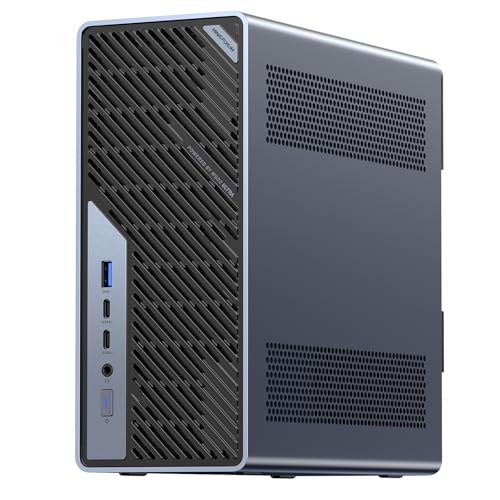
MINISFORUM MS-02 Ultra Mini Workstation PC, Intel Core Ultra 9 285HX (24C/24T, up to 5.5GHz), PCIe 5.0 x16, 4× DDR5 Slots, 4× M.2 Slots, USB4 v2 80Gbps, Dual 25GbE+10GbE+2.5GbE, Wi-Fi 7, 350W PSU
High-Performance AI Processor: The MS-02 Ultra features an Intel Core Ultra 9 285HX (24C/24T, up to 5.5 GHz,…
As an affiliate, we earn on qualifying purchases.
As an affiliate, we earn on qualifying purchases.
Europe’s AI Ambitions and Structural Challenges
The €200 billion figure was announced as part of the EU’s broader strategy to become a global leader in AI and digital sovereignty. However, most of this sum is a target to mobilize private investment rather than actual expenditure. The EU’s current initiatives focus on funding high-performance computing infrastructure and establishing regulatory frameworks, but these do not directly address core issues like energy costs, market fragmentation, or talent migration. Meanwhile, US companies continue to outpace Europe significantly in AI investments, with annual expenditures in the hundreds of billions, creating a substantial competitive gap.
European projects are only now beginning to take shape, with tenders for AI ‘Gigafactories’ opening in mid-2026 and construction expected in 2027. In contrast, US firms are deploying large-scale data centers and investing heavily in AI research, often on a single-year basis, which accelerates their technological lead.
“InvestAI is designed to catalyze private sector involvement and build Europe’s AI infrastructure over the coming years.”
— European Commission spokesperson
large scale AI Gigafactory equipment
As an affiliate, we earn on qualifying purchases.
As an affiliate, we earn on qualifying purchases.
Unclear Timeline and Private Investment Commitments
It remains uncertain how much private capital will actually flow into Europe’s AI projects, given the current market conditions and risk aversion among investors. The timeline for the planned Gigafactories and other infrastructure is also uncertain, with delays and potential funding gaps possible. Additionally, the impact of broader structural issues—such as energy costs and regulatory hurdles—on the success of these initiatives is still unclear.

ASUS Ascent GX10 AI Supercomputer, DGX Spark, NVIDIA GB10 Superchip, 128GB LPDDR5x, 1TB PCIe Gen4 NVMe SSD, Wi-Fi 7 & BT5.4, Agentic AI Ready, Supports OpenClaw, NemoClaw, Stackable Chassis
Extreme AI Performance: Powered by NVIDIA GB10 Grace Blackwell Superchip delivering 1 petaFLOP of AI performance and 128GB…
As an affiliate, we earn on qualifying purchases.
As an affiliate, we earn on qualifying purchases.
Next Steps in EU AI Infrastructure Development
The first major steps include the formal tendering process for AI ‘Gigafactories’ starting in July 2026, with construction expected to begin shortly thereafter. European institutions will monitor private sector commitments and project progress through 2026 and 2027. Meanwhile, the EU will continue to develop regulatory and energy policies aimed at addressing structural barriers to AI development. The effectiveness of these measures in closing Europe’s AI gap will become clearer over the next few years.

AI Hardware Engineering: Designing GPUs, TPUs, and Neural Processing Units for High-Throughput Machine Learning Workloads (AI Infrastructure, Hardware & Compiler Engineering Series)
As an affiliate, we earn on qualifying purchases.
As an affiliate, we earn on qualifying purchases.
Key Questions
What does ‘mobilize €200 billion’ actually mean?
It means the EU aims to attract and leverage up to €200 billion in total investments for AI development, primarily through public funds intended to catalyze private sector contributions. It does not mean the EU will spend that entire amount directly.
When will the AI ‘Gigafactories’ be operational?
The first sites are expected to be built and operational by 2027 or 2028, with formal tenders starting in July 2026.
How does Europe’s AI funding compare to US investments?
US tech giants are investing hundreds of billions annually in AI and cloud infrastructure, vastly outpacing Europe’s multi-year, smaller-scale efforts.
What are the main obstacles to Europe’s AI progress?
High energy costs, slow permitting, fragmented markets, talent drain, and dependence on US cloud services are key structural issues that current funding does not address.
Source: ThorstenMeyerAI.com