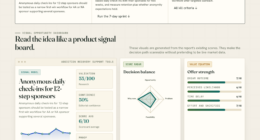

📊 Full opportunity report: Software engineering. The canonical case. on ThorstenMeyerAI.com — validation score, market gap, and execution plan.
TL;DR
Recent data confirms a 40% decline in junior developer hiring since 2022, while senior engineers experience augmentation. The sector illustrates a complex, heterogeneous AI impact, with a looming pipeline crisis projected for 2027-2029.
Recent empirical evidence confirms that junior developer hiring has declined approximately 40% since 2022, with continued reductions through 2025-2026, while senior engineers benefit from AI-driven augmentation, highlighting a complex, heterogeneous impact within the software engineering sector.
Multiple data sources, including the Anthropic Economic Index, METR study, and various hiring analyses, consistently show a significant decline in entry-level software engineering roles, with a roughly 40% drop compared to pre-2022 levels. Major tech firms, such as Salesforce, have announced no new engineering hires for 2025, signaling a strategic shift away from expanding junior roles. Simultaneously, evidence from the METR study indicates senior engineers outperform AI in deep coding tasks, supporting an augmentation rather than displacement narrative for experienced developers. The Goldman Sachs cohort analysis reports a roughly 3 percentage point increase in unemployment among 20-30-year-olds in tech-related roles since early 2025, reinforcing the displacement impact at the entry level. The Anthropic Index further suggests that 57% of AI activity in software is augmentation, with 43% automation, confirming task-specific shifts rather than outright job replacements. Experts warn of a structural mid-level pipeline crisis projected for 2027-2029, driven by the ongoing displacement of juniors and stagnating mid-tier hiring, compounded by macroeconomic factors including interest rate hikes that predate AI maturation.Software
engineering.
The canonical case.
~40% junior hiring drop · 57/43 Anthropic Economic Index split · METR senior-codebase advantage · 2027-2029 pipeline crisis emerging. The most-documented sector for AI-driven labor displacement — and the canonical empirical case the Atlas operates on.
This is Atlas Essay 02 — the first Dimension 1 sector forensic in the Post-Labor Transition Atlas. Software engineering is the canonical case because the empirical evidence base is substantial AND the exposure-vs-displacement distinction is most rigorously testable here. Junior cohort: 40% hiring drop · 25% top-15 tech entry-level decline · 20-35% global junior+QA decline · 37% employers prefer AI over new grads. Senior cohort: METR shows senior+codebase outperforms AI for deep work · 57/43 augmentation/automation Anthropic Economic Index · 5-10× productivity top 20%. Pipeline: 2-5 year mid-level crisis 2027-2029 forecast · the juniors not hired today are the mid-levels missing tomorrow. Attribution rigor required: macroeconomic + AI-driven + cohort-specific factors compounding. Interpretation 2 (transition arriving slowly with heterogeneous effects) empirically dominant.
Five findings. Multi-source convergence.
Software engineering has the most-documented empirical evidence base of any sector for AI-driven labor displacement. Multiple data sources — Anthropic Economic Index, METR, Stanford AI Index 2026, GitHub, Stack Overflow, Levels.fyi, hiring-data analyses — converge on consistent findings. The cohort-bifurcation pattern is what the cross-validation crystallizes.
Second Talent
SolidAITech
BLS
Stanford AI Index
Economic Index
2026
Cross-validated
BDTechJobs
Frontend Highlights
Stack Overflow
Three cohorts. Three trajectories.
Software-engineering displacement is not uniform — it is bifurcated by cohort, and the cohort-bifurcation IS the displacement story. Junior cohort faces structural displacement at scale · senior cohort faces augmentation not displacement · mid-level pipeline faces emerging structural crisis 2027-2029. This is the empirical signature Interpretation 2 from Essay 01 produces.
Three factors. Compounding.
The analytically rigorous framework the empirical literature operates on. The 40% junior hiring drop is structurally driven by three converging factors — naming each component rather than conflating them is the editorial discipline the Atlas operates on through all four phases.
Pipeline collapse. 2027-2029.
The structural emerging risk the empirical evidence surfaces. The cohort-bifurcated displacement is not a stable equilibrium — the junior cohort displacement today produces the mid-level shortage tomorrow. The 2-5 year mid-level pipeline gap is the structurally distinct second-order effect the discourse around AI-driven displacement underweights.
Software engineering is the canonical empirical case the Atlas operates on. Junior cohort displacement at scale (~40% hiring drop) is real and substantial. Senior cohort augmentation (METR + Anthropic Economic Index 57/43) is real and substantial. The mid-level pipeline crisis (2027-2029) is the structural emerging risk. The attribution-rigor framework — macroeconomic + AI-tool maturation + cohort-specific factors — is the analytical discipline the Atlas operates on through all four phases. Interpretation 2 from Essay 01 — transition arriving slowly with heterogeneous effects — is empirically dominant in software engineering. The cohort-bifurcation pattern is the structural-empirical hypothesis the Phase 1 synthesis essay will test across the other three sector forensics.
Implications of Sectoral Displacement and Augmentation
The findings reveal a nuanced reality: entry-level software engineers face significant displacement, risking long-term employment prospects, while senior engineers leverage AI for productivity gains. This bifurcation impacts workforce development, corporate hiring strategies, and economic stability in tech. The projected pipeline crisis threatens future supply of mid-level talent, risking a structural slowdown in software innovation and project delivery. These dynamics underscore the importance of understanding AI’s differentiated effects on labor markets, which could inform policy, corporate planning, and workforce retraining efforts.
Beyond Code: Build Reliable AI-Assisted Software with Context Engineering, Mechanical Gates, and AI Agent Control
As an affiliate, we earn on qualifying purchases.
As an affiliate, we earn on qualifying purchases.
Empirical Foundations and Sector-Specific Evidence
The empirical analysis draws from multiple sources: the Anthropic Economic Index, METR study, Stack Overflow Developer Survey 2025, and numerous industry hiring reports. Data consistently shows a 40% decline in junior roles since 2022, with top tech companies reducing entry-level hiring by 25% from 2023 to 2024. Salesforce’s announcement of no new hires in 2025 exemplifies corporate shifts. The Goldman Sachs cohort data indicates rising unemployment among young tech workers, while the METR study demonstrates senior engineers outperform AI in deep coding tasks, emphasizing augmentation. The sector’s evidence base is among the most comprehensive, making it a canonical case for analyzing AI’s labor impact.
“The empirical evidence confirms a 40% drop in junior developer hiring since 2022, with continued declines through 2025-2026.”
— Thorsten Meyer

AI Engineering: Building Applications with Foundation Models
As an affiliate, we earn on qualifying purchases.
As an affiliate, we earn on qualifying purchases.
Unresolved Questions About Sectoral and Long-Term Impact
While data confirms displacement for junior roles and augmentation for seniors, the long-term effects remain uncertain. The precise pace of the mid-level pipeline collapse, the full macroeconomic impacts, and the evolving role of AI in task automation versus job displacement are still developing. Additionally, the sector’s response to these shifts, including potential policy interventions, is not yet clear.

Automate with Python: Unlock the Power of Python: Automate Everyday Tasks with Essential Tools (Programming Languages)
As an affiliate, we earn on qualifying purchases.
As an affiliate, we earn on qualifying purchases.
Future Developments and Sectoral Adaptations
Monitoring hiring trends, especially in mid-level roles, over the next 2-3 years will be critical to assess the severity of the projected pipeline crisis. Sectoral responses, such as retraining programs and shifts in AI integration strategies, are expected to evolve. Further research will likely clarify the long-term employment impacts of AI in software engineering, including potential policy measures to mitigate displacement and support workforce resilience.

Software Developer Coding Approved Push to Prod Case for iPhone 15
- Quote and Icon Design: APPROVED. PUSH TO PROD with checkmark and rocket
- Ideal for Tech Professionals: Perfect for developers and IT experts
- Durable Protective Material: Scratch-resistant polycarbonate and shock-absorbent TPU
As an affiliate, we earn on qualifying purchases.
As an affiliate, we earn on qualifying purchases.
Key Questions
What is the main evidence of AI-driven displacement in software engineering?
The primary evidence includes a roughly 40% decline in junior developer hiring since 2022, corporate hiring freezes like Salesforce’s, and cohort unemployment increases among young tech workers, all supported by multiple industry data sources.
Are senior engineers being displaced by AI as well?
No. Data from the METR study indicates senior engineers outperform AI in deep coding tasks, suggesting they are more likely to experience augmentation rather than displacement.
What is the significance of the projected pipeline crisis?
The forecasted mid-level pipeline collapse for 2027-2029 could lead to talent shortages, slowing software development and innovation, which may impact the broader tech economy.
How much of the AI impact is due to macroeconomic factors?
Macroeconomic factors like interest rate hikes contributed to hiring declines before AI matured, and while AI exacerbates displacement, it is not the sole cause.
What are the policy implications of these findings?
Policymakers might consider workforce retraining, support for displaced workers, and regulations on AI deployment to mitigate long-term employment disruptions.
Source: ThorstenMeyerAI.com