

📊 Full opportunity report: The Hidden Price Of Free AI Advancements on ThorstenMeyerAI.com — validation score, market gap, and execution plan.
TL;DR
As AI technology becomes cheaper and more widespread, the core value shifts from intelligence to physical infrastructure and human judgment. This development raises questions about sovereignty and economic advantage in the AI era.
Industry experts confirm that as AI models become increasingly inexpensive and ubiquitous, the core value no longer resides in the intelligence itself but shifts toward physical infrastructure and human judgment, impacting economic and geopolitical power.
The core development is that AI models are rapidly approaching commodity status, with their value diminishing as they become easier to replicate and replace. Instead, the physical assets—data centers, chips, power supplies, and supply chains—are emerging as the remaining sources of durable advantage, since building and maintaining these requires significant time, capital, and expertise, making them less replaceable.
According to industry analyst Thorsten Meyer, the physical capacity to produce AI—what he calls the ‘fleet’—is the true moat, especially as models are traded and improved upon in months. This physical infrastructure is costly and time-consuming to develop, giving regions or companies with substantial assets a strategic edge. Meyer emphasizes that regions relying solely on AI usage without investing in these physical assets risk losing sovereignty and economic independence.
Another confirmed point is that human judgment remains a key, non-commodity aspect. Even with superhuman AI, people prefer accountability, trust, and responsibility associated with human decision-makers. Meyer notes that the value of a human standing behind an analysis or decision is likely to increase in importance, as AI outputs become more abundant and less differentiated.
The forecast is right: intelligence becomes a commodity, cheap and ambient like electricity. But “commodity” is a statement about where value leaves. The whole game is being early to where it goes instead.
▲ Opinion & analysis · not investment adviceWhen the crude is cheap, value moves to the refinery, the trusted name on the deal, and the buyer who can only drink so much. Same shape here.
When a capability becomes abundant and free, we stop exercising it. Some of that is fine. Some of it hollows us out.
knowing which wishes are worth making — and being a person who can still tell.
Strategic Implications of Infrastructure and Human Judgment
This shift matters because it redefines economic and geopolitical power in the AI age. Countries and companies that own the physical infrastructure—fabs, data centers, power sources—will maintain a competitive edge, while those that only use AI models risk outsourcing their strategic advantage. Additionally, the enduring importance of human judgment underscores the need for trust and accountability, which cannot be fully delegated to machines.
For policymakers and industry leaders, understanding where value truly resides is essential to maintaining sovereignty and economic resilience. The focus should be on investing in physical assets and fostering human expertise, rather than solely on developing or deploying AI models.

Data Centers and AI Hardware Chips
As an affiliate, we earn on qualifying purchases.
As an affiliate, we earn on qualifying purchases.
From AI Models to Physical Assets and Human Oversight
The industry has long celebrated rapid advancements in AI models, with many assuming that model sophistication equates to strategic dominance. However, recent analyses suggest that the real battleground is in the physical infrastructure that enables AI—semiconductor fabs, data centers, power capacity—and in the human element of accountability and judgment. Historically, owning the means of production has been a key to economic power; this principle now applies to AI infrastructure as well.
Thorsten Meyer’s analysis underscores that physical assets take years and billions of dollars to develop, creating a substantial moat. Meanwhile, AI models can be rapidly duplicated and improved, making them less defensible as long-term assets. This inversion shifts strategic focus toward infrastructure ownership, especially for regions like Europe, which may lack the physical capacity to produce AI at scale.
Furthermore, the human element—judgment, responsibility, trust—remains irreplaceable. Even in a world flooded with AI-generated outputs, people prefer decisions and content that have a human behind them, reinforcing the importance of human oversight in AI deployment.
"The moat is the means of production, not the intelligence itself. Physical capacity to produce and scale AI infrastructure is what sustains long-term advantage."
— Thorsten Meyer
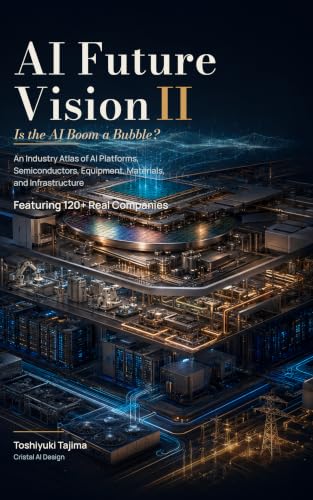
AI Future Vision II Large-Format B5 Edition: Is the AI Boom a Bubble? An Illustrated Guide to the AI, Semiconductor, and Infrastructure Industries Through Real Companies
As an affiliate, we earn on qualifying purchases.
As an affiliate, we earn on qualifying purchases.
Unclear Long-Term Impact of Infrastructure Concentration
It remains uncertain how rapidly physical infrastructure can be distributed or concentrated among nations and corporations, and how this will influence global power dynamics. Additionally, the future of human judgment and accountability in AI decision-making continues to evolve, with questions about how these roles will be defined and valued.
ENTERPRISE COHERENCE in the Age of AI
As an affiliate, we earn on qualifying purchases.
As an affiliate, we earn on qualifying purchases.
Monitoring Infrastructure Investment and Policy Responses
Next steps involve tracking investments in physical AI infrastructure, especially in regions aiming for technological sovereignty. Policymakers may need to prioritize support for physical assets and human expertise to maintain strategic independence. Industry developments in hardware manufacturing and data center expansion will also shape the landscape.

Judgment in Managerial Decision Making
- Book Condition: Used - Good Condition
As an affiliate, we earn on qualifying purchases.
As an affiliate, we earn on qualifying purchases.
Key Questions
Why is physical infrastructure more important than AI models?
Because physical assets like data centers, chips, and power capacity are costly, time-consuming to build, and less easily replicated, they provide a durable strategic advantage that models alone cannot offer.
How does human judgment remain valuable in an AI-dominated world?
Humans provide accountability, trust, and responsibility—qualities that AI systems cannot replicate. People prefer decisions and content that are clearly associated with human oversight, especially in high-stakes contexts.
What are the geopolitical risks associated with infrastructure concentration?
Regions that own and control essential AI infrastructure will hold significant strategic power, potentially leading to increased geopolitical competition and dependency for nations lacking physical assets.
Will AI models eventually become entirely commoditized?
Most industry experts agree that AI models will continue to be traded and improved rapidly, making them less of a long-term differentiator. The real advantage will shift to those controlling physical production capacity.
What should regions or countries do to maintain strategic advantage?
Invest in physical AI infrastructure—semiconductors, data centers, power sources—and foster human expertise in oversight and decision-making to retain sovereignty and economic resilience.
Source: ThorstenMeyerAI.com