
TL;DR

Turn your quiet moments into listening time
- Thousands of audiobooks, podcasts and originals
- Listen on your phone, tablet or Echo — also offline
- Cancel anytime
A crystal healing set is a collection of stones assembled around a theme such as calm or focus, sometimes with a pouch or guide. People use sets for meditation, decoration, or personal rituals, but there is no reliable scientific evidence that crystals diagnose or treat illness. Choose clearly labeled stones, check care and sourcing details, and keep crystal practices separate from medical care.
A set labeled “calm” may contain amethyst and rose quartz, while another arrives with different stones, a tiny guide, and a velvet pouch. Crystal healing sets have no standard recipe, so the name alone tells you little about what you’re buying.
This guide explains what these sets usually contain, how people use them as part of reflection or meditation, and what science can—and can’t—say about healing claims. You’ll also get practical tips for choosing, caring for, and handling stones safely.
A crystal healing set has no standard contents, so check the stone names, count, and dimensions before buying.
People use crystals for meditation, reflection, decoration, or personal rituals; those uses don’t show that stones treat illness.
Look for clear disclosures about treatments, imitations, origin, and sourcing limits.
Don’t ingest crystals or place unknown stones in drinking water, and keep small stones away from children and pets.
Use mineral-specific care guidance because water, salt, heat, and sunlight can damage some stones.
What you can expect to find in a crystal healing set
A crystal healing set is a group of stones sold or assembled for practices such as meditation, reflection, decoration, or spiritual ritual. Sets often follow a theme—such as calm, focus, love, or protection—and may include a pouch or guide. There’s no standard recipe: compare two “calm” kits and you may find different stones, sizes, and instructions. That variation matters because the theme is a seller’s organizing idea, not a regulated description of what the stones contain or what they can do.
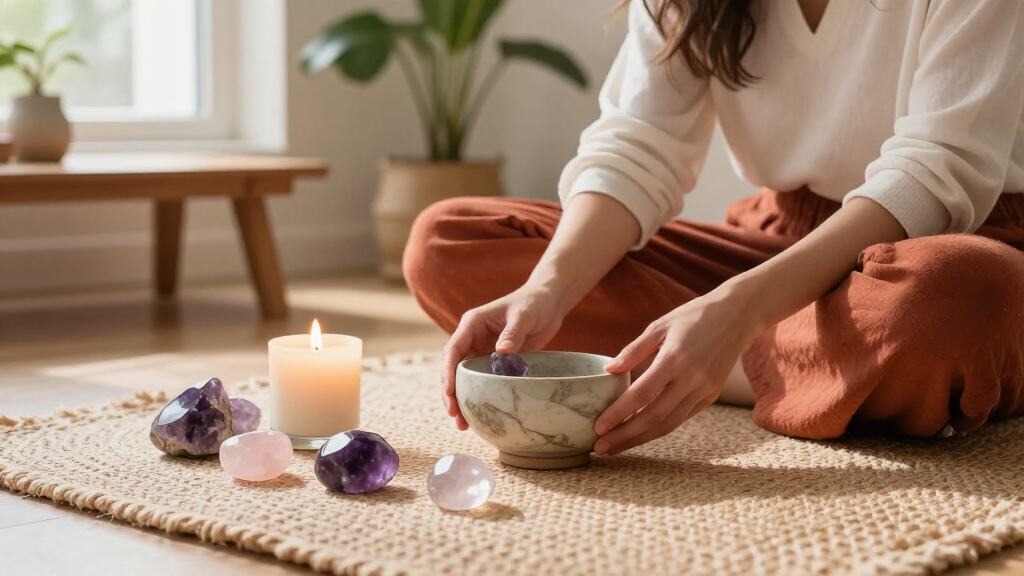
Common choices include amethyst, rose quartz, clear quartz, citrine, black tourmaline, and selenite. Sellers often connect particular stones with traditional spiritual meanings, though interpretations vary across people and traditions. Those meanings can help someone choose an object that feels personally relevant, but they shouldn’t be mistaken for properties shared by every stone or supported medical effects. One beginner set might pair rose quartz and amethyst with a card suggesting a quiet breathing practice.
Before you buy, check the actual contents and measurements. A listing that says “six crystals” could mean six polished pebbles small enough to fit in your palm—or much smaller chips. Size affects how a set feels and how you might use it: a pebble may be easy to hold, while chips may work better as decoration. Ask whether stones are natural, dyed, heat-treated, lab-grown, or imitation if the seller hasn’t said. That information can shape both your expectations and the care each piece needs.
How to use the stones as a focus for reflection
- Choose a simple intention. You might want five quiet minutes after a busy workday, rather than a sweeping promise about changing your life.
- Pick a stone that feels meaningful to you. Hold it, place it beside your journal, or arrange it where you meditate.
- Pause and notice your surroundings. Take a few slow breaths, listen to the room, or write down what’s on your mind.
- Keep the practice grounded. Treat the stone as a reminder to pause, and seek qualified care for health concerns.
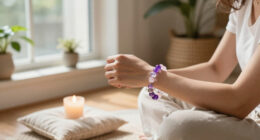
People use crystals in different ways: they may carry one in a pocket, set a few on a shelf, or hold one during meditation. Imagine placing a smooth piece of amethyst beside your notebook each evening. Seeing it can prompt you to stop scrolling and write three lines about your day.
That’s a personal ritual, not proof that a stone changed your health or fortune. A crystal can act like a bookmark: it helps you return to a practice, while the practice itself—such as resting quietly or journaling—does the work you chose for yourself.
What the evidence says about crystal healing claims
Crystal healing has no reliable scientific evidence showing that crystals diagnose, treat, or prevent illness. A stone can carry spiritual meaning for you, but that meaning doesn’t establish a medical effect. If a seller claims a set will cure pain, ease depression, or replace treatment, treat that as an unsupported health claim. This distinction is useful when weighing testimonials: a person may sincerely feel better after a ritual, but that experience alone can’t show that the stone caused the change.
Some people say a ritual makes them feel calmer or more focused. That experience can be meaningful, and the benefit may come from taking time to breathe, setting an intention, or finding comfort in a familiar object. For example, holding a cool, smooth stone during a five-minute pause might help you remember to slow down after a tense meeting. The routine can still be worthwhile as a way to make space for reflection, even when it doesn’t demonstrate a special effect from the mineral.
Keep that kind of use separate from medical care. Don’t stop prescribed medicine or delay talking with a clinician because of a crystal. You can include a stone in a reflective routine while still relying on qualified professionals for diagnosis and treatment. This boundary matters most when symptoms are serious or persistent, since relying on an unproven remedy can delay care that has evidence behind it.
How to compare sets before you spend
The clearest crystal set listing names each stone, describes its size, and explains what the seller knows about treatments and sourcing. Compare the details instead of relying on a theme such as “protection” or “energy.” For instance, a seller who gives mineral names and dimensions offers more useful information than one who promises broad benefits but leaves the contents vague. These details help you judge whether the set matches your intended use, estimate its value, and look up care needs before the stones arrive.
| What to check | Why it helps | Useful listing detail |
|---|---|---|
| Stone identity | Names help you research care and common imitations. | Mineral names for every piece |
| Size and count | Photos can make small stones look much larger. | Dimensions and number of stones |
| Treatment or imitation | “Authentic” doesn’t necessarily mean untreated. | Clear disclosure of dye, heat, lab growth, or imitation |
| Origin and sourcing | Supply chains can be hard to verify. | Specific sourcing information, with limits stated plainly |
| Care instructions | Some stones can be damaged by water, salt, or sun. | Mineral-specific handling guidance |
Ethical sourcing deserves the same careful reading. Mining and trade can affect workers and local environments, and a seller may not be able to verify every step a stone took before reaching the shop. Specific information gives you something to assess; broad promises are harder to check and may hide how little is known. Look for specific, verifiable claims rather than assuming a broad label settles the question. A seller who states the limits of their knowledge may offer a more realistic basis for comparison than one who makes sweeping guarantees.
How to handle and clean your stones safely
Keep crystals out of your drinking water, don’t ingest them, and check each mineral’s care needs before cleaning it. Unknown stones can contain hazardous elements, shed dust, or react with water or other materials. Small pieces also pose a choking risk for young children and pets, so store them out of reach. These precautions are especially useful when a set includes unidentified chips or when a seller encourages putting stones in a bottle: appearance alone doesn’t establish that a mineral is safe to swallow or soak.
Water, salt, heat, and direct sunlight can damage some crystals. A seller’s general instruction to “soak every stone” may not suit the whole set. One piece might tolerate a damp cloth while another could dissolve, discolor, or become brittle, so a single cleaning method can trade convenience for damage. If a stone’s identity or care needs are unclear, use a dry, soft cloth for visible dust and ask a knowledgeable mineral dealer before trying another method.
Some owners use moonlight or sound in traditional cleansing rituals. Those practices are matters of personal or spiritual meaning, not scientifically established ways to recharge a mineral. If you set a stone on a windowsill for a ritual, choose a spot where strong sunlight won’t fade it or where a pet can’t knock it down. A ritual that avoids physical cleaning can be a practical choice when the mineral’s care requirements are uncertain.
A simple first set can be enough
A beginner doesn’t need a large or expensive crystal healing set. Start with a small, clearly labeled group that appeals to you and fits the practice you want to try. If you want a visual reminder to journal, one or two stones and a quiet place on your desk may serve you better than a dozen pieces you won’t use. A smaller set also makes it easier to learn what each stone is and how to care for it before adding more.
Social media and online tutorials have made themed kits easier to find, along with more discussion of identification, treatments, and sourcing. They’ve also made it easier for misleading health claims and misidentified stones to spread. A vivid product photo can make a kit feel persuasive, but it can’t tell you the stones’ exact size, identity, or origin. Treat online enthusiasm as a starting point for questions, then check the seller’s descriptions and look for information that can be verified.
Try one small practice for a week: place a stone near your mug, sit for five minutes before work, and note whether the pause helps you feel more settled. Keep the result honest. You’re learning whether the routine suits you, not testing a guaranteed effect from the crystal. If you don’t find the ritual useful, that’s a reasonable reason to change or stop it; the point is to choose a practice that fits your life.
Frequently Asked Questions
What is usually included in a crystal healing set?
Contents vary, but many sets include several small stones chosen around a theme, sometimes with a pouch or guide. Read the listing for stone names, dimensions, and treatment details because sellers don’t follow a shared standard.
Do crystal healing sets actually work?
There’s no reliable scientific evidence that crystals treat health conditions. Some people find a stone meaningful or calming as part of a reflective routine, but that personal experience isn’t proof of a medical effect.
How can I tell whether a crystal is real?
Appearance alone can mislead you, especially in online photos. Ask for the mineral name, treatment disclosures, and clear images; for a valuable specimen, consult a qualified gemologist or mineral dealer.
How should I cleanse or recharge my crystals?
Moonlight and sound are traditional ritual choices, not scientifically established recharging methods. Check care guidance for each mineral before using water, salt, heat, or direct sunlight, since those can damage some stones.
Can crystals replace medicine or therapy?
No. Crystals should not replace evidence-based medical or mental health care, and you shouldn’t stop treatment because of a crystal practice. You can use a stone as a personal reminder while working with a qualified professional.
Conclusion
Choose a clearly described set that suits a modest personal practice, and let its stones serve as reminders to pause, reflect, or create. Keep health decisions with qualified care, and let the stone be a quiet object on the windowsill—not a promise it can’t keep.
Fall Picks
fall essentials
As an affiliate, we earn on qualifying purchases.