TL;DR

Turn your quiet moments into listening time
- Thousands of audiobooks, podcasts and originals
- Listen on your phone, tablet or Echo — also offline
- Cancel anytime
Spiritual Halloween decorations are seasonal displays that reflect personal beliefs, remembrance, nature, or harvest themes; the phrase has no single formal definition. Choose items for their meaning, learn the context of symbols from traditions you do not practice, and use stable, fire-safe arrangements that fit your household.
A candle beside a photograph can make a Halloween table feel less like a haunted house and more like a quiet place to remember. That small shift captures what spiritual Halloween decorations can do: bring personal meaning to a season often filled with plastic skeletons and jump scares.
The phrase has no single formal definition. For one person, it may mean honoring ancestors; for another, welcoming autumn with pumpkins and fallen leaves, or displaying symbols from a faith they practice. In this article, you’ll find ways to make your display thoughtful, learn how to handle spiritual symbols respectfully, and keep your decorations safe for the people who share your home.
You don’t need a special altar, expensive supplies, or one particular belief system. Start with a simple question: What do you want this display to express? Your answer can guide every choice that follows.
Define what your display is for before buying or arranging decorations.
Use personal items, harvest foods, and natural materials to express meaning without relying on borrowed sacred symbols.
Treat Samhain, Halloween, All Saints’ Day, and All Souls’ Day as distinct traditions, not interchangeable labels.
Use flameless candles around dried plants, keep decorations stable, and leave walking paths clear.
Explain personal displays in plain language and let children and guests choose how they engage.
What Spiritual Halloween Decor Can Mean in Your Home
Spiritual Halloween decorations are seasonal displays that express personal beliefs, remembrance, gratitude, or a connection with nature. The phrase has no single formal meaning, so the same object can carry different significance in different homes. A candle may mark a moment of memory, while a small gourd may simply celebrate the harvest.
That flexibility matters because Halloween is not one shared religious observance. Some modern Pagans and Wiccans observe Samhain, but Halloween and Samhain are not interchangeable. All Saints’ Day and All Souls’ Day are Christian observances around the same part of the year, with their own histories and practices. Not every person who decorates for Halloween follows any of these traditions.
Imagine a family placing orange leaves, a bowl of apples, and a framed photo on a shelf. They might see the arrangement as a way to welcome autumn and remember a grandparent who loved the season. A neighbor could choose the same leaves for color alone. Neither display needs to stand for everyone.
Meaning comes from your intention and tradition, not from a universal rulebook. If you share your display with guests, a short note—“We made this corner to remember Nana”—can make its purpose clear without asking anyone else to adopt your beliefs.
As an affiliate, we earn on qualifying purchases.
Choose Decorations That Match What You Want to Honor
Choose spiritual Halloween decorations by naming the feeling or idea you want your display to express, then select items that genuinely connect to it. Start with the meaning, not the shopping cart. That simple order keeps a display personal instead of turning it into a jumble of symbols chosen just because they look mysterious.
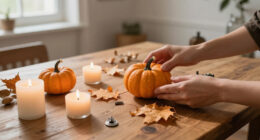
For a harvest theme, a shallow wooden bowl of apples, small pumpkins, and dried seed heads brings warm color and rough, natural texture to a table. For reflection, try a clean cloth, one unscented flameless candle, and a card with a few words of gratitude. A display for remembrance might include a photograph and flowers chosen for their connection to the person you miss.
Use this short process before arranging anything:
- Name your purpose: Choose remembrance, gratitude, seasonal change, faith, or another idea that matters to you.
- Pick two or three meaningful items: For example, a loved one’s favorite flower and a photo, rather than a dozen unrelated objects.
- Choose a calm location: A shelf or side table can feel more intentional than a busy doorway.
- Check the setup: Keep items stable, away from heat, and out of walking paths.
Say you have only 15 minutes and a $10 budget. A small squash, a few fallen leaves gathered where permitted, and a handwritten card can create a complete display. Thought beats quantity; a single meaningful object often says more than a crowded shelf.
As an affiliate, we earn on qualifying purchases.
Honor Loved Ones Without Turning Remembrance into a Rule
A remembrance display can be a simple space for a photograph, flowers, and an object that recalls someone you love. It is an invitation to remember, not a required Halloween practice or a promise that a particular ritual will bring comfort. People respond to loss in different ways, and a quiet corner may suit one person while another prefers no seasonal memorial at all.
For example, you might place your father’s old blue mug beside a photo and a sprig of rosemary because he grew it in the garden. That detail tells a story more clearly than a generic sign that says “spirit.” If a living flame feels right for your practice, keep it attended and far from photographs, curtains, and dried plants; a flameless candle offers a safer glow in a home with children or pets.
Consider making the display optional for everyone in the household. A child could add a drawing, while another family member chooses to sit nearby without adding anything. There is no single correct way to remember, and different comfort levels deserve respect.
If a recent loss feels raw, you can keep the display small, cover it, or put it away whenever you need. A seasonal decoration should support your choices, not pressure you into a ritual. The most caring version may be a single flower in a glass of water.
As an affiliate, we earn on qualifying purchases.
Use Sacred and Cultural Symbols with Care
Before placing a religious or cultural symbol in your Halloween display, learn what it means to the people and tradition it comes from. A symbol is not just a pattern; it may carry sacred, historical, or community significance. If you do not practice that tradition, choosing another decoration can be the more respectful option.
For instance, a shopper might find an unfamiliar ceremonial object at a costume shop and assume it is generic spooky decor. A little research could reveal that it belongs to a living religious practice. Instead of using it as a prop, they could make a striking display from pinecones, dark leaves, and a carved pumpkin—materials that express their own connection to autumn.
Samhain has meaning for some modern Pagans and Wiccans, but representing it as simply “the real Halloween” erases differences among practitioners and other seasonal observances. Likewise, Christian observances around this time have distinct meanings that shouldn’t be reduced to interchangeable decorations. Ask, research, and leave symbols alone when their context remains unclear.
Let a decoration tell your story without borrowing someone else’s sacred language as a costume.
If you’re making a display for guests with varied beliefs, choose plain seasonal items or explain your own practice without claiming it speaks for everyone. A bowl of pears and autumn branches welcomes people without asking them to interpret a sacred emblem.
personal belief Halloween ornaments
As an affiliate, we earn on qualifying purchases.
As an affiliate, we earn on qualifying purchases.
Build a Nature-Based Display That Feels Reflective, Not Scary
Nature-based decorations make a spiritual Halloween display feel seasonal without relying on supernatural imagery. Leaves, gourds, branches, and seed pods bring autumn’s colors and textures into your home, while the meaning can stay personal: change, gratitude, rest, or the harvest. These materials also pair easily with familiar household objects.
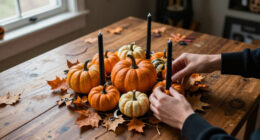
Try setting a small orange pumpkin on a folded linen napkin with three acorns and a handwritten note about something you’re grateful for. The pumpkin gives you color, the acorns add a smooth, woody texture, and the note makes the display yours. If you collect outdoors, take only what you’re allowed to gather and avoid removing materials from protected areas.
| Display style | Try these items | What it can express |
|---|---|---|
| Harvest | Apples, gourds, wheat-colored cloth | Abundance or gratitude |
| Seasonal change | Fallen leaves, bare branches, seed pods | Letting go or renewal |
| Quiet remembrance | Photo, favorite flower, keepsake | Memory and connection |
This kind of table-top arrangement works well in a small apartment: use a plate as a base, then keep the objects low enough that you can still see across the room. Natural does not have to mean elaborate. A few carefully chosen items can look warm and grounded against a plain wall.
Trends in handmade, reusable, and nature-inspired decor are broad observations, not verified sales rankings. If you want to describe what is popular right now, check dated retailer listings or search data rather than treating a mood board as proof.
Keep Candles, Dried Plants, and Walkways Safe
A spiritual Halloween display is safer when it stays stable, uses flameless candles near dry materials, and leaves clear paths through the room. Dried leaves and open flames are a risky mix, especially beside a curtain, paper decoration, or a busy entryway. A gentle glow does not need a real flame to create a reflective mood.
Picture a narrow hallway decorated for trick-or-treaters. A basket of gourds placed beside the front door may look charming in daylight, but it can become a trip hazard when children arrive in dim light. Move it onto a sturdy table, keep the floor clear, and check that cords from lights do not cross the route.
- Use flameless candles near dried foliage, paper, children, and pets.
- Choose a stable surface and keep heavier items low, away from shelf edges.
- Keep exits and walkways clear, including the path to the front door.
- Check scents and smoke before using incense or scented candles around guests who may be sensitive to them.
If you do light a candle, place it in a suitable holder on a clear surface and never leave it unattended. A battery-powered candle tucked among leaves gives you the amber flicker without a flame. Safety protects the meaning: a peaceful display should not ask guests to dodge, step over, or worry about it.
Make Your Display Welcoming to Children and Guests
A welcoming spiritual Halloween display lets guests understand what they are seeing without requiring them to share your beliefs. Offer context, not pressure. A brief label or a friendly explanation can make a personal tradition easier to approach, while leaving room for visitors to respond in their own way.
For example, if you set out a photo to remember a relative, a small card could read, “We keep this here because autumn was her favorite season.” That sentence explains the display without suggesting that every guest should take part. A child who feels uneasy around memorial items might prefer to help arrange apples or draw a pumpkin instead.
Think about both the rewards and tradeoffs. A detailed display may feel meaningful to you, but unfamiliar symbols can confuse younger visitors or guests from other traditions. A simpler arrangement with leaves, family photos, or harvest foods may feel more open, though it may not express a specific spiritual practice as clearly.
Ask household members what they’re comfortable displaying, and give them a real choice. Keep fragile keepsakes out of reach of small hands, and use decorations that can be moved if someone needs space. Hospitality includes room for difference: your home can honor your beliefs without asking everyone who visits to share them.
Frequently Asked Questions
What do spiritual Halloween decorations mean?
They are decorations that express a personal belief, remembrance, seasonal reflection, or nature-centered theme. There is no single formal definition; a pumpkin might mark the harvest in one home and simply look festive in another.
Is Halloween the same as Samhain?
No. Samhain is observed by some modern Pagans and Wiccans, while Halloween has a wider range of cultural and personal practices. Treating the names as interchangeable can misrepresent traditions and the people who practice them.
Can Christians decorate for Halloween in a spiritual way?
Some Christians choose seasonal decorations that connect with their own beliefs or observances, while others prefer different ways to mark the season. Practices vary among Christians, so you can select decor that fits your faith community and personal comfort.
How can I honor a loved one with a Halloween display?
Choose one or two personal items, such as a photograph, a favorite flower, or a keepsake that brings back a specific memory. Keep the display optional and gentle; you can put it away or change it whenever it no longer feels right.
Is it disrespectful to use symbols from a tradition I don’t practice?
It can be disrespectful to use a sacred or culturally significant symbol as a generic seasonal prop without understanding its context. Research the symbol and listen to people from that tradition; if its meaning remains unclear, choose natural materials or personal objects instead.
Conclusion
Make your Halloween display a reflection of what you genuinely want to honor—seasonal change, gratitude, faith, memory, or something else. Choose a few meaningful items, learn the context of symbols you don’t know, and set everything up so guests can move through your home safely.
A pumpkin beside one handwritten note can hold more meaning than a shelf crowded with borrowed symbols. Start small, and let the display say what you mean.
Fall Picks
fall essentials
As an affiliate, we earn on qualifying purchases.