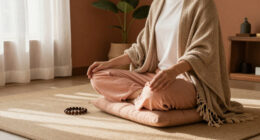
This guide helps beginners choose and use a cushion for seated spiritual meditation. You will compare cushion styles, set up a safe sitting position, and make adjustments so your hips feel supported and your spine can stay comfortably upright. Allow 20-30 minutes to try a cushion and adjust your posture; shopping or delivery may take longer.

Turn your quiet moments into listening time
- Thousands of audiobooks, podcasts and originals
- Listen on your phone, tablet or Echo — also offline
- Cancel anytime

hunnidspace Zafu and Zabuton Meditation Cushion Set with Adjustable Buckwheat and Memory Foam Filling, Purple
- ✔ Set includes: Zafu and Zabuton
- ✔ Fill: Buckwheat hulls and shredded memory foam
- ✔ Cover: Polyester velvet

Myga Zafu Meditation Cushion with Washable Cotton Cover and Buckwheat Filling
- ✔ Shape: Round
- ✔ Filling: Buckwheat shells
- ✔ Cover: Cotton

Hihealer Crescent Meditation Cushion with Buckwheat Hull Filling
- ✔ Shape: Crescent
- ✔ Filling: Buckwheat hulls
- ✔ Cover: Velvet
Difficulty: Beginner | Time: 20-30 minutes to choose and adjust; longer if ordering a cushion
What You’ll Need
Tools & Materials:
- A meditation cushion, folded blanket, or firm pillow for trying a seated position
- A quiet, level floor space
- Optional: a mat or folded blanket to cushion your knees and ankles
Knowledge:
- No meditation experience is required
- You should be able to sit on the floor, or have a chair available if floor sitting is uncomfortable
Spiritual meaning is personal: a cushion can support your practice, but it does not need to be tied to a particular tradition. If you have persistent knee, hip, back, or circulation problems, choose a position that does not increase discomfort and seek advice from a qualified health professional when needed.
hunnidspace Zafu and Zabuton Meditation Cushion Set with Adjustable Buckwheat and Memory Foam Filling, Purple
The hunnidspace set is the most complete meditation setup in this group: a buckwheat Zafu supports the seat, while a separate memory foam Zabuton cushions the floor beneath the legs. That distinction matters for practitioners who find a raised seat helpful but also want something between their knees or ankles and a hard surface. Myga gives us a taller single cushion, but it does not provide the same broad floor coverage.Both pieces have removable, adjustable filling, so we can change their height and firmness to better suit our posture and floor. The velvet covers are removable and machine washable, making routine care more convenient than Myga’s hand-wash and air-dry instructions. The tradeoff is bulk: this is a two-piece indoor set, not the easiest pick to carry around or tuck away. Its listed 3-inch thickness may also be insufficient for anyone seeking substantial padding.The mandala embroidery lends a spiritual visual touch, but the practical case rests on the paired cushions and adjustability. We’d choose it for a dedicated home practice where leg cushioning is as important as seat support. If we only need a portable, raised seat, Myga is simpler; if we want a compact crescent, Hihealer is more focused.
Pros:
- Includes both a buckwheat Zafu and a separate memory foam Zabuton for seat and floor cushioning.
- Removable filling in both cushions allows adjustment of height and firmness.
- Removable covers are machine washable.
- Mandala embroidery gives the purple velvet set a distinctive meditation-room appearance.
Cons:
- Indoor-only design and two-piece format make it less convenient to transport or store.
- Listed 3-inch thickness may feel insufficient on a hard floor.
- Memory foam in the Zabuton feels different from an all-buckwheat setup.
Best for: Home meditators who want a matched seat and leg cushion, plus the option to adjust the filling.
Not ideal for: People who need a lightweight single cushion, practice outdoors, or want thick, plush padding.
Bottom line: For a home practice that needs both a raised seat and cushioning beneath the legs, this adjustable two-piece set offers the broadest support in our comparison.
“For a home practice that needs both a raised seat and cushioning beneath the legs, this adjustable two-piece set offers the broadest support in our comparison.”
Myga Zafu Meditation Cushion with Washable Cotton Cover and Buckwheat Filling
With a listed 4.7-inch height, the round Myga Zafu is the tallest single meditation seat in this lineup. That makes it the most direct option for practitioners who want their hips raised without adding a second cushion. Unlike the hunnidspace set, it does not include a Zabuton, so we should plan separately for knee and ankle comfort if we sit on a firm floor for longer sessions.Its buckwheat shell filling sits in a separate inner pouch, while the removable cotton cover gives the cushion a simple, natural-fiber finish. A side handle makes it easier to carry between rooms. Myga also notes that the cushion can serve as a yoga block for some postures, though its round shape and soft shifting filling may not replace a firm block for every movement.Care is the main compromise. The covers require hand washing and air drying, and washing the inner cover means emptying the buckwheat into another container. That is more involved than the machine-washable hunnidspace covers. Still, as a single seat with useful height and a carry handle, Myga is more portable than a two-piece setup and less specialized than Hihealer’s crescent form.
Pros:
- The 4.7-inch listed height provides the tallest single seat among these picks.
- Buckwheat shells adapt to the sitter while maintaining a firm feel.
- Removable cotton cover and separate inner pouch keep the filling contained during use.
- Side handle helps with portability.
Cons:
- No separate Zabuton or broad cushioning for knees and ankles.
- Hand washing and air drying take more care than the hunnidspace set’s machine-wash instructions.
- Buckwheat must be emptied into a separate container to wash the inner cover.
Best for: Meditators who want a taller, single buckwheat seat that can move easily between practice spaces.
Not ideal for: Anyone who wants a complete floor-cushion set or prefers machine-washable covers and low-effort cleaning.
Bottom line: Choose Myga when we want a taller, easy-to-carry Zafu and are comfortable handling its more involved washing routine.
“Choose Myga when we want a taller, easy-to-carry Zafu and are comfortable handling its more involved washing routine.”
Hihealer Crescent Meditation Cushion with Buckwheat Hull Filling
Hihealer distinguishes itself through shape rather than extra components. Its crescent profile is intended to support seated posture and reduce pressure around the knees and ankles, while the firm buckwheat hulls shift to fit the body. Compared with Myga’s round, taller Zafu, the crescent makes a more specialized choice for people who prefer a shaped seat. It is also far simpler to move than hunnidspace’s separate Zafu and Zabuton.The limitations are worth weighing closely. The listed one-inch thickness is much slimmer than Myga’s 4.7-inch seat and hunnidspace’s three-inch pieces. The description does not give a seat height beyond that thickness, so we should not assume it will raise the hips substantially. On a firm floor, that minimal profile may provide less cushioning than some meditators need, despite the intended pressure relief.A carry handle and single-cushion format suit a flexible routine that includes meditation, stretching, or yoga. The firm filling will appeal to those who want support that molds without feeling plush, but not to anyone looking for a soft landing. For a longer seated practice with floor padding, hunnidspace is more complete; for height, Myga is the clearer pick. Hihealer makes sense when we specifically want a compact crescent shape and are comfortable with its slim profile.
Pros:
- Crescent shape is designed to support seated posture.
- Firm buckwheat hulls mold to the body while retaining a supportive feel.
- Carry handle and single-cushion format suit moving between activities.
- Intended for meditation, yoga, stretching, and relaxation.
Cons:
- Listed thickness is only 1 inch, which may offer limited cushioning on hard floors.
- Firm filling may not suit people who prefer a softer seat.
- Does not include a separate cushion for the legs.
Best for: Practitioners who prefer a compact crescent seat for meditation, stretching, or yoga and favor firm support.
Not ideal for: People who need a taller seat, substantial floor padding, or a soft cushion feel.
Bottom line: Hihealer is the focused pick for a firm, portable crescent seat, provided its slim one-inch profile matches our floor and posture needs.
“Hihealer is the focused pick for a firm, portable crescent seat, provided its slim one-inch profile matches our floor and posture needs.”
As an Amazon Associate we earn from qualifying purchases.
Before You Start
Plan to test posture before buying a cushion if possible. Cushion names and shapes vary by maker, so focus on the actual height, firmness, and support rather than the label. Stop and change position if you feel sharp pain, numbness, or tingling. A chair is a valid option for meditation; the aim is a steady, relaxed seat, not a specific pose.
Step-by-Step Instructions
Step 1: Choose a seated position
Choose a comfortable position: sit on the floor with your legs crossed, kneel with a cushion between your feet, or sit on a stable chair with both feet on the floor. If you sit on the floor, let your knees rest naturally and do not press them toward the ground.
Tip:Use a folded blanket under your knees or ankles if contact with the floor feels hard.
Check: You can remain in the position briefly without sharp pain or strong pressure in your knees, hips, or ankles.
Step 2: Select a cushion shape and fill
Compare a round cushion, often called a zafu, for a raised seat with room to cross your legs, with a crescent-shaped cushion if you want space for your ankles or thighs. Place a flat mat, sometimes called a zabuton, underneath if you want to soften contact with the floor. Choose a fill that feels supportive when you sit rather than one that collapses completely.
Tip:Common fills include buckwheat hulls and kapok. Buckwheat hulls can often be added or removed to change height; kapok is lighter and springier. Check the maker’s care instructions.
Check: The cushion supports your sitting bones without creating a hard edge or making you feel unstable.
Step 3: Set the cushion height
Place the cushion on a level floor, sit on its front half, and center your sitting bones on it. Adjust the height until your hips are slightly higher than your knees. Add or remove small amounts of fill if the cushion allows it, or unfold and refold a blanket to change its height.
Tip:Too much height can feel wobbly; too little may pull your pelvis backward. Make small changes, then sit again before adjusting further.
Check: Your knees rest comfortably below your hips, and your pelvis can tip slightly forward without strain.
Step 4: Arrange your legs and support points
Settle your legs into the chosen position without pulling or pressing them into place. Check that the cushion supports both sitting bones and that your knees or lower legs have comfortable contact with the floor or mat. Place a folded blanket beneath any knee that floats uncomfortably, or change to a chair.
Tip:A stable three-point base comes from your two sitting bones and comfortable support under your legs. You do not need to sit in a full lotus position.
Check: Your weight feels balanced, and your legs are supported without forced stretching.
Step 5: Align your upper body
Rest your hands on your thighs or in your lap. Lengthen your spine gently, lower your shoulders, and keep your chin level. Avoid stiffening your back or pushing your chest forward. Relax your jaw and face while balancing your head over your torso.
Tip:If your back rounds, raise the seat slightly or sit on the front edge of the cushion. If you feel tense, ease the effort rather than holding a rigid pose.
Check: You can sit upright while breathing naturally, without bracing your shoulders or straining your back.
Step 6: Test the setup before meditating
Sit for five minutes and notice pressure, balance, and breathing. Pause and adjust one thing at a time if discomfort builds: change the cushion height, leg support, or sitting position. Set a short timer, such as five or ten minutes, for your first session, and move to a chair if floor sitting becomes uncomfortable.
Tip:Ordinary mild stiffness may ease when you move, but pain, numbness, tingling, or worsening discomfort are signs to stop and reposition.
Check: You can complete a short trial while breathing comfortably and without pain, numbness, or a strong urge to brace against the floor.
Step 7: Care for the cushion after use
Follow the product label for cleaning and storage. Air the cushion if its cover or fill feels damp, and keep it dry between sessions. Check adjustable fill periodically for settling and add or remove material in small amounts to restore a comfortable height.
Tip:Do not wash a filled cushion unless the care instructions allow it; some fills can clump or be damaged by moisture.
Check: The cushion is dry, stored cleanly, and still holds its shape when you sit on it.
Common Mistakes to Avoid
- Choosing a cushion based on its name or spiritual appearance alone. — Test how it feels under your sitting bones, and compare height, firmness, and stability before deciding.
- Sitting too low and rounding the lower back. — Raise the seat in small increments until your hips sit slightly higher than your knees and you can sit upright without forcing it.
- Forcing a cross-legged pose or pushing knees toward the floor. — Let your legs rest where they are comfortable, support floating knees, or use a chair.
- Ignoring numbness or pain to finish a meditation session. — Stop, change position, and shorten the session. Seek professional guidance for ongoing or recurring symptoms.
Troubleshooting
Problem: Your lower back rounds or you feel pulled backward.
Solution: Raise the cushion slightly, sit toward its front half, and let your pelvis tip forward gently. If the posture still feels strained, try a chair.
Problem: Your knees or ankles hurt on the floor.
Solution: Add a mat or folded blanket under the contact points, support each knee that does not rest comfortably, or switch to a chair. Do not force your legs into position.
Problem: You feel unstable or your hips rock.
Solution: Lower the cushion a little, check that it is on a level surface, and sit nearer its center. Remove some fill if the cushion is adjustable and feels too tall or firm.
Problem: Your feet or legs become numb or tingly.
Solution: Stop the session and change position. Reduce the time spent sitting, avoid pressure behind the knees, and use a chair if symptoms return. Consult a qualified health professional if numbness persists.
What Success Looks Like
Your setup is working when you can sit with your weight balanced, hips supported, and spine upright but relaxed. Your breathing remains natural, and a short trial does not cause pain, numbness, tingling, or increasing pressure. You should be able to make small posture adjustments without the cushion sliding or tipping.
Next Steps
Use the same cushion and position for a few short sessions, noting any pressure or instability afterward. Adjust the cushion height or leg support in small steps rather than changing several things at once. Air and clean the cover according to its care label, and check adjustable fill when the seat begins to feel lower. If floor sitting remains uncomfortable, continue with a stable chair or ask a qualified health professional for posture guidance.
Frequently Asked Questions
Do I need a special cushion for spiritual meditation?
No. A firm pillow or folded blanket can help you test the height and posture before buying a cushion. Choose equipment that supports a comfortable, steady seat; spiritual practice does not depend on a particular product.
How high should a meditation cushion be?
There is no single correct height. Start with your hips slightly higher than your knees, then adjust until your pelvis can rest comfortably and your spine does not round or feel strained.
Is a round or crescent meditation cushion better?
Either may work. A round cushion offers a raised seat for many cross-legged positions. A crescent shape can leave more room for the ankles or thighs. Try the shape with your usual sitting position and choose the one that feels stable.
Can I meditate on a chair instead?
Yes. Sit toward the front or middle of a stable chair, keep your feet supported, and let your spine lengthen without stiffness. Use a cushion behind your lower back only if it feels supportive and does not force you forward.
What should I do if my legs go numb?
End the seated position and move gently. At your next session, shorten the sitting time, change leg position, reduce pressure around your knees, or use a chair. Seek medical advice if numbness continues after you move or happens repeatedly.