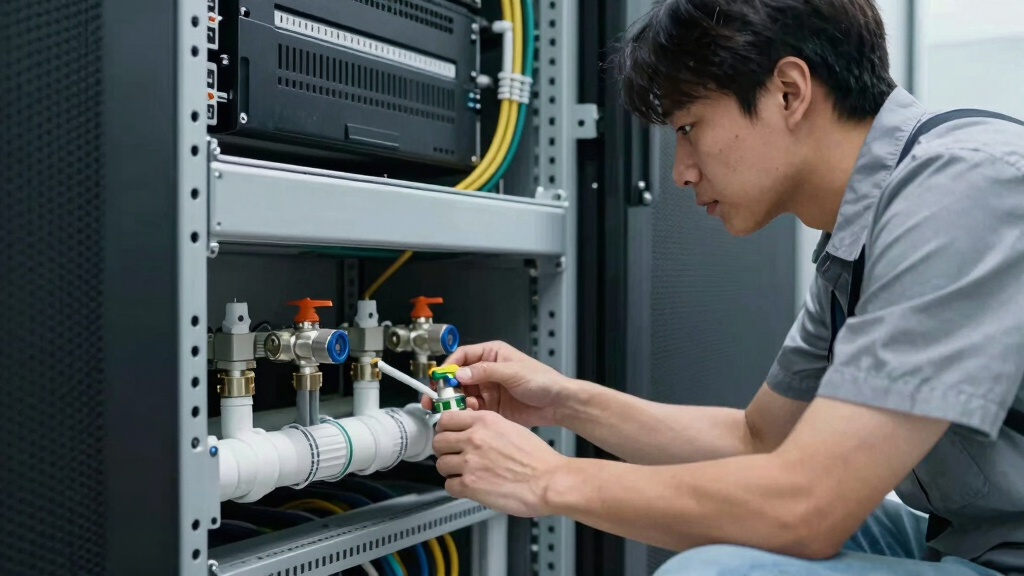

📊 Full opportunity report: AI Growth Hindered By Plumbing, Not Models — What We Need To Fix on ThorstenMeyerAI.com — validation score, market gap, and execution plan.

Turn your quiet moments into listening time
- Thousands of audiobooks, podcasts and originals
- Listen on your phone, tablet or Echo — also offline
- Cancel anytime
TL;DR
Despite advances in AI models, enterprise AI growth is limited by infrastructure challenges. Integration, orchestration, and governance are the main bottlenecks, favoring small operators owning complete stacks.
Recent industry analysis confirms that the primary bottleneck to AI growth in enterprise settings is not model capability but the infrastructure for integration and orchestration. This shift in focus has significant implications for how companies and vendors approach AI deployment in 2026, as the cost and complexity of connecting models to existing systems remain the main hurdles.
Multiple surveys and reports, including those from Gartner, EY, and Anthropic, show that 46% of teams building AI agents cite integration with existing enterprise systems as their main challenge. This challenge involves secure, reliable, and governed access to core systems like CRMs, databases, and APIs. While AI models have advanced rapidly and are now commoditized, the infrastructure to orchestrate, govern, and evaluate these models remains underdeveloped, creating a bottleneck in scaling enterprise AI applications.
Industry projections suggest that most AI spending in 2026 will go toward building and maintaining the connective tissue—orchestration frameworks, governance tools, and evaluation pipelines—rather than on the models themselves. This trend benefits small operators who own their entire tech stack, as they face less integration friction compared to large enterprises tethered to legacy systems and compliance regimes. The market for enterprise agent deployment is expected to grow from $2.6 billion in 2024 to $24.5 billion by 2030, mostly driven by spending on infrastructure rather than models.
The Agent Bottleneck Moved —
It’s Not the Models, It’s the Plumbing
Same-day-verified meta-trend · the one finding the conflicting surveys agree on
The survey chaos, plotted honestly
The inversion
2024–25: WHICH MODEL?
Capability was scarce, so the model was the moat. That race now resets weekly — frontier-class open weights every few weeks, from multiple labs.
2026: WHOSE PLUMBING?
Orchestration, tool access, evaluation harnesses, queues, audit trails, inference economics. Capability commoditized; infrastructure didn’t.
STEELMAN: WHY ENTERPRISES ARE SLOW
Not stupidity — their agents touch payroll, patients, and production, where cascading failures have consequences a solo builder’s stack never faces. Bounded autonomy and governance gaps are rational responses to real risk. Small operators defer that reckoning; they don’t escape it.
The signal: stop watching model benchmarks to predict who wins the agent era. Watch who owns the plumbing. The bottleneck moved there, the money is following — and the structural advantage runs, for once, toward operators small enough to own their whole stack.
Impact of Infrastructure Bottlenecks on AI Deployment
This analysis underscores that AI progress is now limited more by infrastructure challenges than by model capabilities. For enterprises, this means that rapid AI adoption depends on their ability to develop or acquire robust orchestration and governance layers. Small operators with complete, self-owned stacks are advantaged, potentially reshaping competitive dynamics in the AI ecosystem. For vendors, the race is shifting toward providing integrated, scalable infrastructure solutions that simplify deployment and compliance, rather than just developing more powerful models.
As an affiliate, we earn on qualifying purchases.
Shift in Focus from Models to Infrastructure in 2026
Throughout 2026, industry reports have shown a divergence in AI adoption metrics, with some claiming up to 72% of enterprises adopting AI agents, while others report only 34% beginning implementation. The common thread is that most organizations are stuck in experimentation phases due to integration issues. Surveys, including those from Anthropic and EY, highlight that model capabilities are now mature and commoditized, but the infrastructure to connect these models to real-world enterprise systems remains underdeveloped. This transition marks a shift from model development to building the connective infrastructure necessary for scalable deployment.
“Small operators owning their entire stack are at a significant advantage because they face less integration friction.”
— an anonymous researcher
As an affiliate, we earn on qualifying purchases.
Uncertainties in AI Infrastructure Development
While data consistently points to integration as the main bottleneck, there are uncertainties about how quickly infrastructure solutions will mature and scale. The exact pace at which enterprises will overcome governance and security hurdles remains unclear, as does how large vendors will adapt to this shift. Additionally, the long-term impact of small operators owning complete stacks versus large enterprise deployments is still evolving, and the full implications for market dynamics are yet to be seen.
AI governance and evaluation software
As an affiliate, we earn on qualifying purchases.
As an affiliate, we earn on qualifying purchases.
Next Steps in Overcoming Infrastructure Bottlenecks
Industry players are likely to focus on developing comprehensive orchestration and governance platforms to facilitate large-scale deployment. Vendors may accelerate integration solutions tailored for legacy systems and compliance requirements. For enterprises, success will depend on investing in or partnering with providers that can deliver scalable, secure, and easy-to-manage AI infrastructure. Monitoring how these developments unfold over the next year will be crucial for understanding the future landscape of enterprise AI adoption.
As an affiliate, we earn on qualifying purchases.
Key Questions
Why are AI models no longer the main bottleneck?
AI models have advanced rapidly and are now widely available at low cost. The main challenge now lies in integrating these models into existing enterprise systems securely and reliably.
Who benefits most from the infrastructure shift?
Small operators who own their entire tech stack are at an advantage because they face less friction in integration and deployment, giving them a competitive edge.
How will this affect enterprise AI spending?
Most AI-related spending will go toward building orchestration, governance, and evaluation tools, rather than on the models themselves, with market size projected to grow significantly by 2030.
What are the main risks if infrastructure development stalls?
Stalled infrastructure progress could slow enterprise AI adoption, increase deployment costs, and lead to greater reliance on small, vertically-integrated operators.
Source: ThorstenMeyerAI.com
Fall Picks
fall essentials
As an affiliate, we earn on qualifying purchases.