
📊 Full opportunity report: Is AI Becoming Less Expensive? No, Consumers Are Broke, Not Industry Fixed on ThorstenMeyerAI.com — validation score, market gap, and execution plan.
TL;DR
Memory prices are rising more slowly, but this is due to consumers’ inability to afford more, not a supply recovery. Industry capacity shifts toward AI hardware keep prices high for now.
Memory prices are continuing to rise at a slower pace, but industry analysts confirm that this slowdown is driven by consumers reaching their spending limits rather than an improvement in supply conditions. This development indicates that hardware costs for AI and high-performance computing remain elevated, affecting industry and consumers alike.
Recent data from TrendForce’s July 2026 survey shows that conventional DRAM contract prices increased by 13–18% quarter-over-quarter for Q3, while NAND prices rose 10–15%. These figures represent a significant slowdown from the roughly 60% jumps seen in Q2, but analysts emphasize that the underlying cause is demand destruction among consumer electronics makers, not supply recovery.
Industry experts note that the shift in capacity toward high-bandwidth memory (HBM) for AI accelerators — which accounts for over 95% of production by major suppliers — continues to tighten supply. HBM is sold out through 2026, with SK Hynix and Micron having booked their entire capacity for the year by late 2025. This capacity reallocation has driven record price surges: PC DRAM contract prices soared over 105% in Q1 2026, and DDR5 chip prices quadrupled in a single quarter.
Despite the slowdown in price increases, the market remains under pressure. Industry sources warn that prices are plateauing at high levels, with supply still tight, and that the moderation reflects a lack of consumer purchasing power rather than market stabilization.
Memory-Squeeze Check-In: Cooling Because You’re Broke,
Not Because It’s Fixed
Same-day-verified price pulse · TrendForce Q3 survey, July 3 · a plateau at altitude is not relief
The quarter-by-quarter curve — conventional DRAM contracts, QoQ
THE SKEPTIC’S FOOTNOTE
An industry with a documented price-fixing history (the mid-2000s DRAM cartel pleas) is posting record profits on a shortage its own capacity choices created. The AI demand is real — but supplier-side “shortage persists” messaging deserves the same scrutiny as any vendor claim.
Three reads for local-first builders
HBM is now half-plus of a packaged GPU’s cost; H100 rentals +14% y/y. Every squeeze month makes router + hybrid arithmetic more compelling — only high utilization justifies hardware at these prices.
Apple-silicon fleets sidestep the HBM tax — but flagships hold RAM flat and pricing flows through. The window to build at current prices has known width now, unknown later.
Hardware needed within two quarters: waiting is a losing trade. The kit you’re deferring “until prices normalize” waits on fabs that pour concrete in 2027.
The signal: ignore the cooling headline; watch the mechanism. Record prices rising more slowly, caused by exhaustion not supply, with relief parked in 2027-28 — the squeeze is maturing, not ending. Plan hardware like a multi-year condition. One honest wildcard: architectures that simply need less memory — the open labs are already competing on exactly that.
high bandwidth memory (HBM) for AI accelerators
As an affiliate, we earn on qualifying purchases.
As an affiliate, we earn on qualifying purchases.
Why High Memory Costs Persist for Industry and Consumers
This situation underscores that the current slowdown in memory price increases does not signal relief but reflects a market exhausted by demand. For consumers, this means hardware remains expensive, and for the industry, it indicates ongoing capacity constraints and high costs that are unlikely to ease before 2027. This impacts AI hardware costs, enterprise infrastructure planning, and consumer electronics pricing.

Crucial 32GB DDR5 RAM Kit (2x16GB), 5600MHz (or 5200MHz or 4800MHz) Laptop Memory 262-Pin SODIMM, Compatible with Intel Core and AMD Ryzen 7000, Black – CT2K16G56C46S5
Boosts System Performance: 32GB DDR5 RAM laptop memory kit (2x16GB) that operates at 5600MHz, 5200MHz, or 4800MHz to…
As an affiliate, we earn on qualifying purchases.
As an affiliate, we earn on qualifying purchases.
Memory Market Dynamics and Industry Capacity Shifts
Over the past year, the industry has undergone a significant reallocation of wafer capacity toward high-bandwidth memory (HBM) used in AI accelerators. This shift has come at the expense of conventional DDR5 memory, with major suppliers like Samsung, SK Hynix, and Micron prioritizing HBM production. As a result, HBM has been sold out for all of 2026, with capacity fully booked by late 2025. Meanwhile, prices for DDR5 and DDR4 have surged dramatically, with DDR4 spot prices increasing over 2,200% in 12 months.
Analysts describe this as a “permanent reallocation” rather than a temporary cycle, with relief unlikely before late 2027, when new fabs from Micron in Idaho are expected to begin production. The current market conditions are driven by capacity constraints and strategic shifts toward AI hardware, not by a supply glut or easing demand.
“HBM capacity is fully booked through 2026, and major suppliers have prioritized AI hardware over conventional memory.”
— supply chain expert
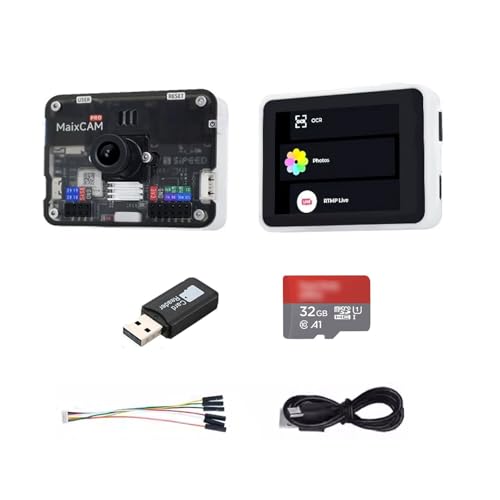
youyeetoo Sipeed MaixCAM Pro AI Development Board, Equipped with a RISC-V 1TOPS NPU and a Vision Camera, enables The Rapid Deployment of AI Vision and Auditory Applications. (SD Card Kit)
[Product Description]MaixCAM is hardware for fast AI vision and auditory app development. MaixCAM-Pro has a strong, affordable processor…
As an affiliate, we earn on qualifying purchases.
As an affiliate, we earn on qualifying purchases.
Extent of Future Price Stabilization and Supply Relief
It remains unclear when memory prices will stabilize at more affordable levels, as capacity constraints and demand shifts persist. Industry forecasts suggest relief may not occur before late 2027, but market dynamics could change based on technological, supply chain, or demand-side developments.
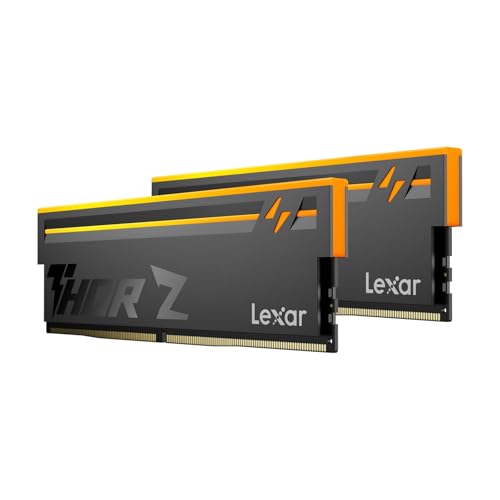
Lexar Thor Z Series RGB DDR5 RAM 32GB Kit (2x16GB) 6000 MHz, DRAM 288-Pin UDIMM Support Intel XMP 3.0 & AMD EXPO, On-die ECC, PMIC, 1.35V, High-Performance PC Computer Memory for Gaming, AI
Unleash Next-Gen Dominance: Experience Lexar DDR5 RAM performance with the Lexar THOR Z Series RGB DDR5 RAM 32GB…
As an affiliate, we earn on qualifying purchases.
As an affiliate, we earn on qualifying purchases.
Expected Industry and Market Developments in 2026-2027
Industry analysts predict ongoing capacity constraints and high prices through 2026, with some relief possibly emerging in late 2027 when new fabs start production. Buyers are advised to plan hardware procurement accordingly, prioritizing minimum necessary capacity and locking in prices now to avoid further cost increases.
Key Questions
Why are memory prices still high despite slower increases?
Prices remain high because supply is constrained due to capacity being shifted toward AI hardware, and demand from consumers and enterprises is exhausted, not because of a supply surplus.
When might memory prices actually decrease?
Analysts estimate that significant relief might not occur before late 2027, when new manufacturing capacity from fabs like Micron’s Idaho plant begins production.
How does this affect AI hardware costs?
High memory prices contribute to elevated costs for AI accelerators and GPUs, making hardware more expensive and impacting deployment timelines and budgets.
Should consumers wait to buy memory or hardware?
Experts recommend purchasing only what is necessary within the next two quarters, as prices are unlikely to fall significantly before 2027, and delaying may lead to higher costs.
Is the memory shortage a deliberate industry strategy?
While the capacity shifts are strategic, industry analysts note that the shortage is partly due to deliberate reallocation toward more profitable AI memory, which has contributed to sustained high prices.
Source: ThorstenMeyerAI.com