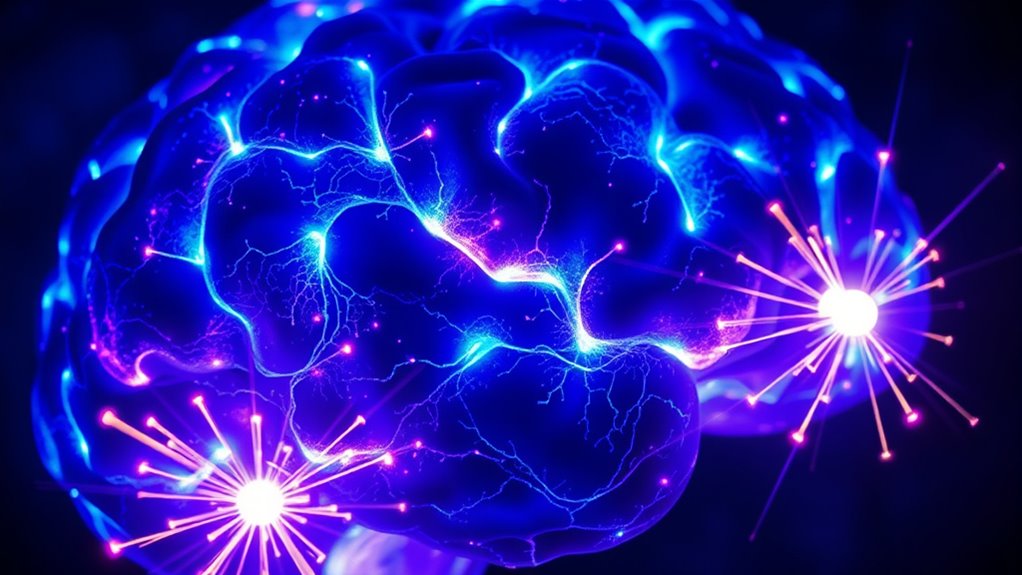

Neuroplasticity is your brain’s amazing ability to rewire itself throughout life, allowing you to learn new skills, recover from injuries, and adapt to different circumstances. By engaging in activities like practice, mindfulness, and trying new routines, you strengthen neural connections and foster positive change. Every experience shapes your brain’s structure and function, making it more flexible and resilient. Keep exploring how these processes work, and you’ll discover even more ways to harness your brain’s power to change.
Key Takeaways
- The brain can continuously rewire itself through experiences, learning, and practice, even into adulthood.
- Engaging in new activities like learning a language or instrument strengthens neural connections.
- Promoting cognitive flexibility through diverse mental challenges enhances problem-solving and adaptability.
- Habits such as mindfulness, exercise, and reading reinforce positive neural pathways and resilience.
- Understanding neuroplasticity empowers individuals to actively shape their mental health and cognitive abilities.
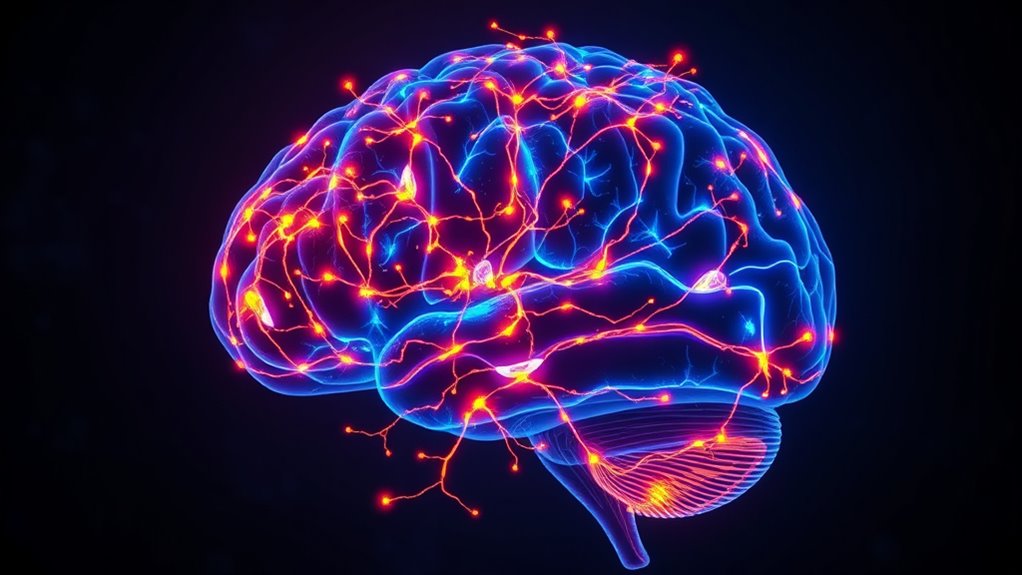
Have you ever wondered how your brain can adapt and change throughout your life? That’s the remarkable power of neuroplasticity in action. Your brain isn’t a fixed organ; it’s constantly rewiring itself in response to your experiences, learning, and even your thoughts. This process, known as brain rewiring, allows you to develop new skills, recover from injuries, and adapt to new environments. When you embrace neuroplasticity, you’re tapping into your brain’s ability to reshape itself, fostering cognitive flexibility—the capacity to switch between different ideas, perspectives, and strategies with ease.
Every time you learn something new or practice a skill, your brain forms new connections between neurons. These connections strengthen over time, making it easier for you to perform tasks and recall information. For example, if you start practicing a musical instrument or learning a new language, your brain actively rewires itself to accommodate these new skills. This rewiring isn’t limited to early childhood; it continues well into adulthood, proving that your brain is capable of growth and change at any age. The secret lies in your brain’s plasticity, which responds to your efforts and environmental influences by reorganizing neural pathways. This ongoing neural reorganization is fundamental to understanding how the brain adapts and evolves.
Learning new skills continually rewires your brain, enhancing growth and adaptability at any age.
Cognitive flexibility plays a crucial role here because it enables you to adapt to changing circumstances and solve problems creatively. When you challenge yourself with new experiences, you stimulate your brain to forge new pathways, enhancing this flexibility. This makes you more resilient to mental fatigue and better at switching between tasks or ideas. For instance, if you’re faced with a difficult problem, your ability to think outside the box depends on your brain’s capacity for flexible thinking. The more you engage in activities that stretch your mental boundaries—like learning a new skill, practicing mindfulness, or even changing routines—the more you promote brain rewiring and boost your cognitive flexibility.
Understanding neuroplasticity empowers you to take control of your mental health and personal growth. You can intentionally design habits and activities that promote brain rewiring, such as reading, physical exercise, or meditation. These activities stimulate neural connections, reinforcing positive patterns and diminishing less useful ones. The more you nurture your brain’s adaptability, the more resilient and versatile you become. Remember, your brain is not static; it’s a dynamic organ capable of incredible transformation. By harnessing neuroplasticity and cultivating cognitive flexibility, you actively participate in shaping your mind’s future, opening doors to lifelong learning and mental agility.

Shakven Left & Right Brain Development Card for Parent-Child Interaction | Brain Training Card Game,20 Brain Training Card Game,Hand-Brain Coordination Card Fine Motor Skills
✒Ensured Child Safety: Ensuring your child's safety, our brain training cards are crafted with thickened, durable cardboard and…
As an affiliate, we earn on qualifying purchases.
As an affiliate, we earn on qualifying purchases.
Frequently Asked Questions
Can Neuroplasticity Reverse Age-Related Cognitive Decline?
Yes, neuroplasticity can help reverse age-related cognitive decline. By engaging in mental exercises, learning new skills, and staying active, you can promote brain aging and support cognitive enhancement. These activities stimulate neural connections, making your brain more adaptable and resilient. While it may not completely reverse all decline, harnessing neuroplasticity offers a powerful way to improve memory, focus, and overall mental clarity as you age.
How Long Does It Take to See Changes From Neuroplasticity Training?
Like planting a seed and watching it grow, you might start noticing small changes in a few weeks, but measurable progress often takes a few months. Timing expectations vary based on your efforts and the type of training, so stay consistent. With dedication, you’ll see gradual improvements, and over time, these changes become more noticeable, reinforcing that neuroplasticity is a powerful, ongoing process.
Are There Risks Associated With Excessive Neuroplasticity Exercises?
Excessive neuroplasticity exercises can lead to overtraining risks and balance concerns. You might experience mental fatigue, increased stress, or difficulty concentrating if you push too hard. To avoid these issues, it is crucial to listen to your body, rest when needed, and vary your activities. Maintaining a balanced approach helps guarantee you benefit from neuroplasticity training without risking burnout or disrupting your mental stability.
Can Neuroplasticity Help Recover From Traumatic Brain Injuries?
Think of your brain as a city rebuilding after a storm. Neuroplasticity acts like skilled workers, helping your brain reorganization and paving new roads for lost functions. It can markedly aid your functional recovery from traumatic brain injuries by rewiring pathways. With targeted exercises and therapy, you’re guiding this rebuilding process, promoting healing and regaining abilities. Your brain’s natural adaptability becomes a powerful tool in restoring your life.
Is Neuroplasticity Equally Effective for Everyone?
Neuroplasticity isn’t equally effective for everyone because individual differences and learning capacity vary. Your brain’s ability to change depends on factors like age, genetics, and experience. If you’re younger or have a strong learning capacity, you might see faster or more significant improvements. However, consistent effort and tailored strategies can enhance neuroplasticity regardless of these differences, helping you maximize your brain’s potential for growth and recovery.

Mindfulness for Brain Health: Neuroscience-Informed Mindfulness in Plain English, Empowering You with Self-Care and Mindfulness Meditation Practices … and Joy (Brain Health & Well-being Series)
As an affiliate, we earn on qualifying purchases.
As an affiliate, we earn on qualifying purchases.
Conclusion
Embrace the incredible power of neuroplasticity and unleash your brain’s boundless potential. By believing in your ability to change, you can cultivate new connections, conquer challenges, and create a confident, resilient mind. Remember, your willingness to work, wonder, and witness your own growth can turn trials into triumphs. Harness this healing harmony within, and watch your world widen with wisdom, wellness, and wonder. Your brain’s brilliance begins with your belief—start shaping your success today.

The New Penguin Russian Course: A Complete Course for Beginners
As an affiliate, we earn on qualifying purchases.
As an affiliate, we earn on qualifying purchases.

Neuroplasticity: Exercises to Improve Cognitive Flexibility, Conquer Trauma & PTSD, Change Bad Habits, Eliminate Depression and So Much More!
As an affiliate, we earn on qualifying purchases.
As an affiliate, we earn on qualifying purchases.